
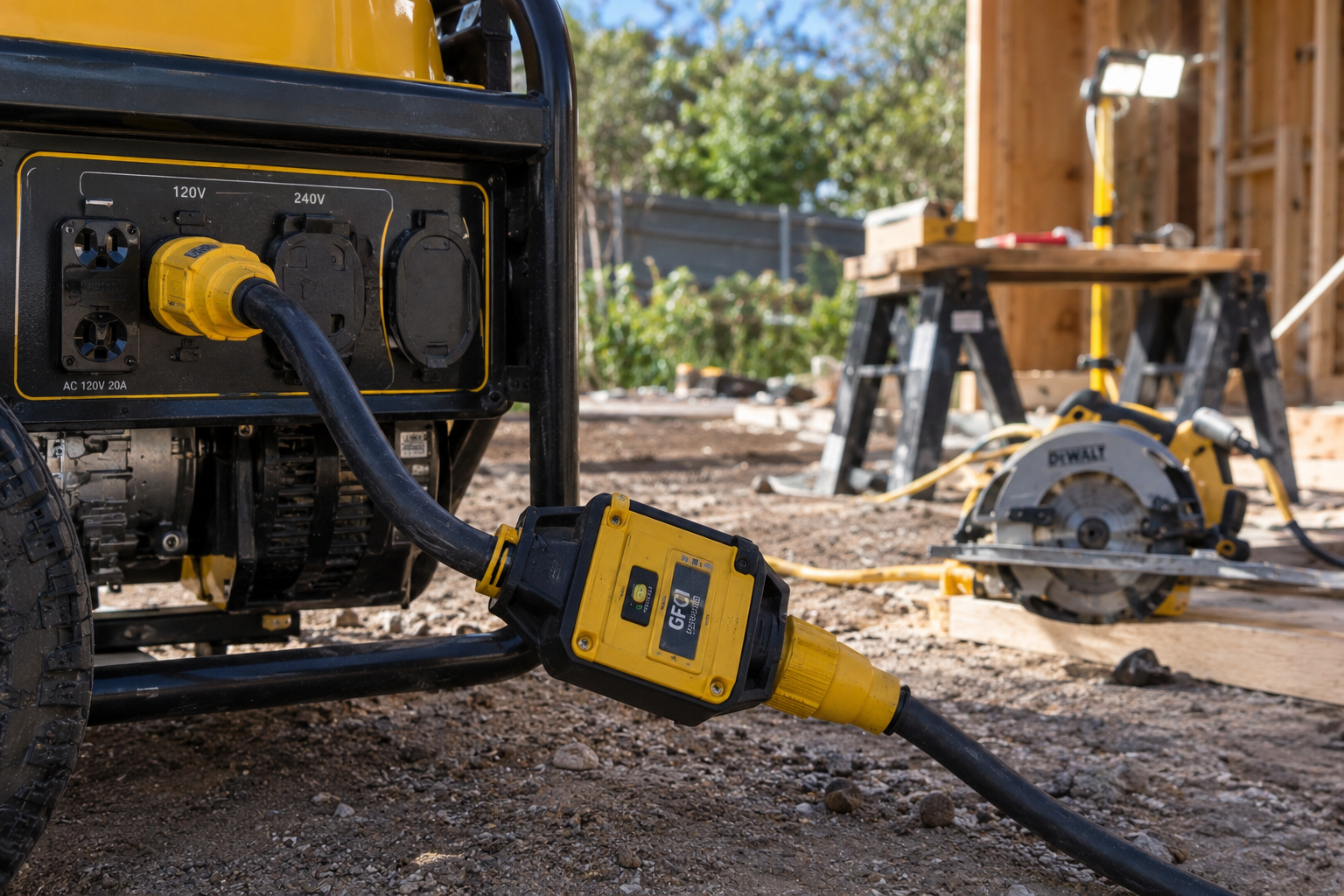
Remote sites, new builds without temporary power, and early-phase framing all depend on reliable portable generation. An undersized unit stalls tools. An oversized unit wastes fuel and money. Wet island conditions and proximity to residential or resort areas add safety and noise considerations that mainland catalogs rarely address.
We stock generators (including Honda and other professional lines), heavy-duty extension cords, jobsite lighting, and related accessories at both our Honolulu and Kahului locations. This guide covers practical sizing, fuel choices, inverter versus conventional designs, and the grounding and GFCI practices that matter on Oahu and Maui jobsites.
How to Size a Generator for Real Tool Loads
Generator capacity is expressed in running watts (continuous output) and starting or surge watts (brief capacity to start motors). The correct method is:
- List every tool and light that will run at the same time.
- Add their running watts.
- Add only the single largest starting surge.
- Apply a modest buffer (often 20–25 percent) for voltage drop, long cords, and future tools.
Do not add every starting wattage together. Motors almost never start in the exact same instant.
Typical running and starting ranges for common jobsite tools (always verify the nameplate on your specific models):
| Tool / Equipment | Typical Running Watts | Typical Starting / Surge Watts |
|---|---|---|
| 7-1/4″ circular saw (13–15 A) | 1,400 – 1,800 | 2,400 – 5,400 |
| Miter or table saw | 1,500 – 1,800 | 2,500 – 3,600 |
| Air compressor (portable) | 1,200 – 2,200 | 3,600 – 6,600+ |
| Angle grinder | 700 – 1,400 | 1,400 – 2,800 |
| Reciprocating saw | 960 – 1,200 | 1,900 – 2,400 |
| LED jobsite lights (per unit) | 50 – 250 | Same as running |
| Battery chargers (per bay) | 100 – 350 | Minimal |
A framing crew running one circular saw, one portable compressor, LED lighting, and a couple of chargers can easily reach 4,000–6,000 running watts plus a large compressor surge. Size for the actual simultaneous load, not the sum of every tool in the truck.
Inverter vs Conventional Generators
Conventional generators deliver power through a standard alternator. They are often less expensive per watt and handle motor loads well. Many are louder and produce less clean power.
Inverter generators convert power electronically. They typically run quieter, use less fuel at partial loads, and produce cleaner electricity that is safer for sensitive electronics and battery chargers. For crews working near residential neighborhoods or resorts, the lower noise of many inverter models is a practical advantage.
Both designs appear in contractor inventories. Match the technology to the work: heavy motor starting often favors conventional or larger dual-fuel units; mixed tool-plus-electronics loads and noise-sensitive sites often favor inverter designs.
Fuel Type and Runtime Considerations
Gasoline remains the most common fuel for portable jobsite generators. Propane (or dual-fuel) units offer cleaner storage and longer shelf life for fuel, which can matter on remote sites or when the generator sits for periods between mobilizations.
Runtime depends on load and tank size. A unit running at 50 percent load lasts longer than the same unit pushed near its continuous rating. Plan fuel logistics for the full shift, especially on sites with limited access.
Noise, Location, and Neighbor Considerations
Hawaii jobsites often sit close to occupied homes, resorts, or commercial spaces. Many municipalities and project specifications limit operating hours or maximum noise levels. Quieter inverter models and proper placement (downwind, behind barriers when possible) reduce complaints and keep the schedule intact.
Never run a generator indoors or in enclosed spaces. Carbon monoxide is colorless and odorless. Place the unit outdoors with adequate clearance and direct exhaust away from work areas and buildings.
Grounding, GFCI, and Wet-Condition Safety
Construction sites are wet. Rain, irrigation, concrete curing, and coastal humidity create ground-fault risks. OSHA requires GFCI protection for most 120-volt, 15- and 20-amp temporary receptacles used by employees on construction sites (29 CFR 1926.404). An assured equipment grounding conductor program is the formal alternative, but most crews find GFCI protection simpler.
Key practical points:
- Many portable generators under 5 kW have specific exemptions under certain conditions, but larger units and any setup feeding extension cords or spider boxes typically require GFCI protection.
- Use GFCI-protected receptacles, portable GFCI devices, or spider boxes with built-in protection.
- Inspect cords daily for damage. Keep connections out of standing water.
- Follow the generator manufacturer’s grounding instructions. Bonding and grounding requirements depend on whether the unit is treated as a separately derived system.
Wet island conditions make these practices non-negotiable. Damaged cords and missing GFCI protection are common sources of incidents.
We stock heavy-duty extension cords and jobsite lighting that integrate with generator setups. Confirm the cord gauge matches the load and distance to limit voltage drop.
What We Carry and How Local Inventory Helps
Our inventory includes generators from Honda and other professional manufacturers, along with jobsite lights, heavy-duty extension cords, and related accessories. Selection and quantities can differ between stores, so call ahead for specific models or larger units.
Relevant products and support:
- Portable generators suitable for contractor use (Honda and other lines we stock)
- Jobsite lighting (LED and related portable units)
- Heavy-duty extension cords sized for tool loads
- Compatible accessories and special-order capability for larger or specialized units
- Staff guidance on matching generator capacity to the tools you actually run
When a generator fails mid-project or a crew adds tools, waiting for mainland freight costs schedule time. We keep inventory on the ground in Honolulu and Kahului so most common needs can be addressed the same day.
Why Local Support Beats Catalog Ordering
Big-box and pure online sources can list impressive wattage numbers, but they rarely stock the exact unit, the right cord gauge, and matching lights in Hawaii at the same time. We focus on the combinations contractors actually use on island sites and can help verify that the generator’s running and surge ratings match the simultaneous tool load.
We also service major brands and offer the unconditional one-year guarantee on qualifying DEWALT, Milwaukee, and Metabo HPT power tools. The same local repair and support approach applies across the jobsite equipment we carry.
Practical Sizing and Safety Checklist
- List simultaneous tools and lights; use nameplate watts where possible.
- Add running watts, then add only the largest single starting surge.
- Apply a buffer for cords and future loads.
- Choose inverter or conventional based on noise sensitivity and load type.
- Confirm fuel logistics and runtime at expected load.
- Plan GFCI protection and proper cord management from day one.
- Place the generator outdoors with a clear exhaust path and adequate clearance.
Frequently Asked Questions
How do I calculate the generator size I need?
Add the running watts of everything that will operate at the same time, then add the single largest starting surge. Apply a 20–25 percent buffer. Always check the actual nameplates on your tools.
Can one generator run a circular saw and an air compressor together?
Yes, if the generator’s running and surge ratings cover the combined running load plus the compressor’s starting surge. Many portable compressors have high starting demands; size accordingly or stagger starts.
Do I need GFCI protection with a portable generator?
In most construction situations, yes. OSHA requires GFCI protection for temporary 120-volt receptacles used by employees. Small generators under certain conditions have limited exceptions, but extension cords and wet conditions usually make GFCI protection the practical requirement.
Are inverter generators better for jobsites near homes?
They are often quieter and produce cleaner power. Noise limits and neighbor proximity make the lower sound levels of many inverter models useful on residential and resort-adjacent work.
What if the generator I need is not in stock?
Call either store. We can check current inventory, recommend alternatives that meet the same wattage targets, or arrange a special order. Honolulu: (808) 841-0902. Maui: (808) 242-7878.
Do you carry extension cords and lights as well?
Yes. We stock heavy-duty extension cords and jobsite lighting that pair with generator setups. Match cord gauge and length to the load to avoid excessive voltage drop.
Get the Right Power on the Ground
Bring a list of the tools and lights you plan to run simultaneously, or describe the crew size and typical equipment. We will help match available generators to the real load and confirm compatible cords and lighting.
Join the e-Power Club for alerts on generator and jobsite equipment promotions. Stop in, call, or ask about a commercial account. We keep the power local so your remote and early-phase work stays on schedule.
Pricing and specific model availability vary by location and change over time. Confirm current stock, specifications, and any applicable pricing directly with the store. Always follow the generator manufacturer’s operating, grounding, and safety instructions. Comply with applicable OSHA and local requirements for temporary power.
