
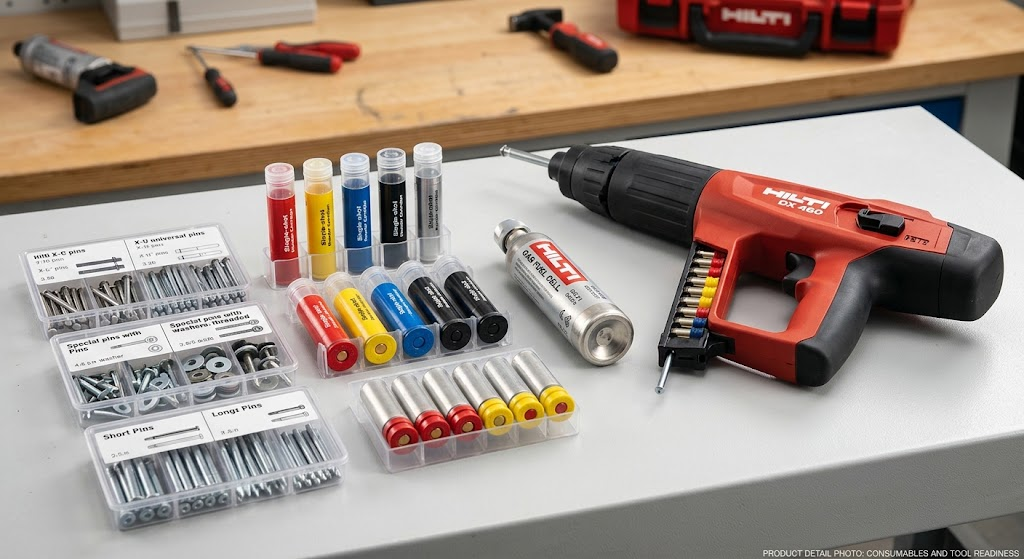
Traditional nails and screws reach their limit when the base material is concrete, masonry, or structural steel. Powder-actuated tools drive pins directly into those substrates. Gas-powered nailers handle high-volume framing and attachment work without a compressor. Both systems appear regularly on Hawaii structural, concrete, and remodel projects.
We stock specialty fastening tools, including powder-actuated options, along with related fasteners and anchors. This guide covers when each system makes sense, load and pin selection, common island applications, and the safety practices that keep crews productive and compliant.
When Powder-Actuated Tools Are the Right Choice
Powder-actuated tools use a controlled powder load to drive a hardened pin into concrete, masonry, or steel. They excel at attaching wood, track, sill plates, furring, electrical boxes, and other components to hard substrates without pre-drilling in many cases.
Common applications on Oahu and Maui jobsites include:
- Attaching wood or metal track to concrete or CMU
- Fastening to structural steel decks and beams
- Securing sill plates and ledgers where code allows
- Remodel work involving existing concrete or masonry walls
- Temporary or permanent attachments during formwork and fit-out
The system is not suitable for every material. Very hard, brittle, or soft substrates can cause ricochet, pass-through, or poor holding power. Always verify the base material and follow manufacturer guidelines.
Gas-Powered Nailers for Framing and Attachment
Gas-powered (fuel-cell) nailers operate without an air hose or compressor. A fuel cell and battery ignite a small charge that drives the nail. They are common for interior and exterior framing, sheathing, and certain specialty attachments where mobility matters more than continuous high-volume pneumatic output.
These tools suit remodel crews working in finished spaces, multi-story work where hoses become cumbersome, and sites where compressor logistics are limited. They do not replace powder-actuated tools for direct fastening into concrete or steel.
Safety, Training, and Certification
Powder-actuated tools are treated with the same seriousness as firearms under OSHA and manufacturer rules. Only trained and certified operators may use them. Certification is tool- and manufacturer-specific in most cases. Operators must carry proof of training.
Key safety requirements include:
- Eye protection, hearing protection, and hard hats as conditions demand
- Warning signs posted in the work area
- Tool held perpendicular to the surface
- Never pointing the tool at anyone, loaded or unloaded
- Proper misfire procedure (typically hold the tool against the work for at least 30 seconds)
- No fastening into unsuitable materials (cast iron, glazed tile, surface-hardened steel, glass block, and similar)
Edge distance rules are strict. In concrete and masonry, stay at least 3 inches from unsupported edges in most standard applications. In steel, maintain at least ½ inch from edges unless the manufacturer specifies otherwise. Violating these distances risks spalling, ricochet, or loss of holding power.
We emphasize that operators must complete manufacturer training and follow the specific tool manual. Our staff can discuss available tools and point crews toward proper training resources, but certification itself comes from the manufacturer or authorized trainer.
Load and Fastener Selection
Powder loads are color-coded by power level. Always start with the lowest recommended load for the tool, fastener, and base material, then increase only as needed to achieve proper embedment. Over-powered loads increase the risk of over-driving, spalling, or fastener failure.
Pin selection depends on the base material thickness, the material being fastened, and the required embedment. Concrete typically needs greater embedment than steel. Manufacturer charts correlate pin length, shank diameter, and load level to holding values.
Gas nailers use collated nails matched to the tool and the framing application. Follow the tool manufacturer’s nail specifications for length, diameter, and collation type.
| System | Primary Base Materials | Typical Use Cases | Key Consumable |
|---|---|---|---|
| Powder-actuated | Concrete, CMU, structural steel | Track, plates, furring, attachments to hard substrates | Pins + color-coded powder loads |
| Gas-powered nailer | Wood framing, sheathing | Interior/exterior framing, remodel mobility | Collated nails + fuel cells |
Hawaii-Specific Considerations
Coastal salt air and humidity affect both the tools and the fasteners. Store powder loads and fuel cells in dry, secure conditions. Pins and nails used in exterior or exposed applications should be corrosion-resistant where the specification requires it. Our fasteners and anchors inventory includes options treated for coastal exposure.
Volcanic aggregate in local concrete can vary in hardness. Test fastenings in representative areas when the mix design or aggregate content is unknown. Spall guards and proper edge distance become even more important in denser or more variable concrete.
What We Stock and How We Support Specialty Fastening
Our specialty trade tools category includes powder-actuated tools. We also carry a broad selection of fasteners and anchors for concrete, masonry, and structural applications. Gas-powered and other cordless fastening options appear in the broader nailer selection.
Relevant products and support:
- Powder-actuated tools and compatible pins/loads where stocked
- Fasteners and anchors suited to concrete, CMU, and steel
- Related fastening tools for framing and remodel work
- Staff guidance on matching tools and consumables to the application
- Commercial account options for volume pin, load, and fastener purchases
- Local inventory that reduces wait times for specialty items
Selection varies by location. Call ahead when you need a specific tool model, pin type, or load level.
Local Inventory Versus Catalog Lead Times
Specialty fastening tools and consumables are easy to overlook until the job needs them. Waiting for mainland shipments of pins, loads, or a replacement tool stops production. We keep working inventory of specialty fastening equipment and related anchors so structural and remodel crews can stay on schedule.
We also support the broader tool package with repair services and the unconditional one-year guarantee on qualifying DEWALT, Milwaukee, and Metabo HPT power tools. The same local approach applies to the specialty fastening category.
Practical Selection and Safety Checklist
- Confirm the base material is suitable for powder-actuated or gas fastening.
- Verify operator training and certification for the specific powder-actuated tool.
- Select the correct pin length and start with the lowest appropriate powder load.
- Maintain required edge distances (typically 3 inches in concrete, ½ inch in steel).
- Use proper PPE and post warning signs.
- Follow manufacturer misfire and storage procedures.
- Match gas nailer nails and fuel cells to the tool and application.
Frequently Asked Questions
Who is allowed to operate a powder-actuated tool?
Only trained and certified operators. Certification is required under OSHA and is specific to the tool manufacturer in most cases. Operators must carry proof of training.
How do I choose the right powder load?
Start with the lowest power level recommended for the tool, fastener, and base material. Increase one level at a time only if proper embedment is not achieved.
Can powder-actuated tools be used on all concrete?
No. Avoid very hard, brittle, or unsuitable materials. Maintain edge distances and test in representative areas when aggregate hardness varies.
When is a gas nailer better than a pneumatic nailer?
Gas nailers excel when mobility is critical, hoses are impractical, or the work is in finished or multi-story spaces. They are not a substitute for powder-actuated tools on concrete or steel.
Do you carry both the tools and the pins/loads?
We stock specialty fastening tools and related fasteners and anchors. Confirm current availability of specific pins, loads, and tool models when you call or visit.
Are there corrosion concerns with these fasteners in Hawaii?
Yes. Choose corrosion-resistant pins and nails for exterior or exposed applications, and store loads and fuel cells in dry conditions.
Match the Fastening System to the Substrate
Powder-actuated tools solve the problem of attaching to concrete and steel when conventional fasteners cannot. Gas nailers keep framing crews mobile. Both require the right consumables, correct technique, and strict attention to safety.
Bring the base materials and attachment details for your current work. We will help you review available specialty tools and fasteners so the system matches the substrate and the schedule. Join the e-Power Club for updates on fastening tools and consumables that support structural and remodel production.
The correct tool and pin combination turns difficult substrates into reliable attachment points.
