
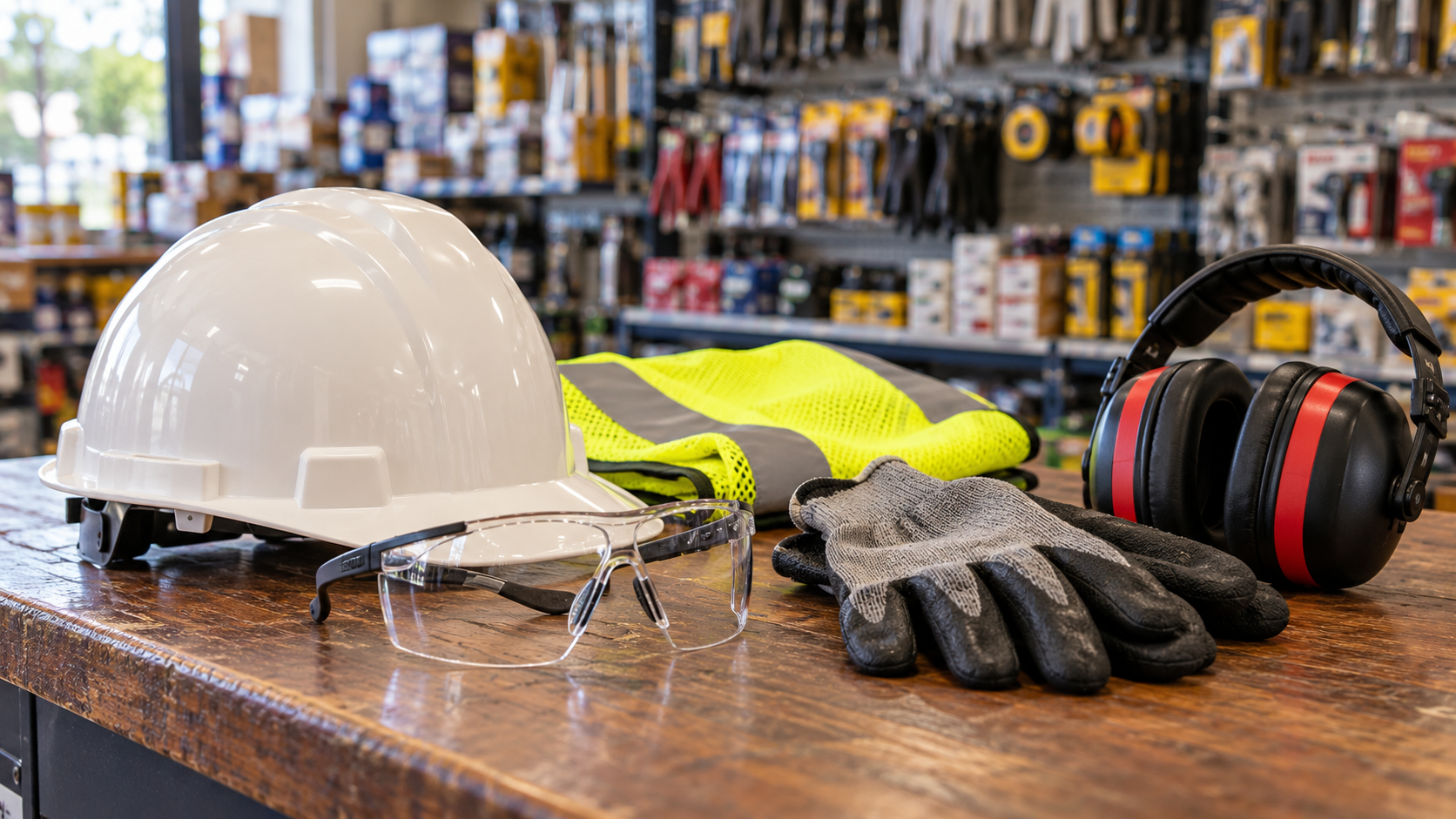
Buying safety equipment for a Hawaiʻi jobsite starts with the work your crew actually performs. A roofing crew needs different protection from a finish carpenter working indoors. Coastal exposure and hot conditions also deserve attention when you plan equipment care and daily work.
At Slim’s Power Tools, we help customers compare professional equipment at our Honolulu and Kahului stores. Use this guide to plan your PPE purchase around the task. You’ll also find equipment-care guidance and relevant products from our stores.
Start With the Jobsite Hazard
Before shopping, identify the task and the exposure. Write down the material being worked and the equipment involved. Include the employer’s required ratings or approved product specifications.
OSHA’s personal protective equipment guidance explains that PPE belongs within a broader safety program. Equipment must fit the worker, and workers need training on its limitations and correct use. Buying a recognized brand alone does not establish that an item suits the job.
Use this table to organize your questions. It is a buying aid, not a complete PPE assessment.
| Work situation | Equipment to discuss | Question before purchase |
|---|---|---|
| Cutting or drilling | Eye protection | What impact protection and coverage does this task require? |
| Repeated noisy tool use | Hearing protection | What protection does the assessed noise exposure require? |
| Handling rough materials | Work gloves | Which glove rating fits the hazard without sacrificing control? |
| Roofing or elevated work | Fall-protection system | Are the components approved for the planned application? |
| Dust-producing work | Dust controls and respiratory protection | What does the exposure assessment require? |
| Extended kneeling | Knee protection | Does the design suit the surface and working position? |
Bring this information when you contact us. A specific requirement gives us a useful starting point for checking available products.
Plan for Heat Without Reducing Protection
Some protective clothing and respirators add to the body’s heat burden. A comfortable-looking substitute is not automatically an acceptable replacement for required protection.
Build the work plan around ways to reduce heat exposure. Provide drinking water and suitable rest areas. Adjust workloads when conditions require it, and allow workers to acclimatize. OSHA advises increasing rest as heat stress rises rather than applying one fixed break schedule to every outdoor task.
Cooling accessories can support that plan, but they cannot make unsafe working conditions acceptable. We list cooling products from Ergodyne and Milwaukee among our safety supplies. Ask about available options after confirming that an accessory will work with required head protection.
For headgear, start with the specified protection class and type. Treat ventilation as a secondary choice within those requirements. Do not modify a helmet to make it cooler.
Match Respiratory Protection to the Exposure
Dust and gas are different hazards. N95 filtering facepiece respirators protect against particles; they do not protect against gases or vapors. That distinction matters if a project involves chemical exposure or concerns about volcanic emissions.
Our safety-equipment collection includes disposable N95 respirators from 3M and Milwaukee. Their inclusion does not mean an N95 is suitable for every cutting task or dusty work area.
Under OSHA’s respiratory-protection requirements, required workplace respirator use involves a respiratory-protection program. Medical evaluation and fit testing for tight-fitting respirators are part of that process. A user seal check does not replace fit testing.
Ask your employer’s safety lead to identify the required respirator before purchasing. Do not choose a gas cartridge from an online description alone. Selection depends on the contaminant and exposure conditions.
Consider dust controls at the tool as well. Our jobsite equipment and specialty tools include dust shrouds and extraction equipment. Confirm compatibility with your tool and the required dust-control method.
Inspect Equipment Before Relying on It
A product’s age does not tell you everything about its condition. Follow its inspection instructions and removal criteria, particularly after damage or unusual exposure.
For fall protection, examine the equipment before use. Safewaze’s inspection guidance identifies issues such as damaged stitching and missing or unreadable labels. Its inspection materials also address corrosion on hardware.
Do not treat a harness as a standalone purchase. Anchorage and connecting equipment must suit the application. Fall clearance and rescue arrangements require planning by the people responsible for the system.
Give storage the same attention as selection. Follow the manufacturer’s cleaning method rather than applying a universal freshwater-rinse schedule. Store harnesses away from direct sunlight and corrosive substances, using the conditions specified in their instructions.
A useful crew practice is to separate equipment awaiting inspection from equipment cleared for use. Keep the model information with the inspection record so replacements can be checked against the original specification.
Safety Products and Tools at Slim’s
Our safety equipment and PPE collection includes the following product lines. Store availability varies, so confirm the required size and model before visiting.
- Safewaze fall protection: Harnesses and connecting equipment for approved applications.
- Head and eye protection: Options from LIFT Safety and Milwaukee, with additional brands represented.
- PIP work gloves: MaxiFlex and MaxiCut products.
- Respiratory protection: Disposable N95 options from 3M and Milwaukee.
- Related supplies: Hearing protection, knee pads, first-aid kits, and cooling accessories.
- Tool service: Repair support and sharpening for eligible items; contact the store about service requirements.
Safety planning also connects to the tool itself. Our professional power tools include rotary hammers, saws, and grinders. Ask about compatible accessories rather than choosing a blade or attachment by appearance.
For dust-producing applications, provide the tool model and the planned material. Our specialty collection lists Dust Buddie and Dustie shrouds, together with vacuum systems and related components. A vacuum purchase alone does not establish that a setup meets your project’s exposure-control requirements.
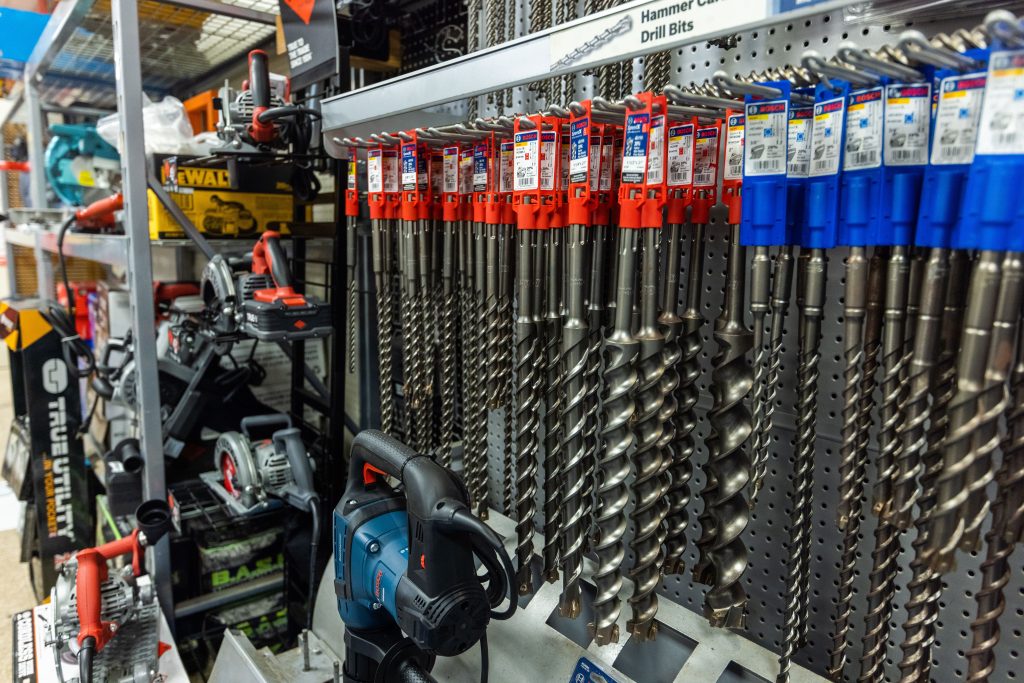
Photo source: Slim’s Power Tools.
Why Buy From Our Local Team?
We began in Honolulu in 1972 and expanded to Maui in 1993. Our family-owned business combines professional tools with product guidance and support after purchase.
The practical reason to visit a specialist supplier is the conversation. Bring a model number or an approved equipment list. We can help compare available options and discuss compatible accessories. That gives you a way to resolve product questions before placing an order.
We also provide repair support and sharpening for eligible tools or cutting accessories. These services have their own eligibility requirements; they are not a promise to repair damaged PPE.
Our unconditional one-year guarantee applies to qualifying DEWALT, Milwaukee, and Metabo HPT power tools. Ask us to confirm coverage for the specific purchase.
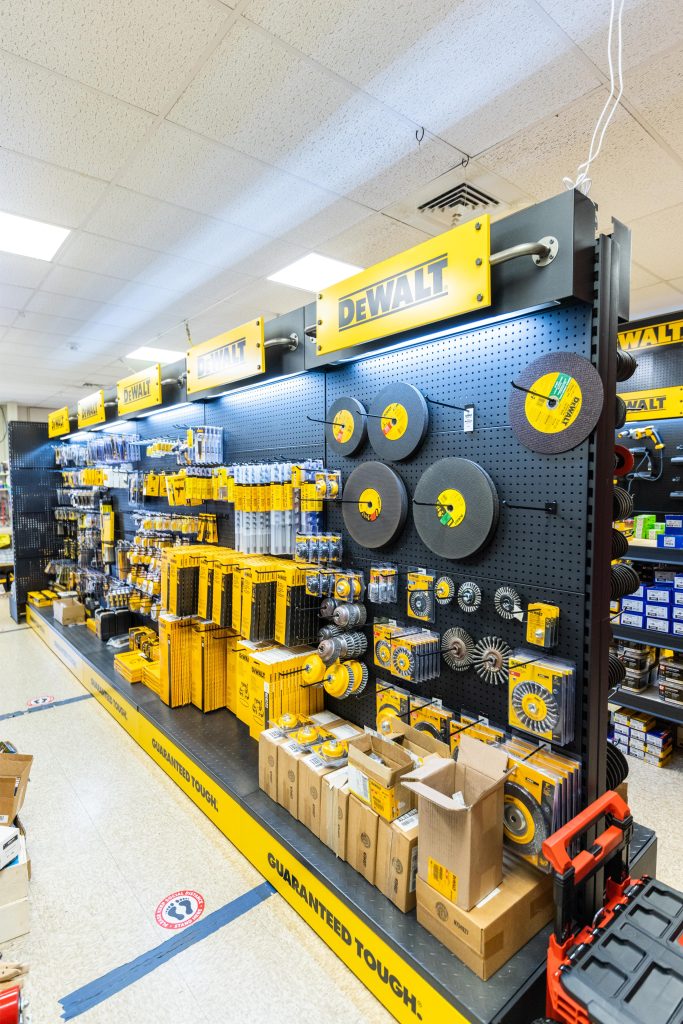
Photo source: Slim’s Power Tools. Accessory display shown for store context.
Prepare Your Equipment List
Before contacting us, collect the product specifications your project requires. Include quantities and individual sizes so the discussion goes beyond a general request for safety gear.
If you are replacing an existing item, send its model number and explain why it needs replacement. Avoid substituting a similar-looking component without checking compatibility.
Our stores are in Honolulu and Kahului. Customers arranging purchases from another island should contact us to discuss available purchasing options. Confirm any fulfillment arrangements and timing before building them into a project schedule.
Keep a simple record of the item number and purchase date, with a link or copy of its instructions. Add a field for the assigned worker where equipment is individually fitted. This gives the person placing a later order a reference instead of relying on a photograph or packaging color. When a specified item is unavailable, ask about alternatives and take the proposed model back to the person responsible for approving equipment. Avoid changing an approved order solely to match what is on the shelf.
For crew orders, decide which items need individual fitting and which supplies can be replenished together. Keep approved substitutions on the order only after your project’s safety lead has accepted them.
Frequently Asked Questions
Can I get PPE and power tools at Slim’s?
Yes. We carry safety products alongside professional tools and accessories. Give us your equipment list so we can check the relevant items at your preferred store.
Are N95 respirators suitable for vog?
An N95 does not protect against sulfur dioxide gas. It should not be treated as complete protection against vog. Workplace respiratory protection requires an assessment of the actual exposure.
Does the one-year guarantee cover safety equipment?
Our published guarantee identifies qualifying DEWALT, Milwaukee, and Metabo HPT power tools. Do not assume it covers PPE. Ask us about the terms for the specific product.
Can Slim’s approve my fall-protection setup?
We can discuss available products. Your project’s qualified safety personnel must address system selection and approval using the relevant manufacturer instructions.
Should I replace all PPE on the same schedule?
No. Follow the instructions and removal criteria for each item. Damage or failed inspection can require removal before an age-based replacement date.
Find Equipment That Fits Your Next Job
Bring your approved PPE requirements to Slim’s Power Tools before your next equipment purchase. We’ll help you compare available products and check the accessories your tools need.
Contact our Honolulu store or Kahului store with your list. Confirm availability now so you can plan the purchase around your work.
