
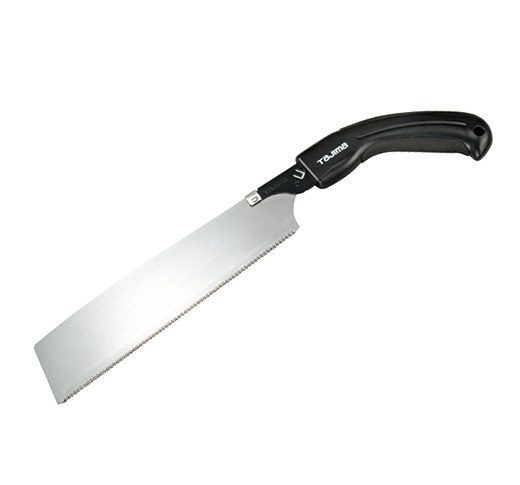
A Japanese pull saw belongs on your bench when its blade suits the cut you need. For furniture joinery or trim work, the useful questions are specific: Is the saw suitable for your material? Will it fit the cutting space? Can you get the correct replacement blade?
At Slim’s Power Tools, we help you compare tools around those questions. Our Japanese hand tools selection includes Tajima and Takagi/Shark products. For Hawai‘i woodworking, choosing the blade is only part of the purchase. Keeping steel dry between jobs matters too.
This guide covers tool selection and care. Use it to plan your purchase and prepare for a practice cut before starting the project.
What the Pull Stroke Changes
Japanese pull saws cut as you draw the blade toward you. The cutting stroke puts the blade under tension, which allows a thin blade design. Treat that blade as a cutting tool, not a lever. Twisting it in the kerf or pushing through a bind can damage it.
Kerf is the width of the cut. For a concrete example, Tajima’s Japan Pull 265 specifications list a 0.6 mm blade thickness and a 0.9 mm kerf. The model also has a quick-release blade retainer. These measurements describe that saw; they are not universal specifications for Japanese tools.
A narrow cut still needs an accurate layout. Allow for the kerf on the waste side of your line, then check the result on scrap before cutting a finished component. A thin blade does not correct a misplaced line.
Match the Blade to Your Woodworking Task
Start with the direction of the cut and the finished surface you need. A saw chosen for trimming a dowel should not be assumed suitable for ripping a thick board. Check the manufacturer’s application guidance instead of relying on the tool’s appearance.
| Your task | What to confirm | Why it matters |
|---|---|---|
| Crosscutting stock | Blade suitability for crosscuts and your material | The cut crosses the grain rather than following it |
| Ripping a board | Tooth pattern intended for rip cuts | A general-purpose description does not establish rip-cut performance |
| Fine joinery | Blade dimensions and cutting clearance | The saw must fit the joint without striking nearby surfaces |
| Trimming dowels flush | Dedicated flush-cutting suitability | Unsuitable teeth can mark the surrounding surface |
| Replacing a blade | Exact part number and handle compatibility | Similar-looking blades are not necessarily interchangeable |
Working With Koa or Monkeypod
Tell us which wood you are cutting and whether the task is rough sizing or a visible joint. Bring the board thickness and a photograph of the work if that helps explain the cut.
Use scrap from the same board for your first trial. Look at the cut surface and check whether the saw tracks are where you expect. Do not treat “Japanese” as a promise of tear-out-free results. Blade suitability and technique still determine whether the tool works for your project.
Choosing a Handle and Blade Length
Compare how the handle feels in your working position. A comfortable grip at a store counter can feel different when cutting close to a bench or inside an assembly. Consider the available stroke length before choosing a longer blade.
Tajima offers both curved-handle and straight-handle versions in its Japan Pull range. Ask about current options rather than assuming every handle style is available at both stores.
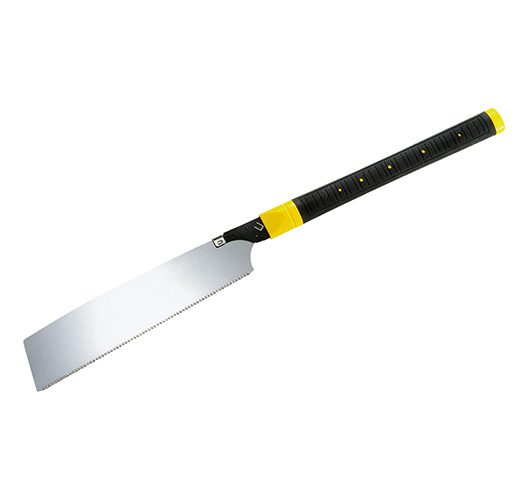
Tajima Japan Pull 265R with a straight handle. Manufacturer product photo. Confirm local stock before visiting.
Start With a Saw You Will Use Regularly
If you are adding Japanese hand tools to an existing kit, begin with one frequent task. Replacing a saw that struggles with detailed cuts is a clearer purchase decision than buying a full set without a project in mind.
Traditional Japanese woodworking includes chisels and wooden-bodied planes, but those tools require their own selection and setup decisions. If you want to explore them, contact us about availability. Our Japanese hand-tool collection focuses on the listed saws and related trade tools.
Make Your First Practice Cut
Secure the workpiece so it cannot shift, and keep your free hand clear of the cutting path. Begin with light, controlled pulls to establish the cut. Follow the saw manufacturer’s use instructions.
If the blade binds, stop. Check alignment and whether the workpiece is closing on the blade. Forcing the next stroke can turn a setup problem into a damaged saw. Practice until you can place the cut consistently before using valuable stock.
Tools and Services You Can Explore at Slim’s
Our professional tools and contractor supplies cover more than the final hand cut. You can build a woodworking setup around your actual tasks, with supporting equipment from our broader departments.
- Japanese saws and blades: Compare listed Tajima and Takagi/Shark options for detailed cutting or trim work. Check replacement compatibility before buying.
- Clamps and measuring tools: Explore our professional hand tools for workholding and layout.
- Woodworking power tools: Our power tool department includes saws and routers, with sanders among the finishing options.
- Repair and sharpening support: Contact your nearest store about service eligibility for your particular tool or cutting accessory. Confirm the service before bringing it in.
We also offer an unconditional one-year guarantee on qualifying DEWALT, Milwaukee, and Metabo HPT power tools. Ask us to confirm coverage before purchase. This offer should not be assumed to cover Japanese hand tools.
Protect Steel Tools in Hawai‘i’s Humidity
The Canadian Conservation Institute’s guidance on iron and steel care explains that humid air accelerates rusting. Chloride-containing salts, including those associated with sea spray, can increase corrosion. A Japanese-branded tool still needs appropriate storage and maintenance.
| Care step | Practical action |
|---|---|
| After use | Remove residue and dry the tool before storage |
| Protective products | Use an oil or coating only as recommended for the tool |
| Storage checks | Inspect drawers and cases for dampness or condensation |
| Routine inspection | Check blades for corrosion before starting work |
Keep protective oil away from surfaces where it could affect an adhesive or wood finish. Follow the manufacturer’s instructions for coated blades rather than treating every steel surface the same way.
If you use desiccant, maintain it according to its instructions. A packet left indefinitely in a damp case is not a complete storage plan. Monitoring humidity can help you decide whether your workshop needs additional moisture control.
Before sharpening saw teeth, check whether the blade is intended for resharpening. Some models use hardened teeth and replaceable blades. Confirm the recommended maintenance method rather than assuming a general sharpening service suits every saw.
Why Buy Your Woodworking Tools Locally
Our family business began in Honolulu in 1972 and expanded to Maui in 1993. We serve professionals and DIY customers through stores in Honolulu and Kahului.
A big-box listing or online cart can show specifications. Shopping with us gives you a local team to discuss the application and check available products. You can also ask about replacement parts and service before committing to a purchase.
Bring the tool model or your project measurements. That makes the conversation useful from the start. We will help compare available options; contact the store ahead of time if your schedule depends on a specific item.
Frequently Asked Questions
Which Japanese hand tool should I buy first for woodworking?
Choose around your most frequent cut. A suitable pull saw is a practical starting point for hand cutting. Confirm its application before choosing a specialized model.
Does Slim’s carry Japanese woodworking saws?
Yes. We list Tajima and Takagi/Shark saws, with replacement blades represented in the collection. Call your nearest store for model availability.
Can a Japanese pull saw prevent tear-out on koa?
No tool guarantees that result. Check the blade’s suitability and practice on scrap from the same material before cutting your project.
Can I sharpen my Japanese saw blade?
Check the model’s maintenance instructions first. If the manufacturer specifies blade replacement, obtain the compatible part rather than attempting unsupported sharpening.
Does the one-year guarantee cover these hand tools?
Our advertised offer applies to qualifying power tools from the specified brands. Ask us about the terms for the individual hand tool you intend to buy.
Find the Right Tool for Your Next Cut
Visit us at 1626 Republican Street in Honolulu or 142 Kalepa Place in Kahului. Both stores list hours of 7:30 a.m. to 4:00 p.m. Monday through Friday, and 8:00 a.m. to noon Saturday.
Tell us what you are building and which cut needs attention. Contact your nearest Slim’s store to confirm availability, then choose the saw and supporting tools your project requires.
