
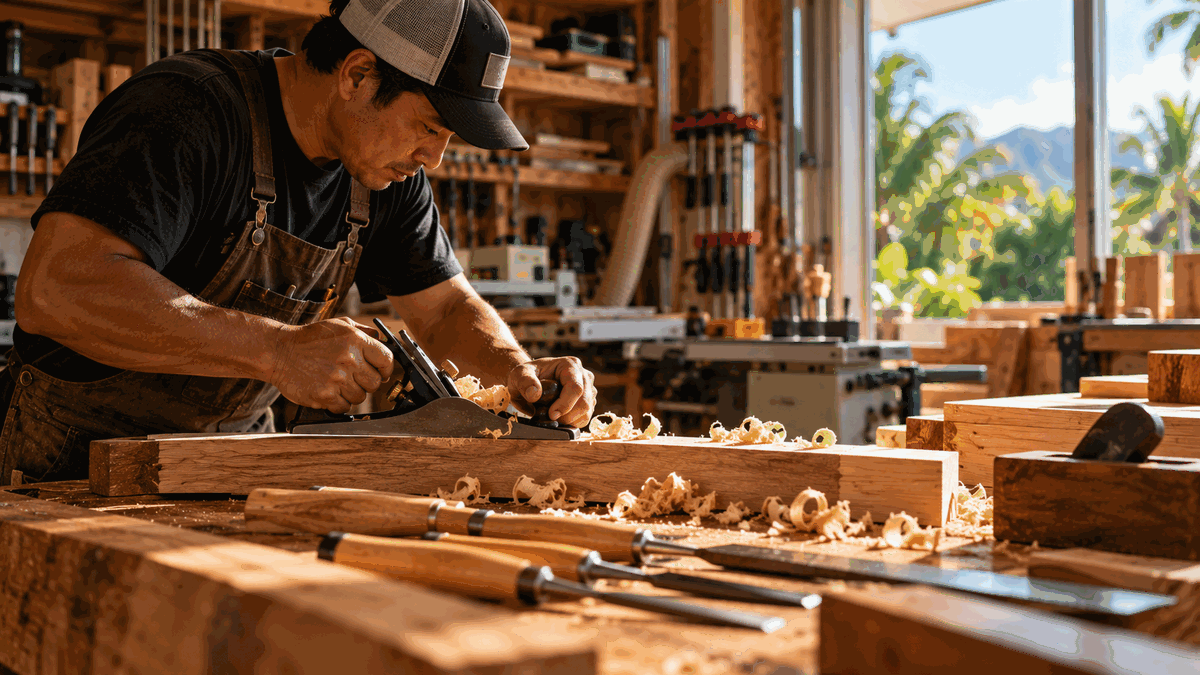
Building furniture, fitting cabinetry, or working with hardwoods in Hawaii comes with challenges that mainland woodworking guides don’t always address. Materials can be expensive to replace, moisture affects both lumber and equipment, and ordering a specialty machine from the mainland requires more planning than a typical online purchase.
Whether you’re setting up a small workshop or replacing equipment you use every day, choosing the right woodworking tools can make your work more accurate, efficient, and manageable.
At Slim’s Power Tools, we’ve served Hawaii’s contractors, tradespeople, and woodworkers since 1972. Our professional tool selection includes woodworking equipment, Japanese hand tools, cutting accessories, and workshop essentials.
In this guide, we’ll look at the tools worth considering, how to match equipment to Hawaii’s woods, and what to check before making a purchase.
Where to Buy Specialty Woodworking Tools in Hawaii
Woodworkers have several options when purchasing specialty equipment. The right source depends on the tool, how frequently you’ll use it, and whether you need help selecting compatible accessories.
| Buying option | Best suited for | What to consider |
|---|---|---|
| Local specialty tool distributor | Professional equipment, cutting tools, machinery, and product guidance | Model availability, service eligibility, special orders |
| General hardware retailer | Common hand tools, supplies, and everyday accessories | Selection of specialty woodworking equipment |
| Mainland online retailer | Specific models and hard-to-find accessories | Shipping costs, returns, freight restrictions |
| Overseas specialty supplier | Traditional or uncommon woodworking tools | Import charges, compatibility, shipping and warranty terms |
Buying locally can be especially useful for larger equipment or products that require compatible accessories.
For example, a replacement saw blade needs to match more than the diameter of your saw. Arbor size, blade speed rating, tooth geometry, and intended material all matter.
At Slim’s, we have locations in Honolulu and Kahului, Maui. Our team can help you explore equipment options, compare specifications, and inquire about special orders.
Before visiting, we recommend contacting your preferred store to confirm availability, particularly for specialty machinery.
Essential Woodworking Tools for a Well-Equipped Workshop
A productive woodworking shop doesn’t need every machine available. It needs equipment that supports the work being done.
Someone building cabinets may prioritize accurate sheet-good cutting and joinery. A furniture maker working with hardwood may need more flexibility for shaping, surfacing, and finishing.
Cutting and Stock Preparation Equipment
For many woodworking projects, the first step is preparing lumber or sheet materials to the correct dimensions.
Common equipment includes:
- Table saws: Useful for repeatable rip cuts and other operations when equipped and used with the appropriate guarding, support, and accessories.
- Miter saws: Designed for crosscuts, angled cuts, and trim preparation.
- Band saws: Useful for curved cuts, resawing, and irregular stock.
- Planers: Help bring suitable lumber to a consistent thickness.
- Jointers: Prepare flat reference faces and straight edges before further machining.
Not every workshop needs all five machines.
A small cabinet shop may rely heavily on a table saw and miter saw, while a furniture maker working with rough lumber may benefit more from a planer and jointer.
The most useful purchase is the one that addresses a regular bottleneck in your process.
Routers, Drills, and Joinery Equipment
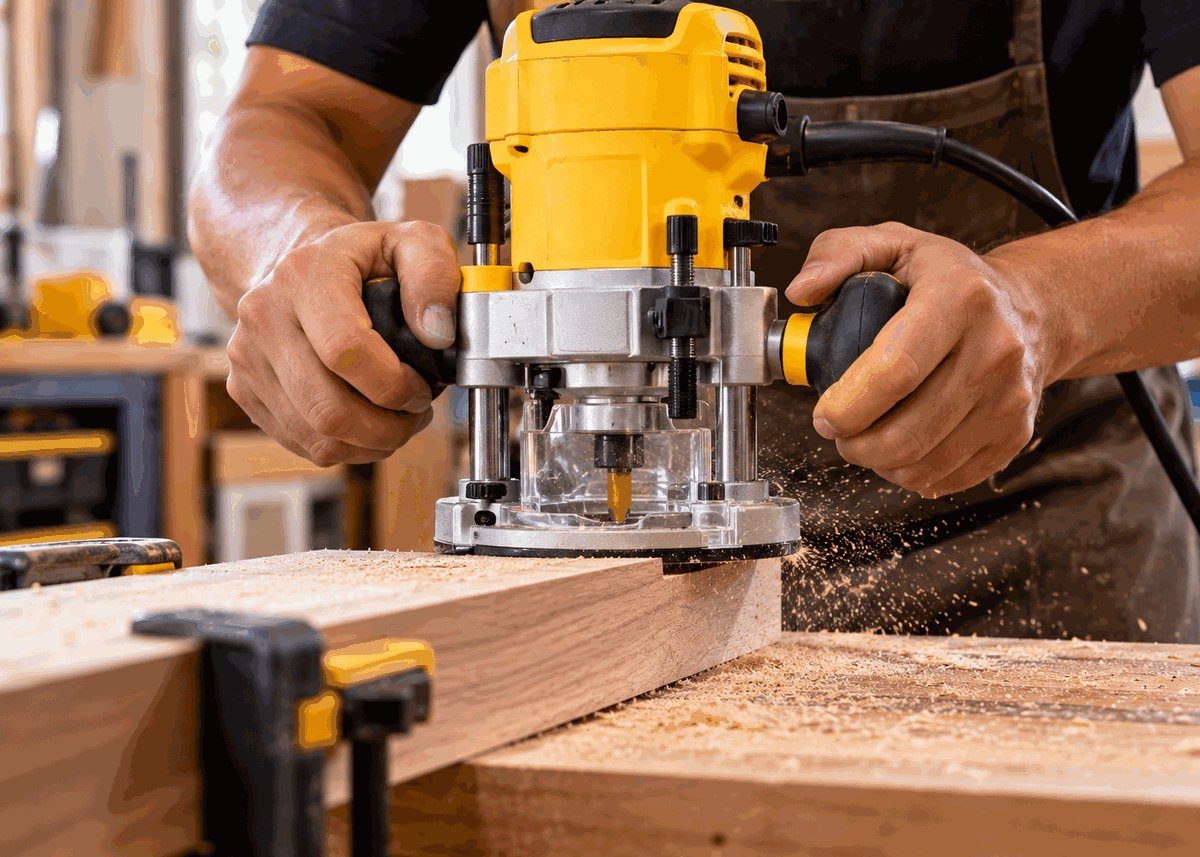
Once stock is prepared, woodworking becomes a matter of fitting components accurately.
Routers are useful for edge profiles, grooves, rabbets, and selected joinery operations. The appropriate router and bit depend on the material, cut depth, and working method.
Drills and drivers handle fastening, pilot holes, and hardware installation. For repetitive work, jigs and guides can improve consistency.
When comparing equipment, consider more than motor power.
Look at adjustment mechanisms, available accessories, compatibility, and how easily the tool can be controlled during the intended operation.
Hand Tools for Detail and Finishing Work
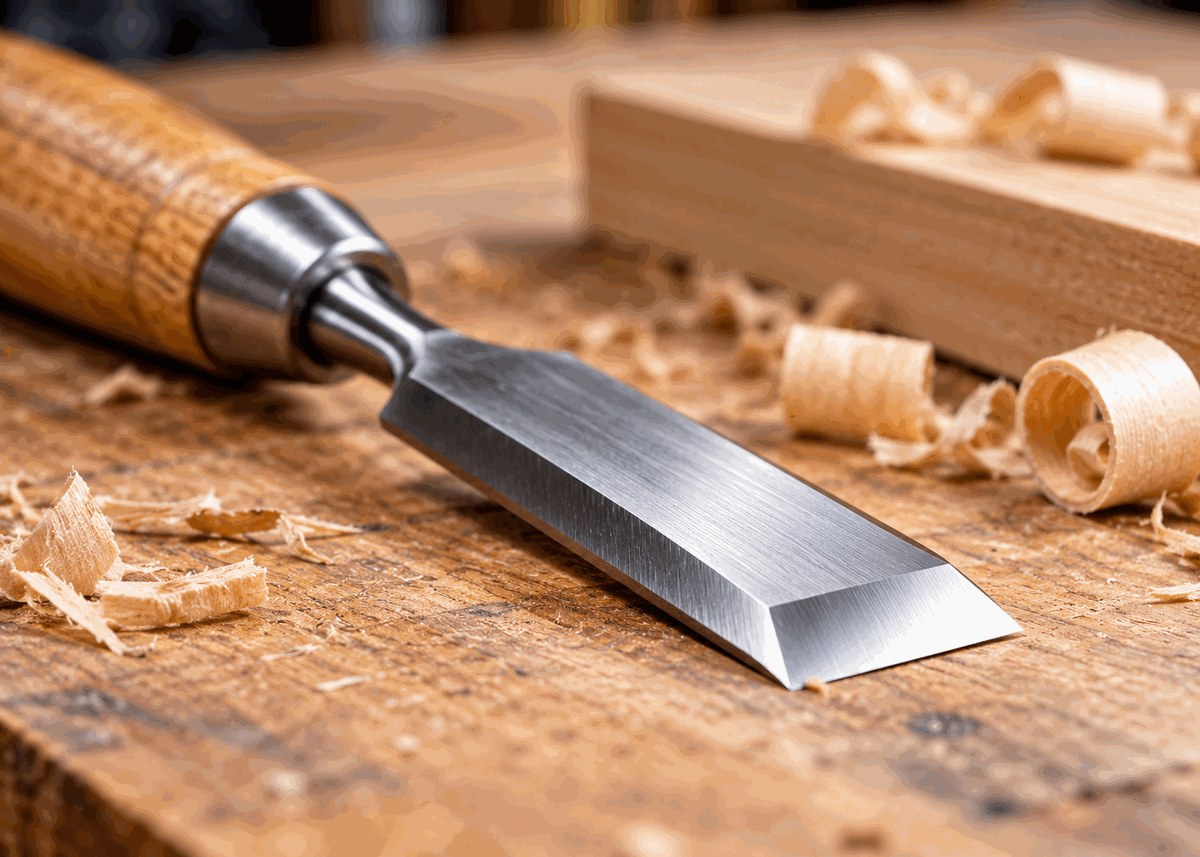
Power tools handle many repetitive operations efficiently, but hand tools remain valuable.
A sharp chisel can refine a joint. A hand saw can make a controlled cut where a powered saw would be awkward. A marking gauge helps establish consistent reference lines.
For many woodworkers, the strongest setup combines powered stock preparation with hand tools for fitting, adjustment, and finishing.
Choosing Tools for Koa and Other Hawaii Woods
Hawaii woodworkers work with a variety of materials, including koa, mango, monkeypod, milo, and other locally used hardwoods.
Each species has different working characteristics. Grain direction, density, moisture content, and figure can affect cutting performance.
Highly figured wood can be particularly challenging.
Curly or interlocked grain may tear out when cutting edges are dull or when the cutting approach is unsuitable.
Match the Tool to the Wood
| Woodworking situation | Useful equipment | Practical consideration |
|---|---|---|
| Cutting figured hardwood | Appropriate fine-cutting blade or saw | Tooth geometry, sharpness, feed technique |
| Preparing rough lumber | Jointer and thickness planer | Stock condition, grain direction, safe machine operation |
| Fitting cabinet components | Router, accurate saw, measuring tools | Repeatability and material support |
| Refining joinery | Chisels and fine hand saws | Edge condition and controlled cutting |
| Finishing curved surfaces | Suitable sanding equipment and hand tools | Surface shape and grain direction |
| Working with moisture-sensitive stock | Moisture meter and stable storage | Acclimation and intended indoor conditions |
For expensive or highly figured wood, test your cutting setup on an offcut before machining the final component.
A sharp blade is important, but it isn’t the only factor. Feed direction, machine setup, and material support also influence the result.
Why Wood Moisture Matters
Wood responds to changes in surrounding humidity by gaining or losing moisture.
If lumber is machined before it reaches an appropriate moisture condition for its intended environment, components may move after assembly.
This can affect cabinet doors, drawer fronts, furniture panels, and other close-fitting parts.
A moisture meter can help assess stock condition, but readings need to be interpreted according to the wood species, meter type, and intended use.
For furniture and cabinetry, allow suitable time for lumber to acclimate and account for seasonal movement in the design.
Japanese Hand Tools and Precision Cutting
Japanese hand tools deserve a place in the discussion, particularly for woodworkers who value controlled cuts and accurate layout.
However, it’s important to distinguish traditional Japanese woodworking tools from the products currently represented in our catalog.
Our Japanese hand tool collection features Tajima and Takagi/Shark, including pull saws, replacement blades, utility knives, and layout tools.
When a Japanese Pull Saw Makes Sense
Japanese pull saws cut on the pulling stroke. This places the blade under tension, allowing many designs to use relatively thin blades.
A narrow kerf can be helpful when fitting trim or cutting smaller woodworking components.
Some saws use replaceable blades, which makes replacement compatibility an important buying consideration.
Before purchasing, check the blade length, tooth pattern, material suitability, and availability of replacement blades.
A fine-toothed saw may suit detailed joinery, while a more aggressive tooth pattern may be appropriate for faster cuts.
What About Japanese Chisels and Hand Planes?
Traditional Japanese woodworking includes nomi chisels and kanna planes. Some are made using laminated steel construction and require specialized setup and sharpening.
These tools are worth researching if your work involves traditional joinery or hand-planed surfaces.
However, they are not part of Slim’s currently listed Japanese hand tool range. We don’t want customers to assume that traditional Japanese planes or chisels are available at our stores.
If you’re searching for a specific model, contact us with the manufacturer’s details to discuss whether special ordering is possible.
For everyday woodworking, our broader hand tool range also includes chisels, scrapers, files, clamps, and measuring tools.
Protecting Woodworking Equipment From Hawaii’s Humidity
Moisture is a practical concern for anyone maintaining a woodworking shop in Hawaii.
Coastal exposure, humidity, and poor storage conditions can encourage corrosion on exposed metal. Wood components can also change dimension as moisture levels fluctuate.
The good news is that consistent maintenance helps protect both hand tools and machinery.
A Simple Workshop Maintenance Routine
- Clean cutting tools after use. Remove sawdust, residue, and moisture before storage.
- Protect exposed steel. Use an appropriate corrosion-prevention product according to the manufacturer’s instructions.
- Keep equipment dry. Avoid storing tools where rainwater, condensation, or persistent moisture can accumulate.
- Inspect machine surfaces. Check cast-iron tables and exposed metal components for corrosion, using products suitable for woodworking machinery.
- Maintain cutting accessories. Replace damaged blades and keep serviceable cutting edges properly maintained.
For hand tools, protective storage can be especially helpful when equipment isn’t used regularly.
Desiccant packs or other appropriate moisture-control products may help in enclosed storage, provided they are maintained as directed.
Sharpening and Blade Maintenance
A dull cutting edge can make woodworking more difficult and may increase the likelihood of poor surface quality.
However, sharpening methods differ by tool.
Traditional chisels and plane blades may be sharpened with suitable stones or other approved methods. Many replaceable-blade Japanese saws are designed for blade replacement rather than routine hand sharpening.
At Slim’s, we offer sharpening services for eligible cutting accessories. Contact our team to confirm whether your specific blade qualifies.
More Than Hand Tools: What Slim’s Carries for Woodworkers
A woodworking project often requires a combination of cutting equipment, hand tools, accessories, and workshop supplies.
Our broader product selection includes:
- Table saws, miter saws, and band saws: Cutting equipment for different stock preparation and shaping applications.
- Routers and planers: Equipment for shaping edges, preparing surfaces, and selected woodworking operations.
- Drills and drivers: Corded and cordless options for drilling, fastening, and assembly.
- Saw blades and cutting accessories: Blades and related products for different materials and cutting requirements.
- Router bits and drill bits: Accessories for profiles, holes, and selected joinery tasks.
- Chisels, files, and scrapers: Hand tools for fitting, shaping, and finishing work.
- Clamps and measuring tools: Products that help with assembly, alignment, and accurate layout.
You can explore our professional power tools and related categories before visiting.
Product availability varies between Honolulu and Kahului, so we recommend checking with your preferred location about particular models.
Why Choose Slim’s Power Tools for Woodworking Equipment?
Buying woodworking equipment involves more than choosing a brand.
You also need to consider the material, intended application, accessories, maintenance requirements, and how the equipment fits into your workshop.
At Slim’s Power Tools, we specialize in professional-grade tools, machinery, and contractor supplies.
Our local store counters give Hawaii woodworkers an opportunity to discuss their equipment needs with staff who receive product training.
We can help you compare available products, identify compatible accessories, and inquire about special orders.
For larger equipment, buying locally also provides a practical opportunity to discuss availability and purchasing arrangements before committing to an order.
Unlike an online product listing, a conversation at the counter can help clarify whether a tool actually suits your work.
Our goal is to help you make a purchase that fits your projects, not simply add another tool to your collection.
Frequently Asked Questions About Specialty Woodworking Tools in Hawaii
1. Where can I buy specialty woodworking tools in Hawaii?
Slim’s Power Tools has locations in Honolulu and Kahului, Maui. Our listed products include professional power tools, Japanese hand tools, cutting accessories, and workshop equipment. Contact your preferred store to confirm specific models.
2. What woodworking tools should a beginner buy first?
Start with the work you plan to do. A basic setup may include measuring tools, clamps, a suitable saw, a drill or driver, and essential hand tools. Add specialized machinery when your projects justify it.
3. Does Slim’s sell Japanese woodworking tools?
Yes. Our Japanese hand tool range includes Tajima and Takagi/Shark pull saws, replacement blades, utility knives, and layout products. Traditional Japanese kanna planes and nomi chisels are not part of our currently listed range.
4. What tools work best for koa woodworking?
Tool choice depends on the operation and the wood’s grain. Sharp cutting edges, suitable saw blades, careful machine setup, and controlled cutting techniques are important when working with highly figured koa.
5. How do I prevent woodworking tools from rusting in Hawaii?
Keep tools clean and dry, protect exposed steel with suitable products, and store equipment away from persistent moisture. Inspect cast-iron surfaces, cutting edges, and moving components regularly.
6. Can Slim’s help with specialty woodworking equipment orders?
You can contact our Honolulu or Kahului team about special-order possibilities. Provide the manufacturer, model number, and relevant specifications. Availability and ordering arrangements depend on the product.
Build a Better Woodworking Setup With Slim’s Power Tools
Whether you’re preparing hardwood for furniture, fitting custom cabinetry, or upgrading your workshop equipment, the right tools should support the way you work.
At Slim’s Power Tools, we can help you explore professional woodworking equipment, cutting accessories, hand tools, and compatible supplies.
Let’s find woodworking tools that fit your projects, your workshop, and the way you work in Hawaii.
