
Choosing the wrong metal cutting tool wastes material, shortens blade life, and cuts into your margin. Whether you work marine-grade stainless in coastal air or cut high-volume aluminum, the tool has to match the material, thickness, and production pace. Make the opening more directly useful to the professional reader rather than announcing what the guide covers.
Hand Tools for Metal Cutting: Control Where Power Tools Fall Short
Aviation snips and manual nibblers still win on tight-radius cuts, standing-seam work, and confined spaces. Straight-cut, left-cut, and right-cut snips use different blade geometries. The wrong pair forces the material instead of guiding it, which produces ragged edges and early blade wear.
Gauge capacity and leverage matter. Compound-action designs multiply force, but lower-quality pivots lose that advantage after months of daily use. Blade hardness determines whether 18-gauge steel cuts cleanly or binds. For Hawaii’s marine environment, steel quality affects longevity. Higher-chromium alloys resist surface corrosion longer and hold an edge better under salt-air exposure.
We stock professional-grade aviation snips and related hand cutting tools at both Honolulu and Kahului locations. Staff can help match snip type and capacity to the sheet metal you cut most often.
Quick comparison of common hand cutting options
| Tool Type | Best For | Typical Capacity | Key Advantage |
|---|---|---|---|
| Straight-cut snips | Long straight cuts | Up to 18-gauge mild steel | Clean straight lines |
| Left-cut snips | Curves to the left | Up to 18-gauge mild steel | Controlled left curves |
| Right-cut snips | Curves to the right | Up to 18-gauge mild steel | Controlled right curves |
| Manual nibblers | Tight radii, limited access | Sheet metal | Minimal distortion |
Power Tools for Cutting Metal: Speed for Production Work
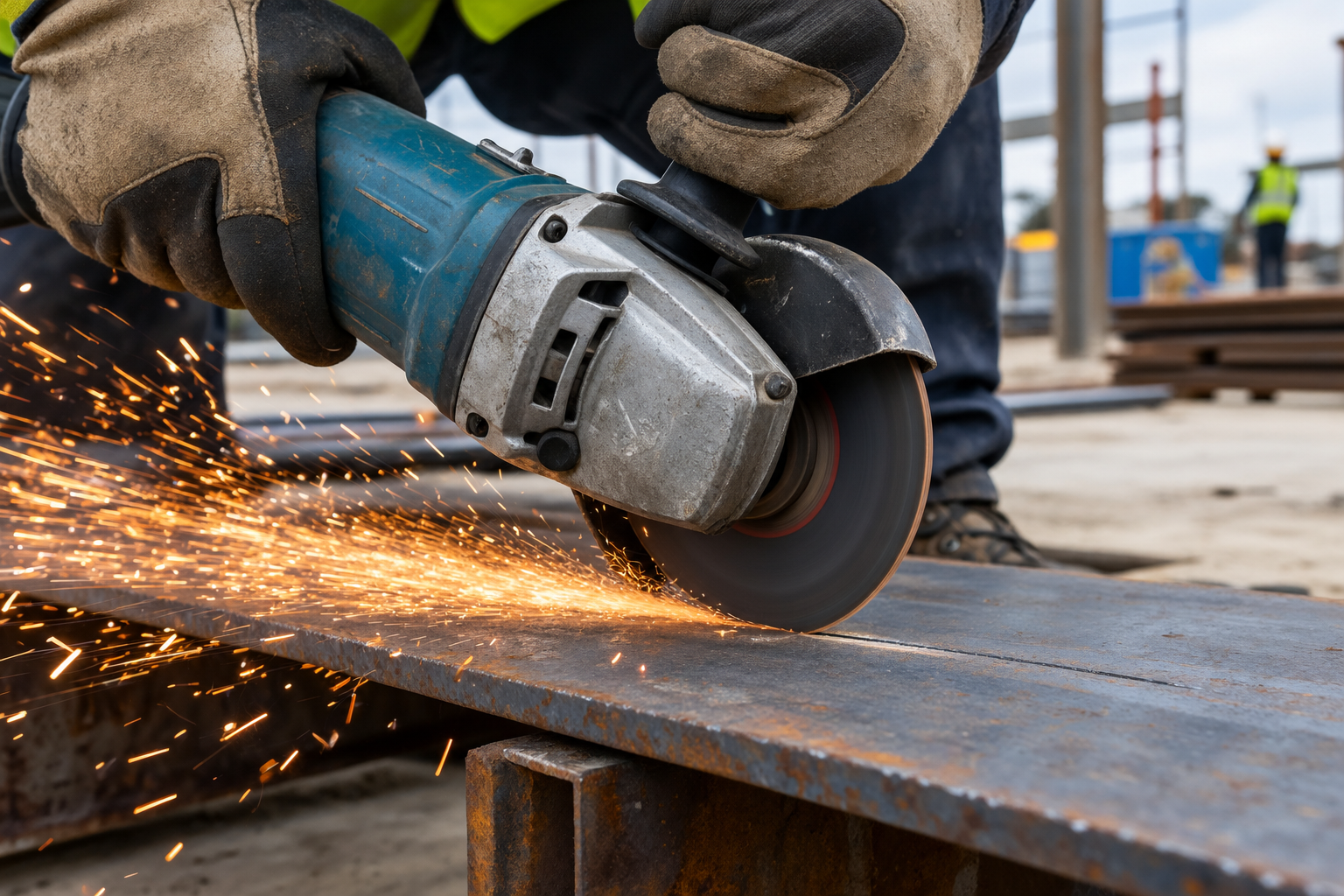
Angle grinders and cut-off tools handle most professional metal cutting. Amperage and surface speed must match the material. Mild steel cuts efficiently with aluminum-oxide wheels at higher surface feet per minute. Stainless steel needs zirconia-alumina wheels at lower speeds to avoid work hardening and excessive heat that shortens both blade and tool life.
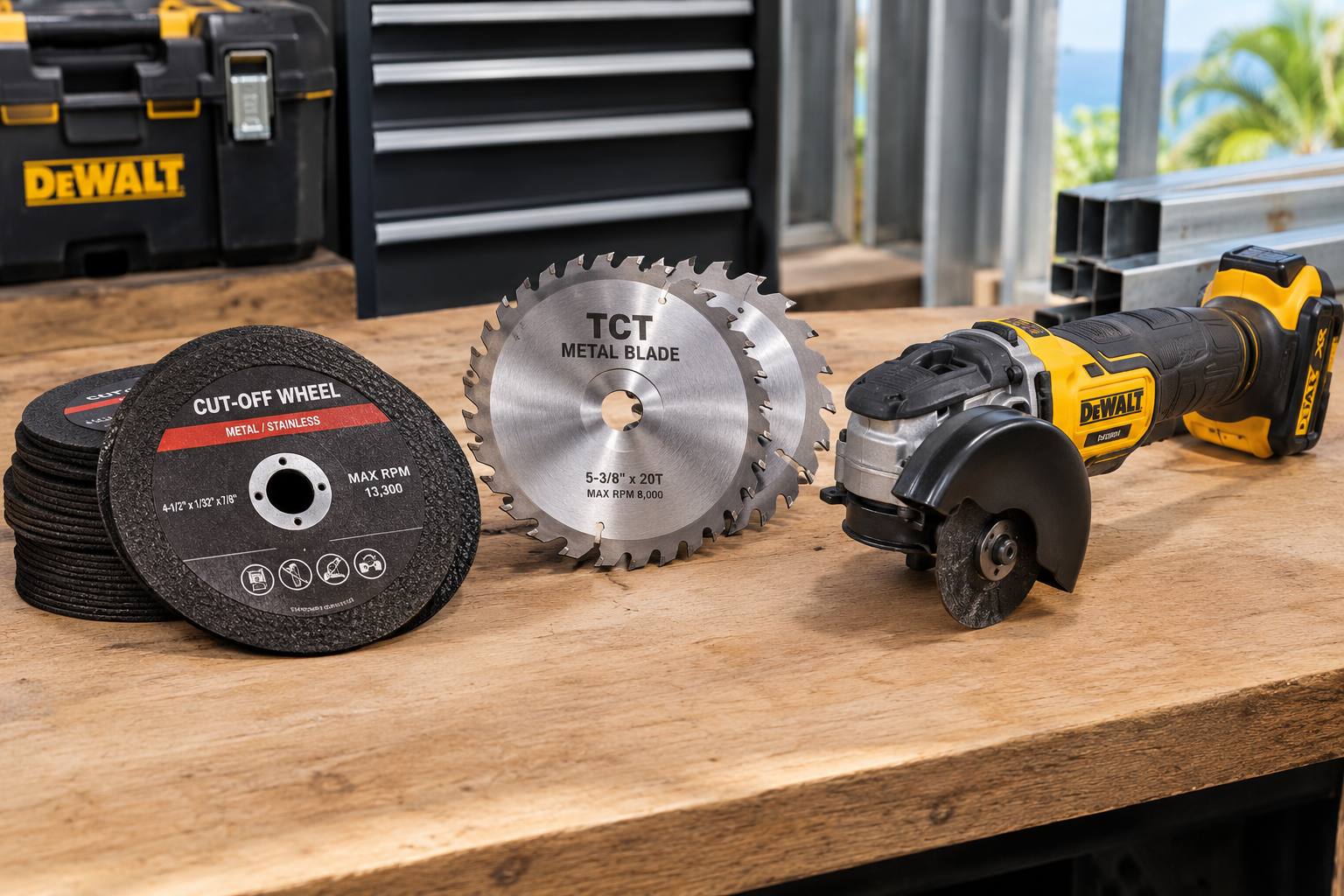
Blade choice drives cost per cut. Abrasive cut-off wheels deliver a limited number of cuts in quarter-inch steel. Tungsten-carbide-tipped blades last significantly longer. Diamond blades push that further in stainless. The higher upfront cost usually pays off on any volume work.
Electric shears and nibblers produce clean edges on sheet metal without the heat distortion common with grinders. Swivel-head models reach complex paths that would require multiple grinder setups. Dedicated tools deliver more power and control than drill-mounted attachments, though attachments work for occasional use.
We carry angle grinders, cut-off tools, and compatible wheels and blades from brands including DEWALT, Milwaukee, and Metabo HPT. Our unconditional one-year guarantee on selected power tools from these brands means local repair or replacement support when a tool fails on the job. No mainland shipping delay when a deadline is tight.
Specialized Cutting Tools: When Standard Equipment Is Not Enough
Annular cutters and step drills pay for themselves on repeated hole work. Annular cutters remove material only at the periphery, so they clear less material and require less power than twist drills. That produces faster holes with less heat and lower amperage draw.
Cost-per-hole math favors them quickly. A carbide-tipped annular cutter can drop the cost of a one-inch hole in plate steel well below a twist drill while delivering tighter tolerance and cleaner edges. Step drills eliminate bit changes for multiple diameters and deburr as they cut, which is useful on thin-gauge stock that distorts under a separate deburring step. Magnetic drill bases add setup time but improve accuracy on structural steel in the field.
We stock specialized metal-cutting blades, cobalt and carbide bits, step drills, and related accessories across both stores. Local inventory means you can pick up the exact size or range you need the same day instead of waiting for mainland freight.
How to Choose the Right Metal Cutting Tool for Your Application
Start with the material: ferrous or non-ferrous, thickness, hardness, and required edge quality. Aluminum needs different blade geometry and higher surface speeds than stainless. Stainless requires lower speeds and appropriate tooth geometry or grit to prevent work hardening. Abrasive wheels on aluminum often load and generate excess heat.
Next match the cut type. Straight cuts in thick plates favor chop saws or circular saws with proper metal blades. Curves in sheet metal favor shears or nibblers. Holes call for drills or annular cutters based on diameter and precision needs.
Production volume changes the math. Occasional cuts favor lower-setup handheld tools. High-volume work rewards specialized tooling that stays consistent across dozens or hundreds of cuts. Factor the time and consumable cost across the full run, not a single cut.
Hawaii jobsite conditions add another layer. Coastal salt air accelerates corrosion. Remote Maui sites may favor cordless platforms even if the initial cost is higher. Our staff has guided local metalworkers through these choices for decades and can point you toward tools and blades that hold up under the actual conditions you face.
Material-to-tool matching table
| Material | Recommended Approach | Speed / Notes |
|---|---|---|
| Mild steel | Abrasive or TCT blades, angle grinder/chop saw | Higher surface speed |
| Stainless steel | Zirconia or carbide, lower speed | Avoid work hardening |
| Aluminum | High-tooth TCT or shear | Higher surface speed, chip control |
| Thin sheet metal | Shears, nibblers, or aviation snips | Minimize distortion |
| Structural plate holes | Annular cutters or cobalt bits | Precision and reduced heat |
Safety, Maintenance, and Tool Life in Hawaii Conditions
Abrasive-wheel incidents remain a leading source of injury in metalwork. Use wheels rated well above the tool’s operating speed, keep guards in place, and inspect for cracks or damage before mounting. Eye protection rated for impact is required. Most angle grinders exceed the noise level that calls for hearing protection.
Inspect blades regularly. Replace abrasive wheels that show cracks, chips, or uneven wear. Replace TCT blades when tips are damaged or cutting performance drops. Forcing a dull blade generates heat that damages both the tool and the workpiece.
Storage and cleaning matter more in humid coastal air. Wipe and oil tools after use in marine environments. Surface rust can appear quickly on unprotected steel. Keep tool cases dry and consider corrosion inhibitors for hand tools stored long-term. Monthly checks of electrical connections catch corrosion before it causes failure.
We offer sharpening for eligible blades and cutting accessories plus repair support for the tools we sell. Local service keeps you working instead of waiting on shipping.
Featured Metal-Cutting Tools and Supplies at Slim’s Power Tools
We stock the professional equipment and consumables Hawaii metalworkers use every day:
- Angle grinders and cut-off tools (corded and cordless platforms from DEWALT, Milwaukee, Metabo HPT, and others)
- Abrasive cut-off wheels and carbide-tipped metal blades
- Aviation snips and related hand cutting tools
- Cobalt and carbide drill bits, step drills, and annular cutter options
- Portable band-saw blades and metal-cutting circular blades
- Cutting fluids and corrosion-protection products suited to island conditions
Inventory varies by location. Call the Honolulu or Kahului store to confirm current stock of a specific model or size.
Why Local Pros Choose Slim’s Over Big-Box or Online-Only Retailers
Big-box stores stock for the broadest consumer demand. Online retailers cannot put a specific blade or bit in your hand the same morning a job changes. We maintain a deep local inventory of professional-grade tools and consumables on Oahu and Maui because our customers are contractors and fabricators who cannot wait a week for freight. Staff who work with local metalworkers every day understand the demands of salt air, dense aggregate, and tight schedules. The unconditional one-year guarantee on selected DEWALT, Milwaukee, and Metabo HPT tools is backed by two Hawaii locations, so support stays local.
Relevant Products and Services We Offer
- Professional angle grinders, cut-off tools, and metal-cutting saws
- Carbide metal blades, abrasive wheels, and band-saw blades
- Aviation snips, shears, and hand cutting tools
- Cobalt bits, step drills, and specialized hole-making tools
- Sharpening service for eligible cutting accessories
- Repair support and the unconditional one-year guarantee on qualifying power tools
- Business accounts and special-order capability for items not currently on the shelf
Frequently Asked Questions
What is the difference between abrasive wheels and carbide blades for metal cutting?
Abrasive wheels cost less per unit but wear faster and generate more heat. Carbide-tipped blades last longer and produce cleaner cuts on many materials, which usually lowers cost per cut on volume work. Match the blade to the metal and the tool’s speed rating.
How do I protect metal-cutting tools from Hawaii salt air?
Clean and dry tools after each use. Apply a light oil or corrosion inhibitor, then store them in a dry case or cabinet. Avoid leaving them exposed overnight on coastal jobsites. We stock related protectants and can advise on storage practices.
Do you carry blades for stainless steel and aluminum?
Yes. We stock metal-cutting blades formulated for stainless, aluminum, and mild steel. Bring the material thickness and the saw or grinder model so we can confirm the correct tooth geometry or grit.
What does the one-year unconditional guarantee cover?
On qualifying DEWALT, Milwaukee, and Metabo HPT power tools purchased from us, the guarantee provides local support for repair or replacement within the first year under the stated terms. Ask at the counter to confirm a specific tool is covered and keep your proof of purchase.
Can I get sharpening or repair service for metal-cutting blades and tools?
Sharpening is available for eligible saw blades and cutting accessories. We also provide repair support for major brands we sell. Call the store ahead to confirm eligibility and current turnaround.
How do I know which snips or shear to buy for sheet-metal work?
Match the snip type (straight, left, or right) to the curves you cut most often and confirm the gauge capacity against the material thickness. Our staff can walk you through the options based on the work you do.
When a job depends on clean cuts and tools that keep working, start with equipment matched to the material and the conditions. Visit us in Honolulu or Kahului to talk through your application with staff who know local metalwork. We can help you leave with the right tools and blades in hand.
Contact Honolulu: (808) 841-0902 | Contact Maui: (808) 242-7878
Mahalo for supporting a local family business that has served Hawaii’s trades since 1972.
