
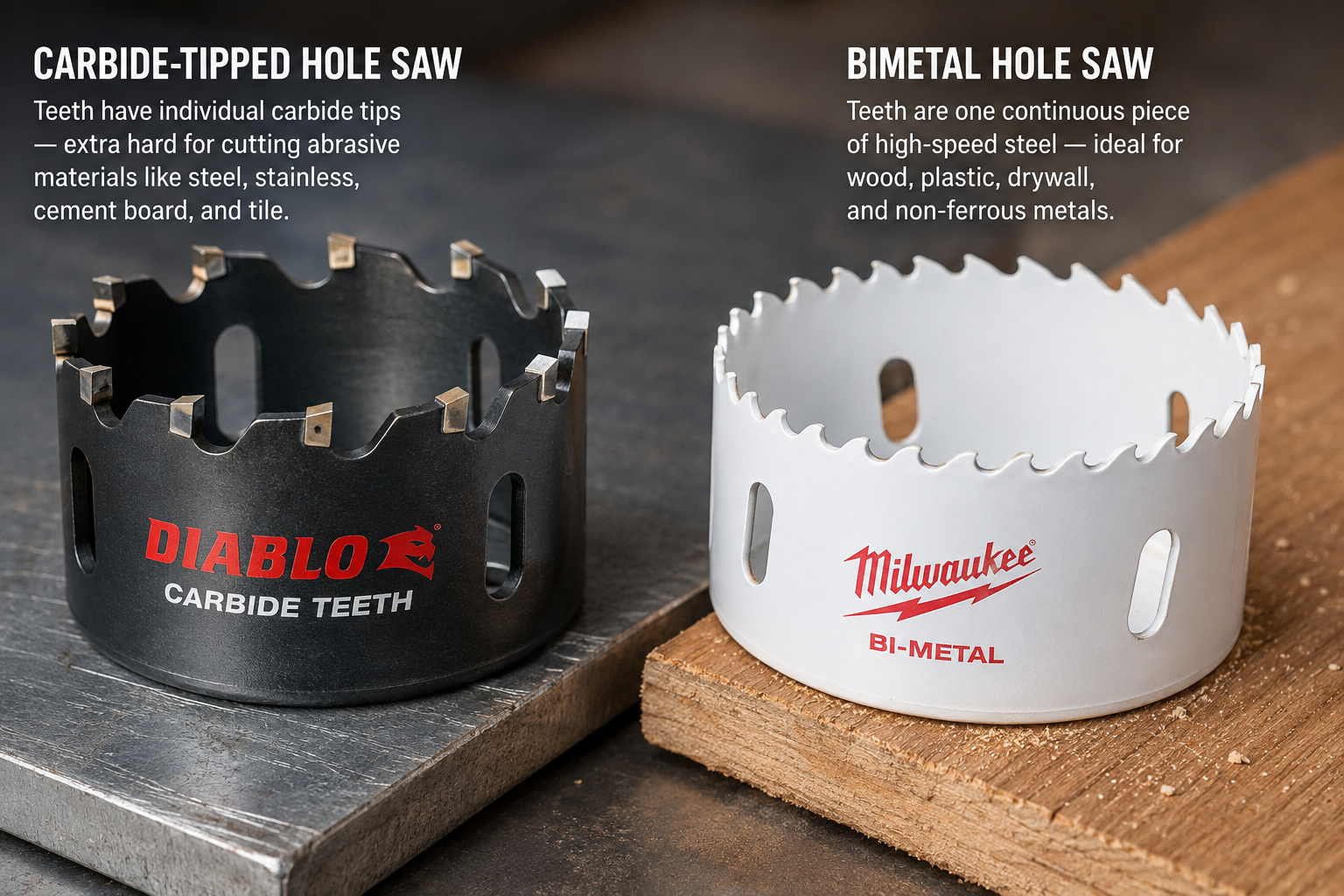
Choosing the wrong hole wastes time, dulls edges fast, and can ruin a clean cut on the job. Contractors and serious DIYers working with thick metal or dense wood need a clear understanding of carbide and bimetal options so the tool matches the material. This guide breaks down the differences, shows where each type performs best, and helps you pick the right cutting edge for real-world use in Hawaii.
What Makes a Bimetal Hole Saw
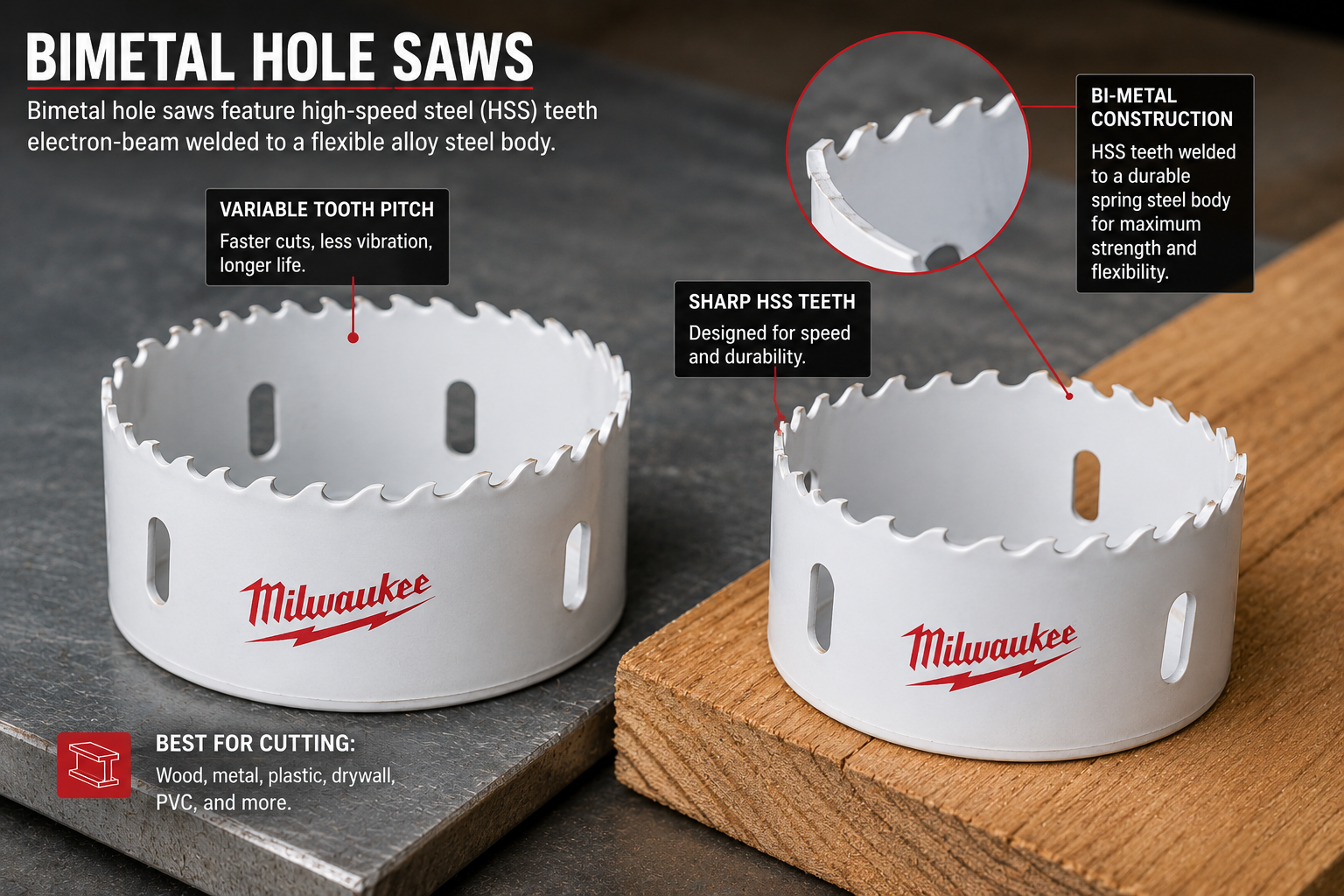
Bimetal hole saws combine high-speed steel teeth with a flexible steel body. The teeth handle the cutting while the body absorbs shock and reduces the chance of cracking under stress. This construction works well across a range of materials including wood, plastics, aluminum, and mild steel.
On thicker mild steel or when the work involves occasional thin stainless, a quality bimetal saw can still get the job done if you run it at the correct speed and use cutting fluid. The flexibility helps when the material shifts or when you hit an unexpected nail in wood. Many crews keep a set of bimetal hole saws on the truck for general work because they cover most everyday needs without the higher cost of carbide.
Durability sits in the middle range. Teeth wear faster on hard or abrasive materials, and heat buildup can shorten life if you push too hard or run the saw too fast. Still, for mixed wood and light-to-medium metal work, bimetal remains a practical, cost-effective choice.
What Makes a Carbide Hole Saw
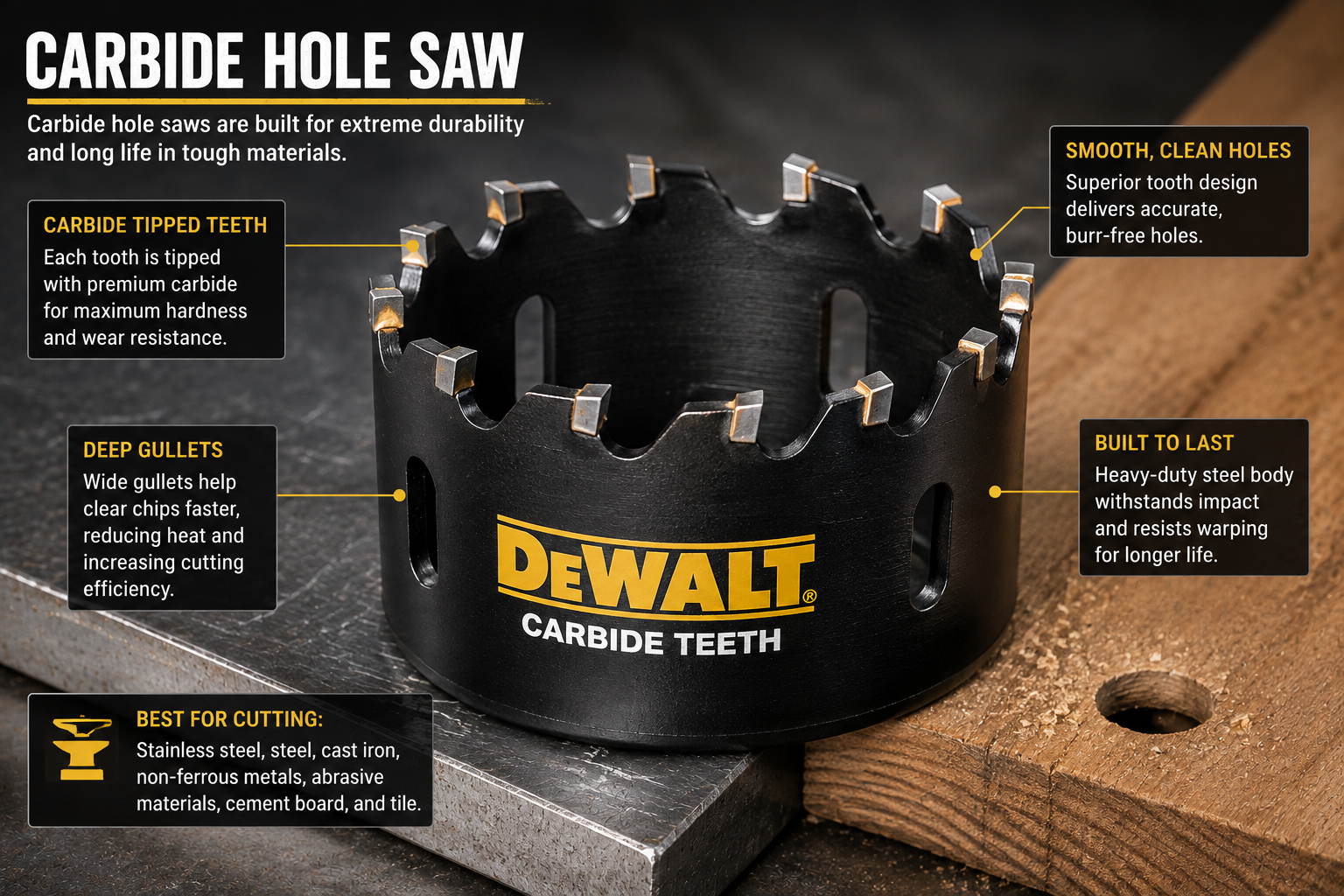
Carbide hole saws use tungsten carbide tips or teeth soldered or brazed onto the body. Carbide is significantly harder than high-speed steel, so it resists heat and abrasion better. This makes carbide the stronger option for stainless steel, cast iron, thicker structural metal, and other demanding materials.
Cutting speed is often higher once the saw is properly engaged, and the edge stays sharp longer under heavy use. Some manufacturers note that carbide-tipped designs can deliver many times the cuts of standard bimetal saws in certain applications, especially abrasive or hard materials. The trade-off is that carbide is more brittle. Excessive side pressure, sudden impact, or running the saw dry on thick metal can chip or break teeth.
For crews that cut thick metal regularly or work with stainless and cast materials, the longer service life usually justifies the higher price. Carbide also performs well in dense hardwoods when longevity matters more than initial cost.
Side-by-Side Comparison
| Feature | Bimetal Hole Saw | Carbide Hole Saw |
|---|---|---|
| Best materials | Wood, plastic, mild steel, thin metal | Stainless, cast iron, thick metal, abrasive materials |
| Durability on hard metal | Moderate; wears faster | High; resists heat and wear |
| Flexibility | Higher; less prone to cracking | Lower; more brittle under impact |
| Cutting speed | Adequate for general work | Often faster on tough materials |
| Cost | Lower | Higher |
| Ideal user | Mixed-material crews, general contractors | Heavy metal work, frequent stainless cuts |
Matching the Saw to Thick Metal
Thick metal generates more heat and places greater stress on the teeth. Bimetal can handle moderate thicknesses of mild steel when you use low speed, firm pressure, and cutting fluid. On thicker sections or stainless, heat builds quickly and the teeth dull. Carbide handles these conditions more effectively because the tips retain hardness at higher temperatures.
For structural steel, pipe, or stainless plate common on commercial jobs, start with a carbide-tipped hole saw sized for the diameter you need. Keep the RPM in the recommended range for the diameter and material, clear chips regularly, and apply lubricant. These steps extend life regardless of the tooth material, but they matter even more with carbide to avoid chipping.
Matching the Saw to Wood
Both types cut wood cleanly when sharp. Bimetal works well for framing, finish work, and most jobsite wood cutting. The flexible body tolerates minor deflection better if the bit wanders slightly. Carbide shines when you need maximum life in dense tropical hardwoods or when the same saw must also handle occasional metal.
In Hawaii, crews often cut koa, ohia, or other dense species alongside metal framing or stainless hardware. Having both types available lets you match the tool to the dominant material on that day rather than forcing one saw to do everything.
Practical Tips for Longer Life
Run the correct speed for the diameter and material. Larger saws need lower RPM. Use cutting fluid on metal to reduce heat and improve chip clearance. Let the saw do the work instead of forcing it. Clear the hole periodically so chips do not pack and overheat the teeth. Store the saws so the teeth do not bang against other tools.
Humidity and salt air in Hawaii accelerate corrosion on unprotected metal. Wipe tools after use and store them dry when possible. Quality brands with better coatings hold up longer under these conditions.
Why Local Selection Matters
Big-box stores and online retailers often stock limited sizes and fewer professional-grade options. Inventory can run thin on the exact diameter or tooth style you need, and shipping from the mainland adds days when a crew is waiting. Slim’s Power Tools maintains a deep local stock of professional hole saws and related accessories at both the Honolulu and Maui locations. Staff who work with these tools daily can help match the right style and size to the material and the job.
The same local advantage applies to service. If a saw needs evaluation or you want advice on technique for a specific application, the team on the counter has practical experience with Hawaii jobsite conditions.
Products and Services at Slim’s
- Professional carbide-tipped and bimetal hole saws in common and larger diameters
- Matching arbors and pilot bits for secure mounting
- Cutting fluids and lubricants suited for metal work
- Sharpening services for eligible cutting tools
- Special-order capability when a specific size or brand is required
- Unconditional one-year guarantee on qualifying DeWalt, Milwaukee, and Metabo HPT power tools that drive these accessories
- Knowledgeable staff who can recommend the right combination for wood, mild steel, or stainless applications
Frequently Asked Questions
Can a bimetal hole saw cut stainless steel?
Yes, on thinner gauges when you use low speed, cutting fluid, and steady pressure. Thicker stainless or frequent cuts are better handled by carbide.
How much longer does carbide last compared with bimetal?
Results vary by material and technique, but carbide typically outlasts bimetal significantly on hard or abrasive materials. On mild steel and wood the difference is smaller.
Do I need different saws for wood and metal?
Not always. A quality bimetal set covers most mixed work. Crews that cut thick metal or stainless regularly benefit from dedicated carbide saws.
What speed should I run a hole saw?
Follow the manufacturer chart for diameter and material. Larger diameters and harder materials require lower RPM to control heat and tooth life.
Can Slim’s sharpen hole saws?
Sharpening is available for eligible saw blades and certain cutting accessories. Call the store with the specific item to confirm it can be serviced.
Should I buy a set or individual sizes?
Sets make sense for crews that need a range of common diameters. Individual carbide saws are practical when you only need specific sizes for heavy metal work.
Ready to Cut Cleaner and Longer
The right hole saw depends on the material thickness, how often you cut it, and the conditions on the job. Bimetal delivers solid performance and value for wood and lighter metal. Carbide brings the durability needed for thick metal and demanding applications. Matching the tool to the work keeps crews productive and reduces wasted time on the jobsite.
Visit Slim’s Power Tools in Honolulu at 1626 Republican Street or in Kahului at 142 Kalepa Place. Call (808) 841-0902 on Oahu or (808) 242-7878 on Maui to check current stock or get advice on the best option for your next project. Join the e-Power Club for early notice on promotions and new tool arrivals. When the cut has to be clean and the tool has to last, stop by and talk with the team that understands Hawaii jobsites.
