
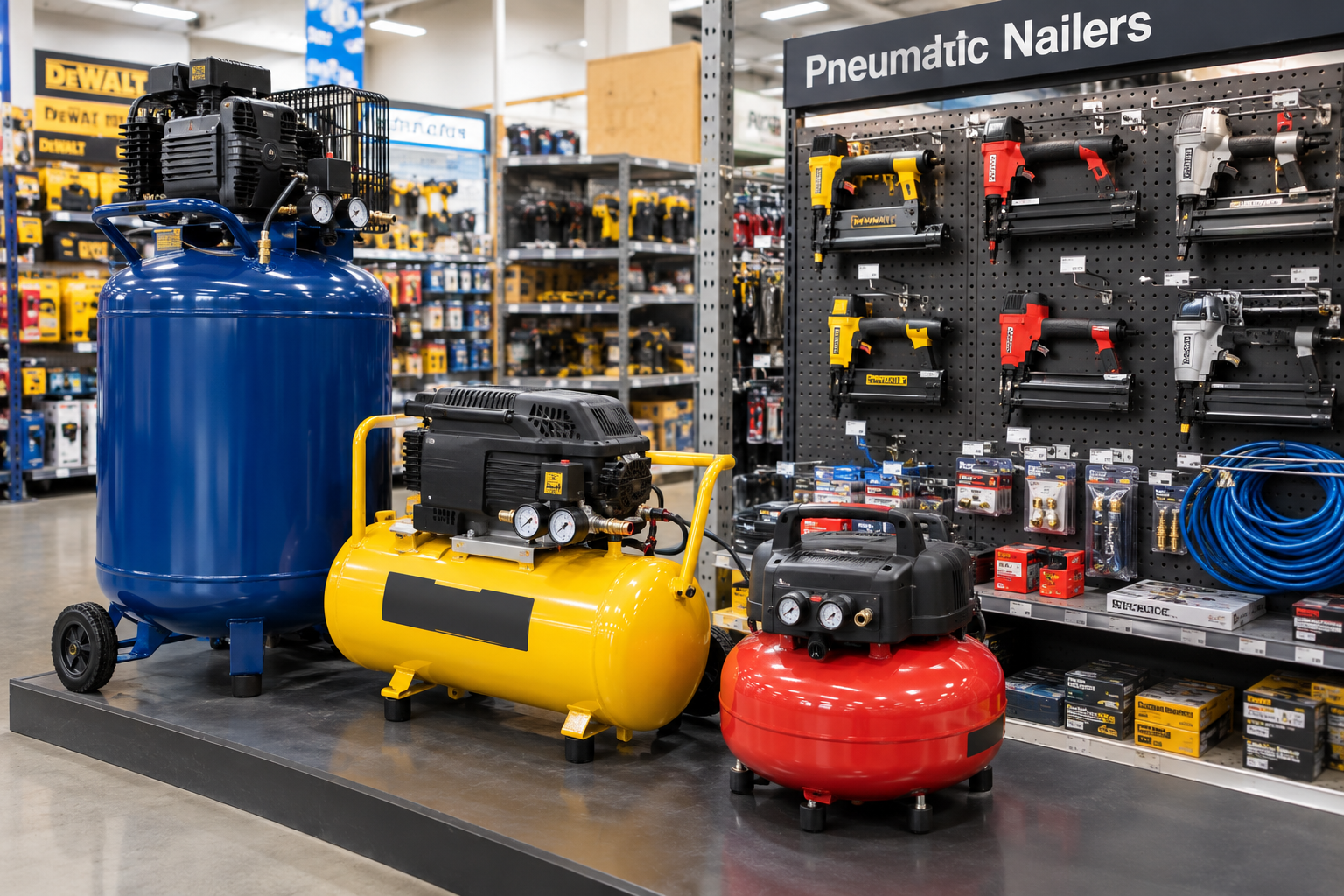
An undersized compressor is one of the fastest ways to slow a framing or finish crew. The nailer stalls, the motor cycles nonstop, and production drops. On Oahu and Maui the problem compounds because high humidity and salt air attack both the compressor and the tools downstream.
We stock pneumatic nailers, staplers, compressors, hoses, and related supplies at both our Honolulu and Kahului locations. This guide walks through the practical numbers you need so you can match the compressor to the work instead of guessing.
CFM and PSI: The Two Numbers That Actually Matter
Most contractors look at tank size first. Tank size only stores air. The pump’s continuous output, measured in cubic feet per minute (CFM) at a stated pressure, is what keeps the nailer firing without waiting for recovery.
Most pneumatic nailers operate between 70 and 120 PSI. The industry benchmark for sizing is CFM delivered at 90 PSI. Always check the specific tool’s manual for its rated air consumption at 90 PSI, then choose a compressor that meets or exceeds that figure with a modest buffer for hose losses and rapid fire.
| Nailer Type | Typical CFM @ 90 PSI | Working PSI Range | Practical Compressor Target @ 90 PSI |
|---|---|---|---|
| Brad / pin nailer | 0.3 – 0.8 | 70 – 100 | 1.5 – 2.5 CFM |
| Finish (15–16 ga) | 0.7 – 2.0 | 70 – 120 | 2.5 – 4.0 CFM |
| Framing | 2.0 – 4.0 | 90 – 120 | 4.0 – 6.0 CFM |
| Roofing / siding coil | 2.0 – 3.0 | 90 – 120 | 3.5 – 5.0 CFM |
| Two tools simultaneous | Sum of both | — | Sum + 25 % buffer |
Sources for these ranges include manufacturer charts from Senco and common industry CFM tables used by contractors. Always verify the exact rating on your specific nailer model.
A compressor rated only by peak PSI or by CFM at a lower pressure will mislead you. Demand the delivered CFM figure at 90 PSI.
Hawaii Conditions Change the Equation
Island air carries high moisture year-round. When a compressor pulls in that humid air and compresses it, the temperature rises and the air holds more water vapor. As the air cools in the tank and lines, water condenses. That water reaches the nailer, washes out lubricant, and accelerates internal corrosion.
Salt air makes the problem worse. Marine aerosols travel inland and combine with moisture, speeding corrosion on fittings, regulators, and tool internals.
Practical steps that matter here:
- Drain the compressor tank at the end of every shift, sometimes mid-day on long runs.
- Install a water separator (and preferably a regulator/filter combination) downstream of the tank, not right at the outlet where the air is still hot.
- Use pneumatic-tool oil rated for air tools when the manufacturer requires it. We carry Relton and Metabo HPT air-tool oils among other maintenance products.
- Keep hose runs as short and clean as practical. Long soft hoses drop pressure and collect more condensate.
These steps protect both the compressor and the nailers you already own.
Oil-Lubricated vs Oil-Free Compressors
Oil-lubricated pumps generally run cooler, quieter, and longer under continuous contractor duty. They require regular oil checks and changes.
Oil-free pumps need less routine maintenance and avoid the risk of oil carry-over into the air stream. Many portable jobsite models lean this direction for convenience.
In Hawaii the humidity argument often favors a well-maintained oil-lubricated unit with proper filtration, because the oil film provides an extra barrier against internal rust. Either design can work if you control moisture and match the CFM correctly. We stock both styles so you can choose based on your crew’s maintenance habits and duty cycle.
Tank Size, Portability, and Duty Cycle
Tank size affects how long you can fire before the pump kicks in, not the sustained output. Common practical ranges:
- 4–6 gallons: workable for one framing nailer or two finish tools with moderate pacing.
- 6–8+ gallons or twin-stack: better recovery for production framing or two-gun crews.
- Larger stationary or wheelbarrow-style units: for shop or multi-crew sites that stay put.
Portability still matters on most Hawaii residential and light commercial sites. A unit that two people can load into a truck bed without drama gets used more consistently than a heavier machine left at the yard.
Duty cycle ratings also matter. A compressor rated for intermittent use will overheat if a framing crew keeps it running near continuous. Look for higher duty-cycle or contractor-grade pumps when the schedule is aggressive.
Matching the Compressor to Your Actual Nailers
Bring the nailer model numbers or manuals when you visit. We can check the exact CFM draw and walk you through options currently on the floor. Our power tools department includes pneumatic and cordless fastening tools plus the compressors, hoses, and fasteners that support them. Brands represented in the fastening category include Bostitch, Porter-Cable, and others alongside our broader professional inventory.
If you already run multiple nailers, add their CFM numbers and apply a 25 percent buffer. That single calculation prevents the most common under-sizing mistake.
Moisture Control and Long-Term Tool Life
Water separators, automatic drains, and proper oiling are not optional extras in Hawaii. They are part of keeping pneumatic tools productive for years instead of months. Our chemicals and lubricants selection includes pneumatic-tool oils formulated for air tools. Confirm the manufacturer recommendation for your specific nailers before applying any oil.
Regular draining and filtration also reduce the chance that moisture reaches the driver blade and O-rings inside the nailer itself.
What We Carry and How We Support Crews
We maintain a complete line of pneumatic nailers, staplers, nails, staples, and compressors at both stores. Inventory includes contractor-oriented portable units suited to framing and finish work, along with hoses and fittings. Product selection and quantities can differ between Honolulu and Kahului, so call ahead when you need a specific model or volume.
Relevant products and services you will find:
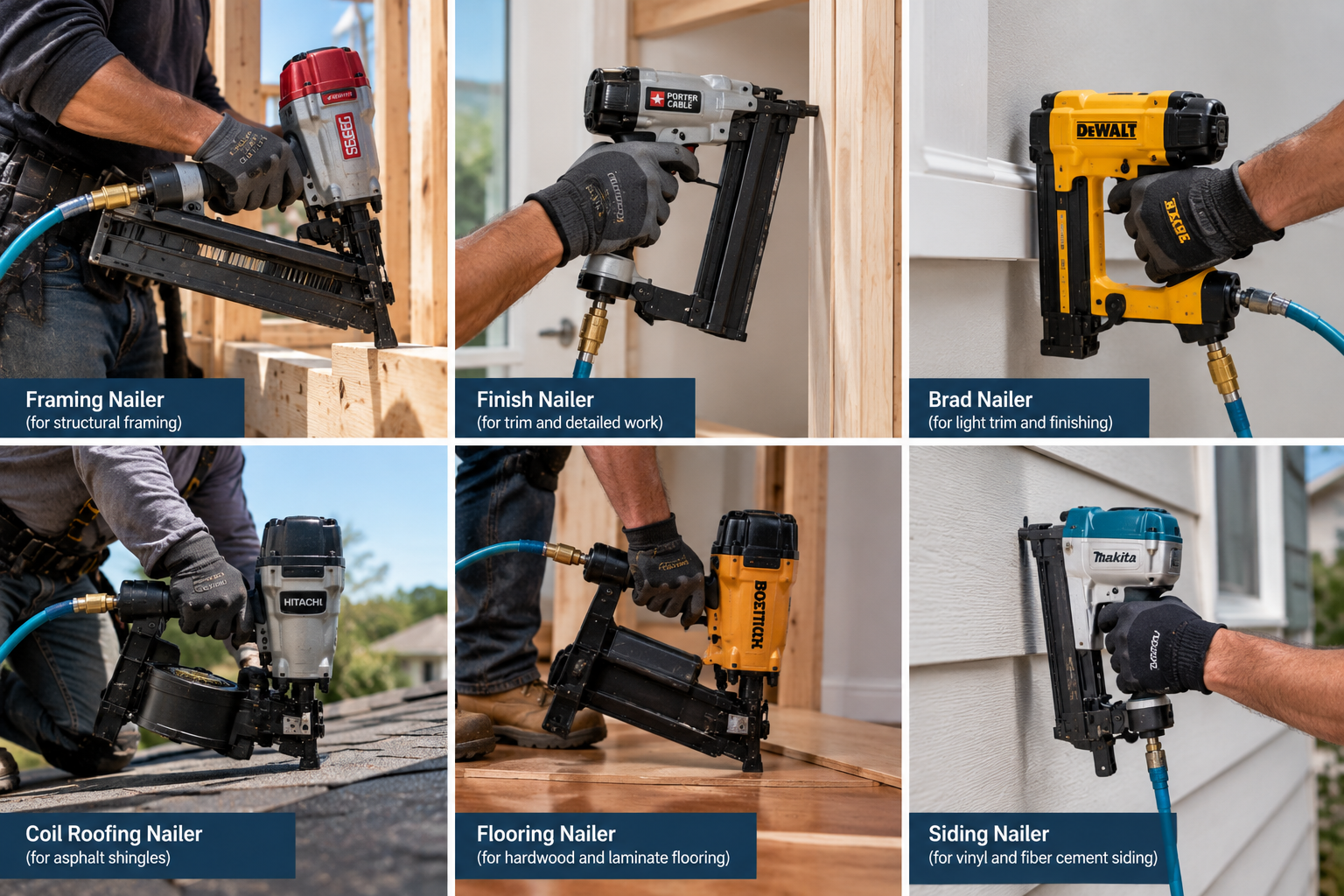
- Pneumatic framing, finish, roofing, and specialty nailers
- Compatible air compressors (including lines such as Rolair and others we stock)
- Air hoses, fittings, and regulators
- Nails, staples, and bulk fasteners
- Pneumatic-tool oils and related maintenance products
- Repair support for major brands we sell
- Special-order capability when a particular model is not on the floor
Our staff receives product training so they can help match compressor output to the nailers you actually use, not generic catalog recommendations.
Why Local Stock Beats Waiting on a Container
Big-box and pure online retailers often treat Hawaii as an afterthought for inventory depth. When a compressor fails mid-week or a crew adds a second nailer, waiting for mainland freight costs more than the price difference. We keep inventory on the ground in Honolulu and Kahului so you can pick up what you need the same day in most cases. That local depth is one of the practical differences contractors notice when schedules are tight.
We also service what we sell and offer guidance on the unconditional one-year guarantee available on qualifying DEWALT, Milwaukee, and Metabo HPT power tools. While that specific guarantee focuses on those power-tool lines, the same local repair and support approach applies across the pneumatic equipment we carry.
Quick Checklist Before You Buy
- Confirm the exact CFM at 90 PSI required by each nailer you plan to run.
- Add a buffer if two tools will fire at the same time.
- Decide oil-lubricated or oil-free based on your maintenance routine and duty cycle.
- Choose tank size for recovery, not as a substitute for adequate CFM.
- Plan for water separation and daily draining from day one.
- Verify current stock and hose/fitting compatibility at the counter.
Frequently Asked Questions
How much CFM do I need for one framing nailer?
Most framing nailers fall in the 2.0–4.0 CFM range at 90 PSI. Choose a compressor that delivers at least that amount, preferably with a buffer so the pump is not running at its limit. Always check the specific tool’s rated consumption.
Can a small pancake compressor run a framing nailer?
It can for occasional single shots, but recovery will be slow and the motor will cycle constantly under production framing. Most crews find a 4–6 CFM unit with a larger tank more practical for sustained work.
Why does my nailer keep misfiring even though the compressor reaches pressure?
Common causes are inadequate CFM under load, pressure drop through long or undersized hoses, or moisture in the line. Check the delivered CFM rating at 90 PSI and inspect the air path for restrictions or water.
Do I need special oil for pneumatic nailers in Hawaii?
Follow the tool manufacturer’s instructions. Many nailers require regular oiling with air-tool oil. High humidity makes consistent lubrication more important. We stock oils suitable for pneumatic tools; confirm compatibility for your models.
What if the exact compressor I want is not on the shelf?
Call either store. We can check current inventory, recommend alternatives that meet the same CFM target, or place a special order. Honolulu: (808) 841-0902. Maui: (808) 242-7878.
Does Slim’s carry both the nailers and the compressors?
Yes. We stock pneumatic nailers and staplers along with compressors, hoses, nails, staples, and related supplies. Selection can vary by location, so contact the store you plan to visit.
Ready to Match Your Compressor to the Work
Bring your nailer models or a description of the crew and the volume of fastening you do each day. We will help you compare available compressors against the actual CFM numbers so the tools keep up with the schedule.
Join the e-Power Club for alerts on compressor and fastening promotions before they go public. Stop in, call, or ask about a commercial account. We are here to keep your crews productive under real island conditions.
Pricing and specific model availability vary by location and change over time. Confirm current stock, specifications, and any applicable pricing directly with the store. Manufacturer requirements for oiling and maintenance always take precedence.
