
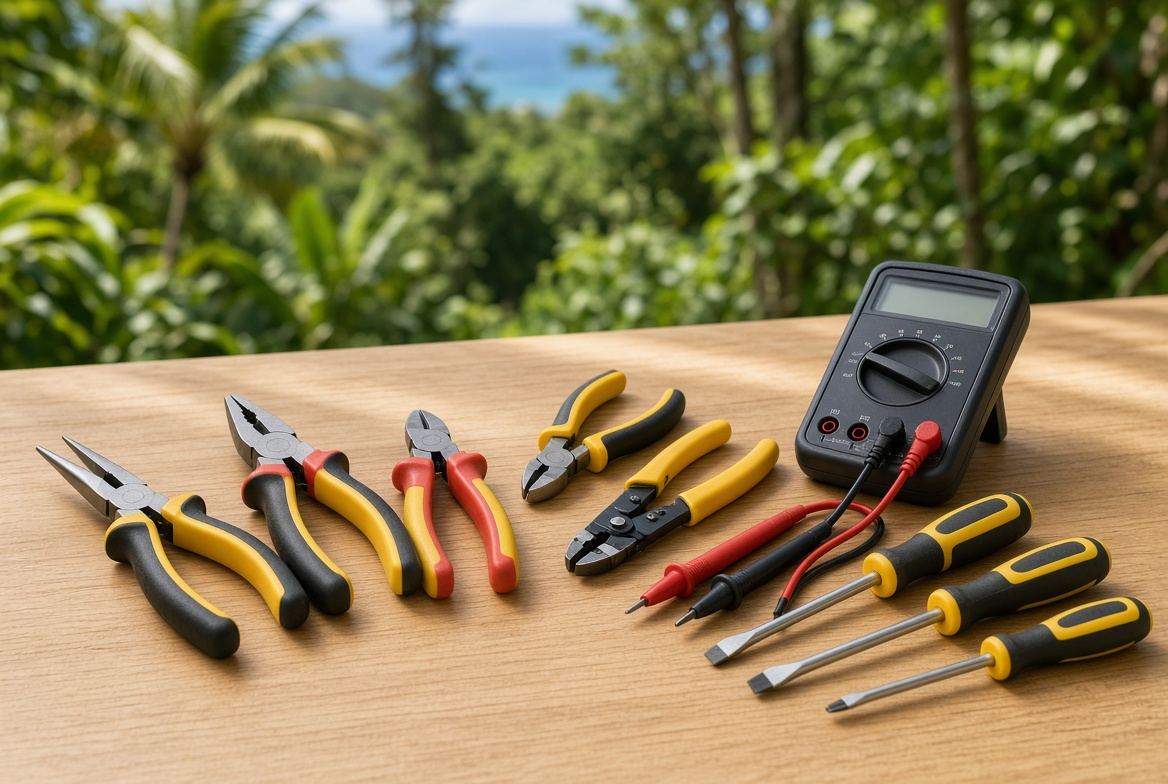
Every electrician knows the frustration of arriving on a job without the right tool. Whether you are starting an apprenticeship or running a contracting crew, the right electrical tools support safety, code compliance, and your professional reputation. This guide covers essential tools by category, with practical investment ranges by career stage and applications that matter in Hawaii’s humid, salt-air climate and dense volcanic aggregate.
At Slim’s Power Tools we have supplied Hawaii contractors since 1972 from our Honolulu store and since 1993 from Maui. We stock professional-grade inventory built for island conditions, offer an unconditional one-year guarantee on select DeWalt, Milwaukee, and Metabo HPT tools, and provide repair and sharpening services with trained staff who understand local jobsites.
Essential Hand Tools Every Electrician Needs Daily
Hand tools form the base of every job, from panel work to troubleshooting. The pliers family serves distinct functions. Lineman’s pliers twist and cut heavy-gauge wire. Needle-nose pliers reach tight junction boxes. Diagonal cutters deliver clean snips. Side cutters make flush cuts. Using the correct type reduces damage that multi-purpose tools can cause.
Wire strippers matter for conductor integrity. Manual strippers suit occasional work. Automatic models with gauge-specific settings help prevent nicked conductors that lead to connection failures. Torque screwdrivers support terminal work that meets manufacturer specifications. Over-tightening contributes to rework on commercial projects.
Insulated tools rated to 1,000 V are commonly used for electrical work where insulated tools are required. Follow NFPA 70E requirements and the applicable manufacturer instructions for the specific task. Proper insulation reduces contact injury risk. Japanese-made precision tools available through our inventory show strong edge retention for repeated wire cutting and hold up better against Hawaii’s humidity than many lower-cost alternatives.
Round out a daily kit with utility knives for cable jacket removal, nut drivers sized for common electrical hardware, and metric Allen wrenches for imported solar and EV equipment.
| Tool Type | Primary Use | Key Feature for Hawaii Work |
|---|---|---|
| Lineman’s pliers | Twisting/cutting heavy wire | Corrosion-resistant finishes |
| Needle-nose pliers | Tight junction boxes | Precision tips that hold up |
| Diagonal cutters | Clean wire snips | Sharp edges for frequent use |
| Automatic strippers | Gauge-specific stripping | Reduces nicks in humid conditions |
| Insulated screwdrivers | Energized equipment work | 1,000 V rating, dual-layer insulation |
Electrical Testing and Diagnostic Equipment
Testing equipment separates safe work from guesswork. OSHA Standard 1910.333 requires verification that circuits are de-energized before work proceeds, using appropriate test instruments. A quality digital multimeter handles voltage, continuity, and resistance measurements performed dozens of times daily. A non-contact voltage tester (NCVT) provides a first check.
Circuit finders and tracers save time on existing installations without updated drawings. Residential work often needs only a basic NCVT and multimeter. Commercial and industrial electricians benefit from clamp meters for non-invasive current measurement, insulation testers for cable integrity checks before energizing, and thermal imaging cameras that identify overloaded circuits or failing connections.
A thermal imaging camera in the $300–$2,000 range can locate problems in minutes that traditional methods take longer to find. For service electricians the efficiency often recovers the cost quickly. We back selected diagnostic equipment with our unconditional one-year guarantee on qualifying tools, which lowers risk when you invest in gear that helps you finish the day safely.
Heavy-Duty Power Tools for Installation and Rough-In
Hawaii’s humid, salt-air environment degrades tools faster than many mainland conditions. Cordless drills and impact drivers benefit from sealed housings and corrosion-resistant chucks. Battery platform choice often matters more than any single tool specification. Committing to one ecosystem (Milwaukee M18, DeWalt 20V MAX, or Metabo HPT) reduces total ownership cost over several years because batteries and chargers remain interchangeable.
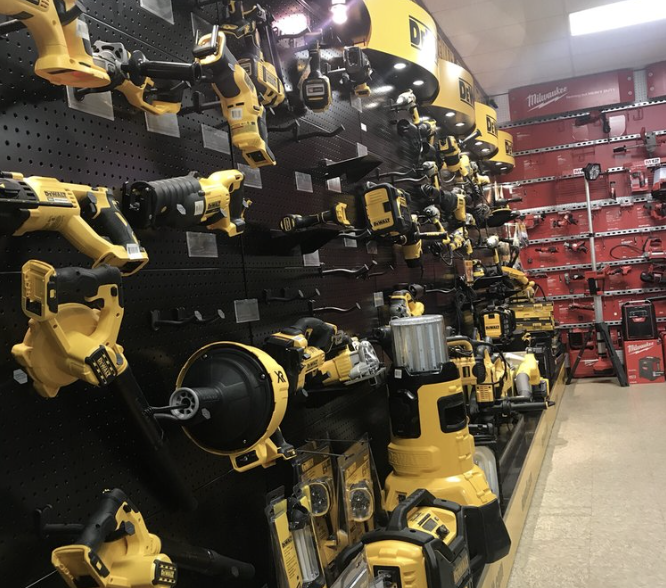
18 V or 20 V-class tools supply the torque needed for drilling joists and driving lag shields into concrete. Rotary hammers handle concrete and masonry penetrations common on commercial sites. A 1-inch SDS-plus rotary hammer drills conduit mounting holes with less fatigue than a standard hammer drill. Reciprocating saws cut existing framing. Portable band saws make clean conduit cuts. Angle grinders with cut-off wheels handle rigid conduit and threaded rod.
Battery-powered hydraulic knockout punches now deliver force previously limited to manual or pump systems. We stock commercial-grade equipment selected for corrosive island environments rather than consumer-grade tools that often fail after repeated salt-air exposure.
Building Your Electrician Tool Kit by Career Stage
Tool investment should scale with the work you perform and the reliability you need.
| Career Stage | Approximate Investment | Core Items |
|---|---|---|
| Apprentice | $300–$800 | Basic pliers set, wire strippers, screwdrivers, utility knife, digital multimeter, NCVT, tape measure, safety glasses, voltage-rated gloves |
| Journeyman | $1,500–$3,000 | Cordless drill/driver combo, reciprocating saw, advanced multimeter with clamp, circuit tracer, insulated tool set, specialty tools for residential/commercial focus |
| Master / Contractor | $5,000+ | Thermal imaging camera, multiple battery platforms for crew use, backup testing gear, conduit bending tools, business-grade diagnostics |
Tool theft affects many contractors. Lockable storage, engraved identification, and serial-number photos help. Clean and lubricate moving parts regularly. Inspect insulated tools before each use per NFPA 70E guidance. Replace damaged tools rather than risk injury.
Pricing Disclaimer: Any dollar ranges shown are approximate investment benchmarks based on typical professional tools at the time of writing. Actual prices vary by model, kit contents, current promotions, and store inventory. Contact Slim’s Power Tools for current pricing and availability.
Specialized Tools for Modern Electrical Work
EV charging installations continue to grow. Level 2 charger work requires calibrated torque tools for terminal connections (often 35–50 ft-lbs) and test adapters to verify proper operation.
Low-voltage and data work now forms a meaningful part of residential revenue. RJ45 crimpers, punch-down tools, coax compression tools, and LAN cable testers support smart-home integration.
WiFi inspection cameras, thermal imaging multimeters, and power quality analyzers help diagnose issues that basic meters miss and support higher-value service calls.
Tools and Services We Offer for Electricians
- Professional cordless platforms from DeWalt 20V MAX / FLEXVOLT, Milwaukee M12 / M18, and Metabo HPT
- Insulated hand tools and Japanese precision cutters and strippers
- Digital multimeters, clamp meters, NCVTs, and related testing equipment
- Rotary hammers, portable band saws, and reciprocating saws suited to conduit and rough-in
- Drill bits, saw blades, and fasteners selected for Hawaii materials
- Unconditional one-year guarantee on qualifying DeWalt, Milwaukee, and Metabo HPT power tools
- Repair services for major brands and sharpening for eligible blades
- Local deep inventory on Oahu and Maui so you can pick up what you need the same day
FAQ
What basic testing tools does an apprentice need first?
A digital multimeter and a non-contact voltage tester cover the majority of daily verification tasks required before working on circuits. Add insulated tools as you move into more complex work.
How does Hawaii’s climate affect tool selection?
Humidity and salt air accelerate corrosion. Sealed housings, corrosion-resistant finishes, and professional battery platforms last longer than many consumer alternatives. We stock tools selected with these conditions in mind.
Do you carry insulated tools rated for electrical work?
Yes. Confirm the 1,000 V rating and dual-layer insulation marks before purchase. Inspect tools before each use and retire any with damaged insulation.
What is the unconditional one-year guarantee?
On qualifying DeWalt, Milwaukee, and Metabo HPT power tools, the guarantee provides support during the first year under the program terms. Ask our team to confirm coverage for the specific model before purchase.
Can I get tools sharpened or repaired locally?
We offer sharpening for eligible saw blades and service major brands we sell. Call the Honolulu or Maui store with the tool details to confirm eligibility and turnaround.
Should I stick to one battery platform?
Yes for most crews. Shared batteries and chargers lower long-term cost and reduce the number of systems you must manage on the job.
Ready to Equip Your Next Job
Start with safety and testing equipment, then build a durable hand-tool kit around one reliable battery platform.
Visit our Honolulu store at 1626 Republican Street or our Maui store at 142 Kalepa Place in Kahului. Talk with our team about the work you do most often. We will help you select tools that perform in Hawaii conditions.
