
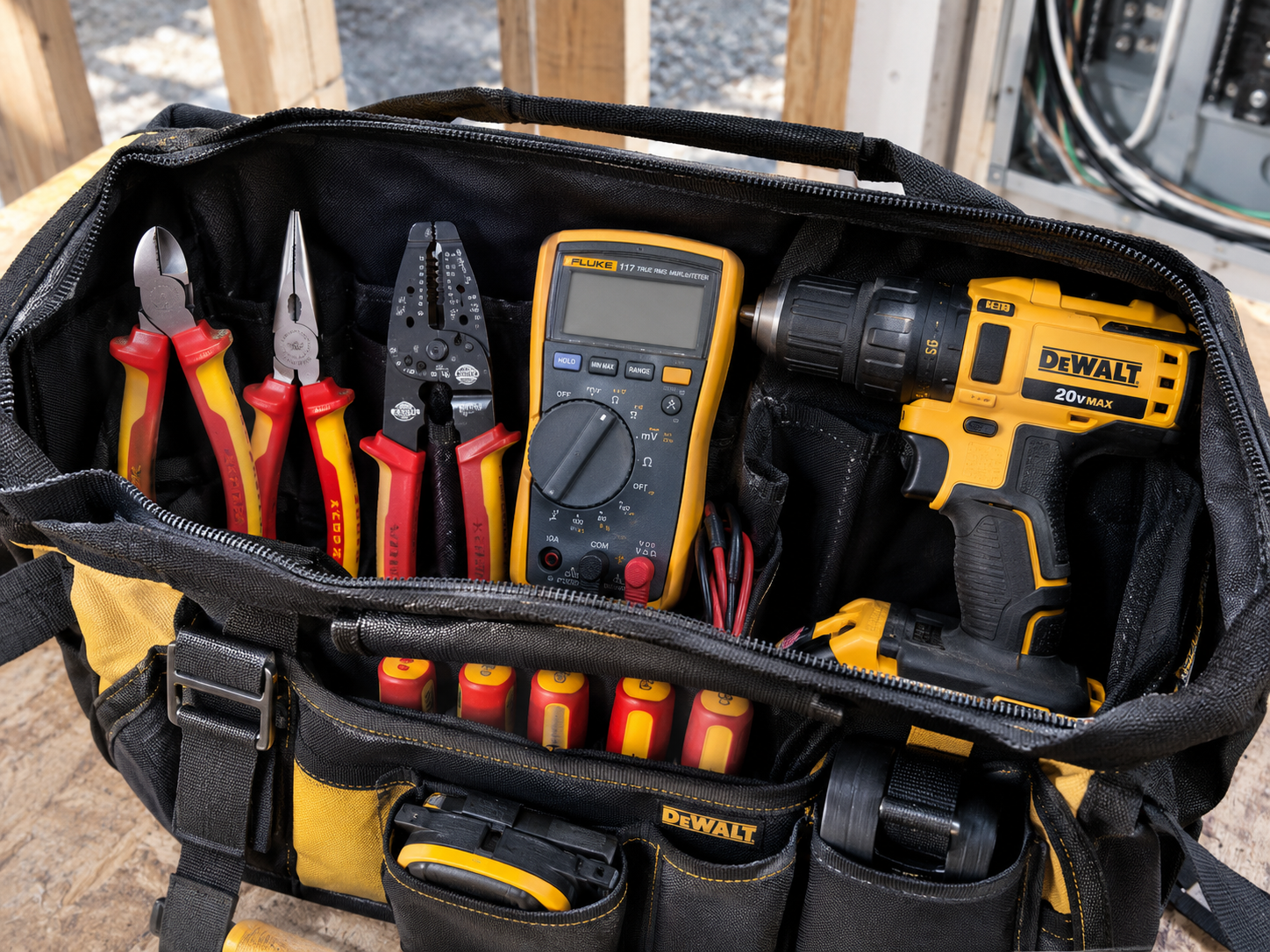
If you are building an electrician's kit, start with the tools you will use on nearly every job. A basic starter kit costs far less than a fully stocked van because the difference comes down to matching tools to the work you actually do. National electrician employment continues to grow, and Hawaii’s solar and EV markets create steady demand for specialized skills. Local conditions, including humidity, salt air, and dense volcanic rock, also shape which tools last.
At Slim’s Power Tools we have supplied contractors and tradespeople on Oahu since 1972 and on Maui since 1993. We stock professional-grade DeWalt, Milwaukee, and Metabo HPT tools with deep local inventory, an unconditional one-year guarantee on select models, and staff who understand island job sites.
The Core Toolkit: Daily Drivers Versus Occasional Tools
Every licensed electrician needs five core items: an 18V cordless drill/driver for general work, a true-RMS multimeter, insulated wire strippers rated to 1000V, a cable cutter capable of handling larger conductors, and a knockout punch set for panels and boxes. The drill and multimeter see use on nearly every call. Specialized items such as hydraulic cutters stay in the van until commercial feeders appear.
Residential work can begin with a lighter platform and move up to 18V for rough-in. Commercial and industrial jobs require higher torque from day one, plus tools for larger conduit and heavy wire. A residential starter kit typically falls in the $1,500–$2,000 range. Commercial kits often run $2,500–$3,500 for tools that hold up to daily hard use.
Quality matters most on tools that take repetitive stress. A professional-grade drill used every day outlasts a consumer model by years, especially in Hawaii’s humidity where corrosion speeds up failure. Tools used only monthly can start mid-tier until volume justifies the upgrade. We back selected DeWalt, Milwaukee, and Metabo HPT tools with our unconditional one-year guarantee so a failure does not cost you billable hours.
Heavy-Duty Tools for Rough-In Work
Rough-in work demands torque and durability. Standard outlet-box work needs at least 50 lb-ft. Conduit mounting and large knockouts push requirements higher, which is why most electricians carry both a drill/driver and an impact driver. The impact mechanism reduces wrist strain on repeated fastening.
Cable cutting follows the same logic. Manual cutters handle 14–10 AWG wire that residential electricians cut constantly. Commercial work with 2/0 and larger conductors benefits from hydraulic cutters that cut fatigue and time. Manual cutters rated for larger sizes cost less and cover most jobs; hydraulic models pay off when feeders are a daily task.
Knockout punches appear on nearly every commercial panel job. Manual ratcheting sets handle common sizes. Battery-powered hydraulic punches finish the same work in seconds. Cheap punches fail quickly in salt air. We stock heavy-duty options built for the islands’ corrosive environment.
Hand Tools and Testing Gear Used Every Day
Wire strippers, linesman pliers, and multimeters see more action than most power tools. OSHA requires insulated tools when working near exposed energized parts. The 1000V rating is standard for circuits 50V and higher. Insulated strippers cost more than non-insulated versions, but the safety margin is non-negotiable.
A solid pliers set, including needle-nose, linesman, and pump pliers, forms the backbone of daily hand work. Japanese-made precision pliers, which we carry, hold an edge longer under heavy daily cutting and stripping. Flush-cutting geometry also reduces sharp wire ends.
True-RMS capability separates useful multimeters from basic ones. Modern systems with VFDs and electronic ballasts produce distorted waveforms that cheaper meters misread. A true-RMS meter in the $100–$200 range, paired with a non-contact voltage tester, covers the majority of residential and commercial diagnostics.
Building Your Kit on a Realistic Timeline
Apprentices and newer electricians should phase purchases over the first two years rather than buying everything at once. This keeps costs manageable while matching tools to the work you actually perform.
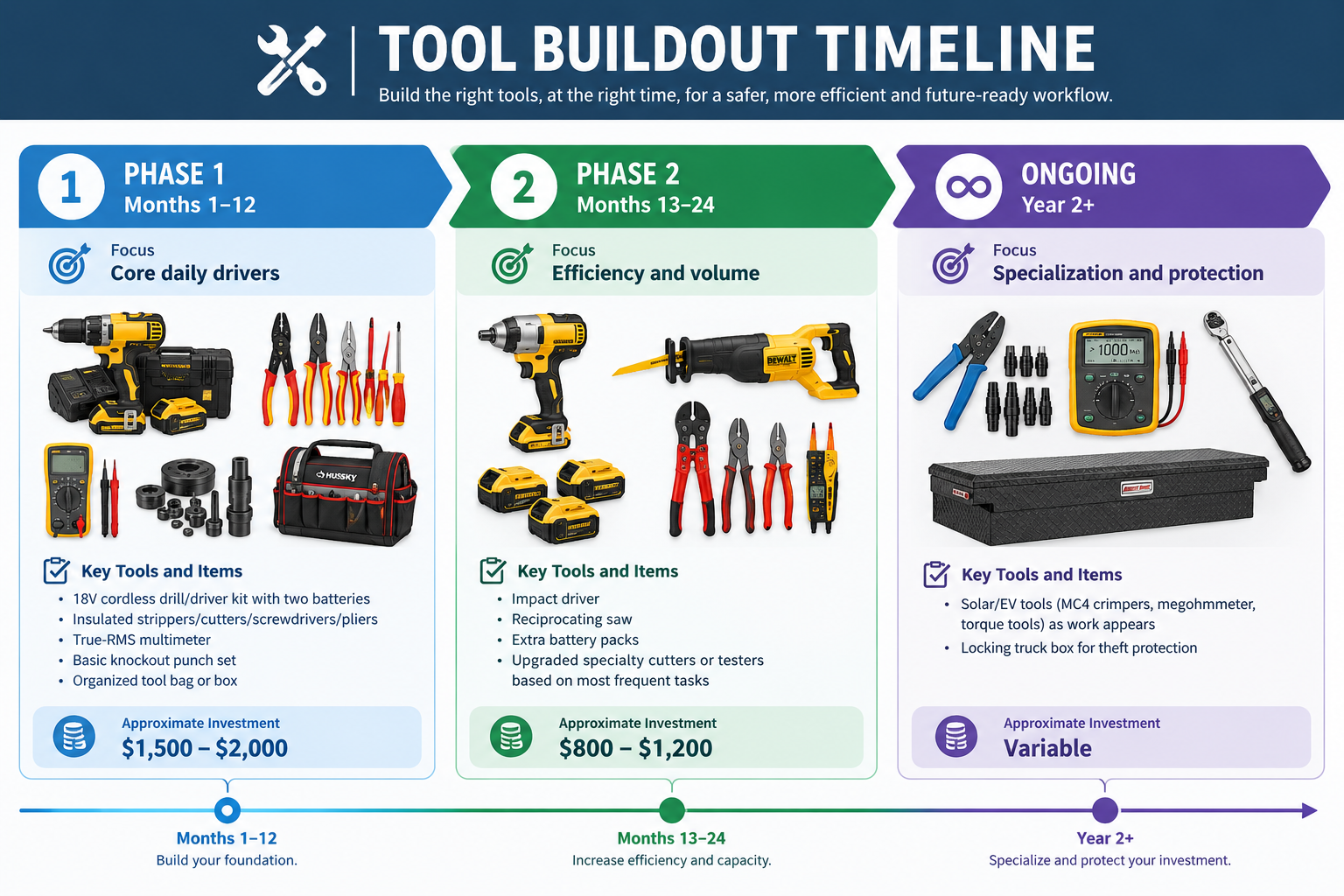
Battery platform choice matters more than brand loyalty. Staying inside one ecosystem, Milwaukee M18, DeWalt 20V MAX, or similar lets every new tool use existing batteries and chargers. Compare the specific models you will use daily rather than overall reputation.
Tool storage protects the investment. Cordless tools account for a large share of construction theft. A locking truck box reduces risk and pays for itself after one prevents loss. Hawaii’s island setting makes off-island movement harder, yet high living costs still drive theft motivation.
Protecting Tools in Hawaii’s Climate
Year-round humidity shortens the life of unprotected tools. Weekly cleaning and lubrication, plus vapor corrosion inhibitor bags for storage, slow corrosion on terminals and bearings. Store batteries in climate-controlled spaces overnight rather than in a hot truck bed. Heat accelerates lithium-ion degradation and shortens cycle life.
When a tool fails, local service keeps you working. Shipping to the mainland for warranty work means days or weeks of downtime plus shipping costs both ways. We handle warranty and repair service locally at our Honolulu and Maui locations so you return to the job faster.
Why Buy from Slim’s Instead of Big-Box or Online-Only
Big-box stores stock for the broadest consumer audience and often carry shallower professional inventory. Online-only retailers cannot put a tool in your hand the same day or walk you through Hawaii-specific corrosion issues. We maintain a deep stock of heavy-duty tools on both islands, train staff who know local conditions, and offer the unconditional one-year guarantee on qualifying DeWalt, Milwaukee, and Metabo HPT tools. Repair and sharpening services stay local. That combination reduces downtime and matches the reality of island contracting.
Tools and Services We Offer for Electricians
- Professional cordless platforms from DeWalt, Milwaukee, and Metabo HPT
- Insulated hand tools and Japanese precision pliers
- True-RMS multimeters and testing equipment
- Knockout punches, cable cutters, and rough-in tools
- Drill bits and consumables suited to volcanic aggregate and metal
- Local repair, sharpening, and warranty support on Oahu and Maui
- Fasteners, anchors, and jobsite supplies that resist salt-air corrosion
Residential vs. Commercial Starter Needs f
| Category | Residential Focus | Commercial / Industrial Focus |
|---|---|---|
| Drill platform | 12V–18V for finish and light rough-in | 18V+ with high torque from day one |
| Cable cutting | Manual cutters for 14–10 AWG | Manual or hydraulic for larger conductors |
| Knockouts | Manual ratcheting sets | Manual or battery-hydraulic for frequent use |
| Testing | True-RMS multimeter + non-contact | Same plus ground resistance for EV/solar |
| Budget range (starter) | $1,500–$2,000 | $2,500–$3,500 |
Prices are approximate and subject to change based on current inventory, promotions, and specific models. Contact us for the latest pricing and availability.
FAQ
What tools should a new electrician buy first?
Start with an 18V cordless drill/driver kit, insulated strippers and pliers, a true-RMS multimeter, and basic storage. Add an impact driver and specialty items as the work volume grows.
Do I need insulated tools for all electrical work?
Yes when working near exposed energized parts. OSHA requires insulated tools or handling equipment in those situations. The 1000V rating is the common professional standard.
How does Hawaii’s climate affect tool life?
High humidity and salt air accelerate corrosion. Clean and lubricate tools weekly. Store batteries properly and use protective bags during storage. Tools built for professional use last longer under these conditions.
Why choose local inventory over online ordering?
Same-day pickup keeps jobs moving. Local warranty and repair service return tools to work in days instead of weeks of mainland shipping.
Does Slim’s carry tools for solar and EV charger work?
We stock the cordless platforms, testing equipment, and related supplies electricians use for these installations. Ask our staff for current options suited to your projects.
Get the Right Tools for Your Next Job
Build the kit that matches the work you do every day and the conditions you face on the islands. Visit us in Honolulu at 1626 Republican Street or in Kahului at 142 Kalepa Place. Our team can help you select the right tools. We can also check current stock and explain the guarantee and local service options.
Shop the full selection of professional-grade tools built for Hawaii’s demanding job sites.
