
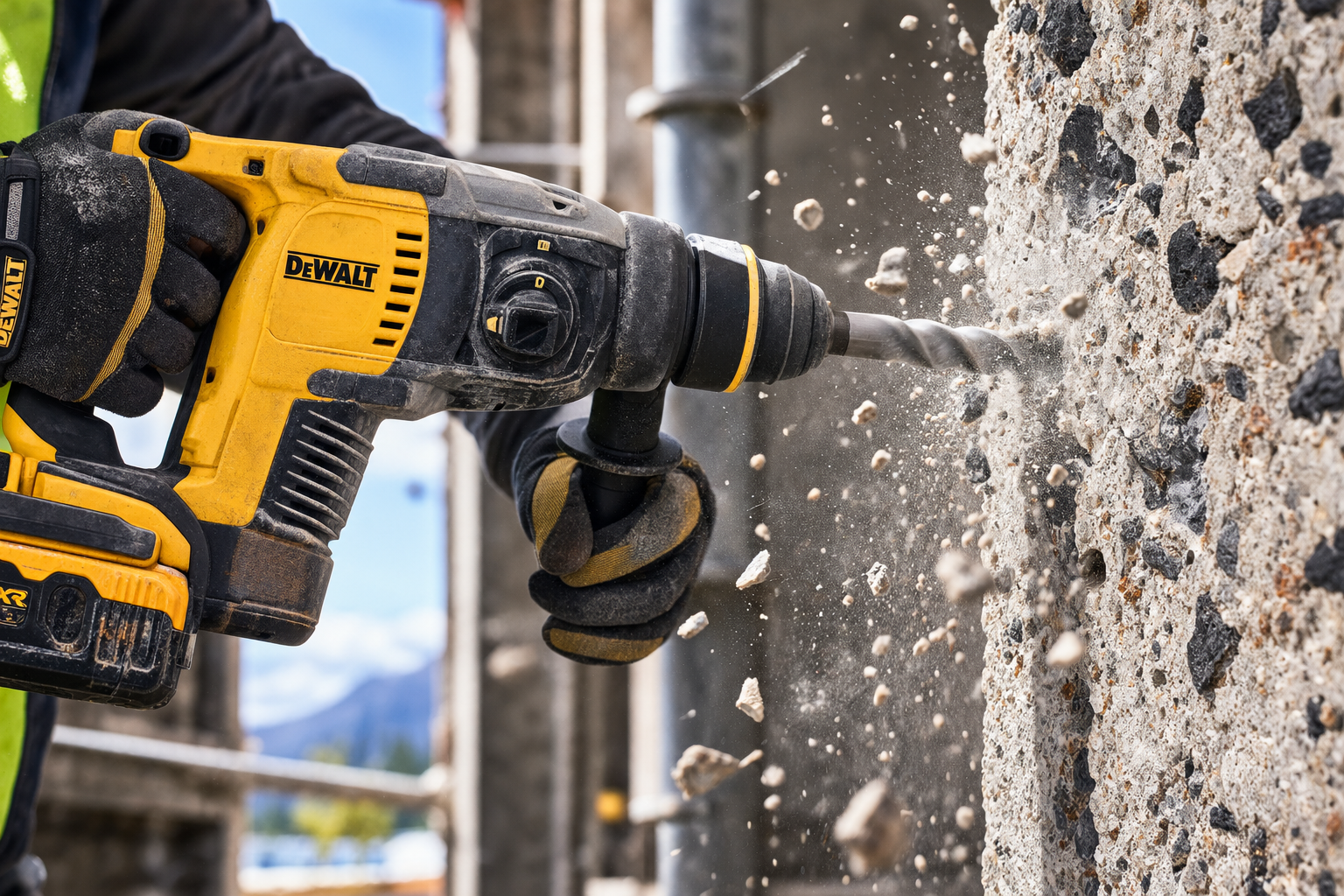
A standard drill spins. A hammer drill punches while it spins. That percussive force, measured in blows per minute (BPM), makes the difference between drilling a clean anchor hole in concrete and burning through three bits while barely scratching the surface. If you're working with masonry, you need to understand exactly when a hammer drill is the right tool and when you're better off with something else.
Hawaii's concrete construction presents specific challenges. Concrete mixes in Hawaii can contain locally sourced volcanic aggregate, which can affect drilling conditions depending on the mix and aggregate. That means your tool selection matters more than it would elsewhere. Since 1972, we at Slim’s Power Tools have guided three generations of island contractors through these decisions at our Oahu and Maui locations.
What a Hammer Drill Does (and When You Actually Need One)
Professional hammer drills can deliver tens of thousands of blows per minute. The mechanism drives the bit forward in thousands of tiny thrusts per minute while spinning, pulverizing masonry instead of just grinding against it. Standard drills rely purely on rotation and pressure, which fails in concrete, brick, stone, and cinder block.
You need a hammer drill for anchor installation in concrete walls, mounting electrical boxes in masonry, drilling through foundation walls, and prep work before tile removal. Standard concrete at 3,000-4,000 PSI requires hammer action for efficient penetration. Hammer action can significantly improve drilling speed in masonry compared with using a standard drill.
Skip the hammer drill for wood framing, metal fabrication, drywall installation, or any project where you're not fighting mineral hardness. The percussion mechanism adds weight, cost, and unnecessary vibration for these applications. Most hammer drills include a mode switch that disables the hammering action, letting you use the tool as a standard drill when appropriate. But if you never drill masonry, you're paying for capability you don't need.
Hammer Drill vs. Impact Driver vs. Rotary Hammer
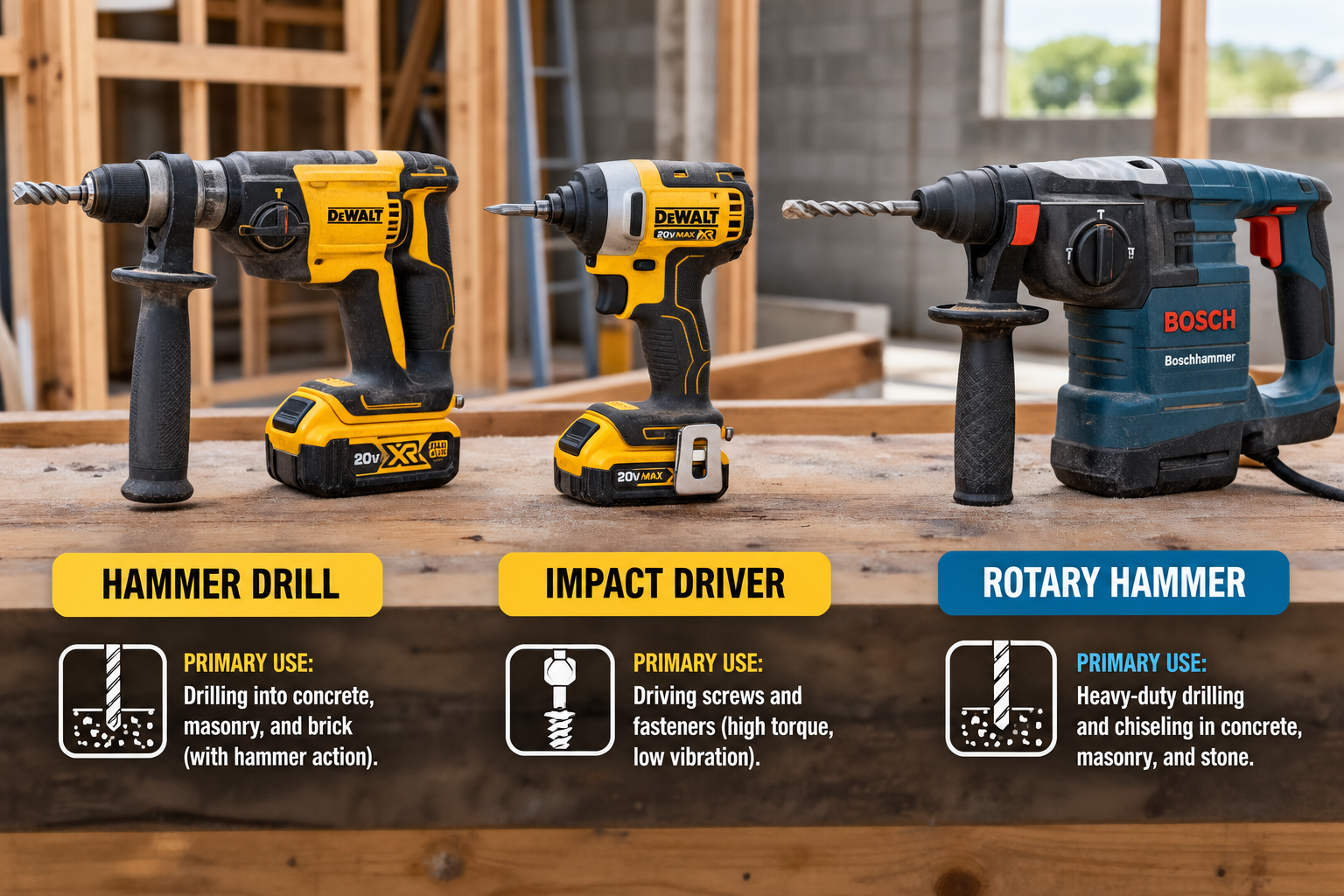
The confusion between these tools costs contractors time and money. An impact driver delivers rotational impacts designed for driving fasteners. It hammers in a circular direction to power through seized screws and lag bolts. A hammer drill hammers forward into the material while rotating. Completely different mechanisms for different jobs. Using an impact driver on concrete accomplishes nothing except frustration.
The line between hammer drills and rotary hammers matters more. Rotary hammers use a piston mechanism that delivers substantially more impact energy, measured in joules rather than BPM, and typically feature SDS chuck systems instead of standard three-jaw chucks. When you're breaking up concrete, chasing channels through foundation walls, or drilling dozens of large-diameter holes daily, rotary hammers justify their higher cost. Hammer drills are generally lighter and less expensive than comparable rotary hammers.
Here’s the decision framework:
| Task | Best Tool | Why |
|---|---|---|
| Fastening into existing materials | Impact driver | Rotational impacts for screws and lag bolts |
| Drilling holes up to 1" in concrete/brick | Hammer drill | Forward percussion + rotation for efficient holes |
| Demolition or holes larger than 1" | Rotary hammer | Higher joule energy and SDS system for heavy work |
We’ve walked contractors through this choice since our family opened the first location in 1972, and the question hasn’t changed. Only the battery technology has.
Corded vs. Cordless: Power Trade-Offs That Matter
Corded hammer drills deliver consistent power through continuous masonry work. A 10-amp corded model maintains full torque on the 200th hole just like the first. No battery fade, no runtime anxiety. For high-volume concrete work or all-day anchor installation, corded tools eliminate the battery juggling act.
Cordless models trade sustained power for mobility. On scaffolding, rooftops, or anywhere you're working 50 feet from an outlet, batteries become essential. Modern brushless motors narrow the performance gap. Brushless motors can improve efficiency, runtime, and motor longevity compared with brushed designs, depending on the tool and application. But runtime realities still constrain cordless work. An 18V hammer drill with a 4.0Ah battery gives you 40-60 holes at 1/2" diameter before needing a swap. For extended cordless work, carrying additional batteries can reduce downtime. That can add $200-400 beyond the tool body.
Pricing Disclaimer: Prices, availability, and specific model details change. Contact Slim’s Power Tools or visit our stores for current pricing and stock on Oahu and Maui.
Hawaii's humid coastal environment adds another consideration. Corded tools need GFCI protection in damp locations per OSHA requirements, and salt air accelerates corrosion on both power types. Sealed housings and stainless components matter more here than on the mainland. At our Honolulu and Maui locations, we help contractors match power sources to their specific job sites and discuss which models carry our unconditional one-year guarantee on select DeWalt, Milwaukee, and Metabo HPT tools.
Professional-Grade Brands We Stock for Island Work
Milwaukee’s M18 FUEL line sees heavy use on professional job sites. Models in this platform deliver high torque, strong bit retention, and compatibility across a large tool ecosystem. Milwaukee backs many of these tools with a five-year limited warranty on the tool and multi-year coverage on batteries. If you’re already invested in the M18 system, staying within it makes economic sense for ongoing projects.
DeWalt’s 20V MAX system offers similar platform depth and reliable performance in concrete and masonry. These tools typically carry a three-year limited warranty and strong service support. Both brands provide the sealed components and metal construction that hold up better in salt air than lighter consumer alternatives.
Makita’s 18V LXT series deserves attention for contractors who value precision engineering. The XPH14 and related models deliver high torque (up to 1,250 in-lbs) and solid BPM ratings in a compact package. We’ve specialized in Japanese hand tools since our founding, and that same attention to tight tolerances and quality control carries through Makita’s power tool line.
Avoid hammer drills with plastic chucks, single-speed operation, or low amp ratings on corded models. These compromises show up immediately in dense concrete. Professional contractors working in Hawaii's challenging conditions need tools matched to the material.
Featured Hammer Drills and Related Tools at Slim’s Power Tools
We keep a deep inventory of professional hammer drills and supporting gear at both our Oahu and Maui locations. Here are some options we regularly recommend for local concrete work:
- Milwaukee M18 FUEL hammer drills (including models in the 2804 series) for high hole counts per charge and strong ecosystem support
- DeWalt 20V MAX cordless hammer drills for reliable performance and service backing
- Makita 18V LXT hammer drills for precision and efficiency in dense aggregate
- Corded professional hammer drills for continuous high-volume foundation and anchor work
- SDS rotary hammers for larger diameter holes and light demolition
- Carbide masonry bits and anchor systems matched to Hawaii concrete
- Battery packs (4.0Ah and 5.0Ah) and chargers to keep cordless tools running all day
Visit our products page or stop by either store to handle these tools in person. We also offer repair and sharpening services that keep your investment working through salt air and humidity.
Why Shop Local at Slim’s Instead of Big-Box or Online-Only
Big-box stores stock consumer models that struggle with Hawaii’s denser concrete and corrosive air. Online retailers can’t let you feel the balance of a tool or verify battery compatibility on the spot. We keep professional-grade inventory on Oahu and Maui, staff trained on the tools we sell, and the ability to discuss salt-air corrosion resistance and volcanic aggregate performance face-to-face. Select DeWalt, Milwaukee, and Metabo HPT tools carry our unconditional one-year guarantee. We also handle repairs and sharpening so your tools stay productive in island conditions. That combination of local stock, real expertise, and after-sale support is hard to match from a national chain or a warehouse on the mainland.
Frequently Asked Questions
Do I need a hammer drill for Hawaii concrete?
Yes for most foundation, anchor, and masonry work. Local mixes often run harder due to volcanic aggregate and higher PSI requirements, so standard drills wear out quickly and progress slowly.
What’s the difference between a hammer drill and a rotary hammer?
Hammer drills use a clutch-style percussion system measured in BPM and work well for holes up to about 1". Rotary hammers use a piston mechanism measured in joules and handle larger holes plus light demolition more efficiently.
Corded or cordless for jobsite concrete work?
Corded for continuous high-volume drilling near power. Cordless for mobility on scaffolding, roofs, or distant locations. Many contractors keep both and match the tool to the day’s tasks.
How many holes can I expect from one battery charge?
Professional 18V models with 5.0Ah batteries typically deliver 60+ half-inch holes depending on concrete hardness and bit condition. Hawaii’s denser aggregate can reduce that number, so extra batteries help.
What features matter most for salt-air environments?
Sealed housings, metal chucks, dust protection, and corrosion-resistant components. We stock models with these traits and can point out which ones perform better in coastal humidity.
Can Slim’s help me choose and service the right tool?
Yes. Bring your project details or existing batteries to either location. We recommend based on real island conditions and support the tools with repair, sharpening, and our one-year guarantee on select models.
Ready to drill cleaner holes in Hawaii concrete with less bit wear and less frustration?
Stop by our Honolulu or Maui locations, handle the tools yourself, and get recommendations from staff who understand local conditions. Shop online or in person and keep your projects moving.
