
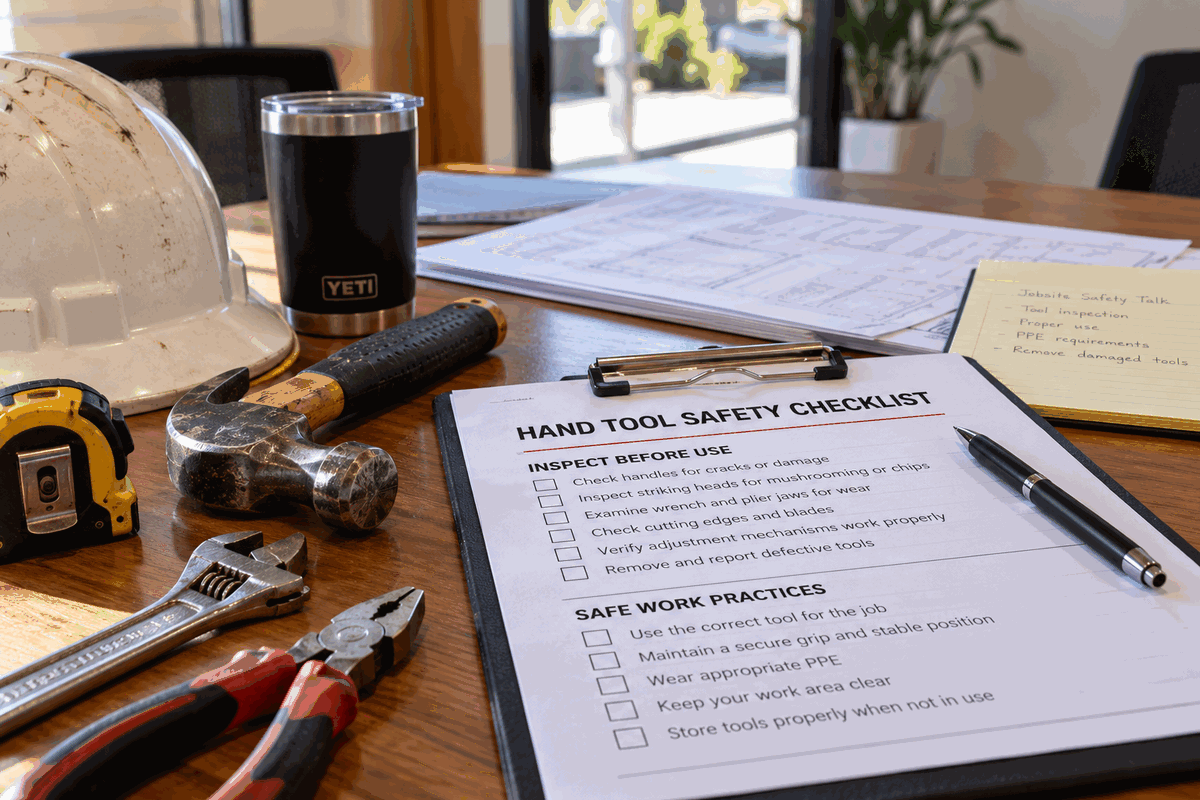
A carpenter reaches for a hammer with a loose head. A mechanic applies force to a wrench with worn jaws. A worker picks up a utility knife without noticing that its blade is damaged.
None of these situations looks particularly unusual. But each can lead to an injury when a tool fails or slips during use.
Hand tool safety is often about recognizing small problems before they become serious ones. A cracked handle, damaged striking surface, or incorrectly sized tool can create unnecessary risks, even for experienced workers.
At Slim’s Power Tools, we supply professional tools and contractor equipment to Hawaii’s tradespeople. We understand the importance of selecting equipment that suits the job and knowing when a worn tool needs to be replaced.
This guide focuses on practical hand tool safety procedures, including common hazards, inspection methods, removal-from-service decisions, and relevant OSHA requirements. It also includes a checklist supervisors can use during routine jobsite inspections.
Common Hand Tool Hazards and Injury Risks
Different hand tools create different hazards. Understanding the risks associated with each tool helps workers recognize unsafe conditions before starting a task.
According to OSHA’s Hand and Power Tools guidance, improper use and maintenance are important sources of hand tool hazards.
The following examples illustrate common problems encountered during construction, installation, and maintenance work.
| Tool | Common hazard | Potential injury | Preventive measure |
|---|---|---|---|
| Hammer | Loose head or damaged handle | Struck-by injury | Inspect head attachment and handle |
| Chisel | Mushroomed striking head | Flying metal fragments | Remove damaged tools from service |
| Wrench | Worn jaws or incorrect size | Hand injury from slipping | Use properly fitting tools |
| Screwdriver | Incorrect tip or improvised prying | Puncture or slip injury | Match tip to fastener |
| Utility knife | Damaged blade or uncontrolled cutting | Cuts and lacerations | Secure material and control cutting direction |
| Handsaw | Damaged teeth or unstable workpiece | Cuts and loss of control | Inspect blade and secure material |
| Pliers | Worn jaws or unsuitable cutting capacity | Slipping or flying fragments | Use tools rated for the application |
These hazards aren’t limited to inexperienced workers.
Familiarity can sometimes encourage shortcuts, particularly during repetitive tasks. A worker who has used the same wrench for years may overlook gradual jaw wear or continue using a damaged handle because it hasn’t failed yet.
Routine inspection helps prevent those habits from becoming accepted practice.
Hand Tool Inspection and Defect Identification
A pre-use inspection doesn’t need to be complicated. The purpose is to identify damage that could affect the tool’s safe operation.
Workers should examine equipment before use and whenever damage is suspected.
For construction activities, 29 CFR 1926.301 establishes specific requirements for hand tools, including restrictions on damaged impact tools and certain unsafe wrench conditions.
Handles and Tool Bodies
Inspect wooden, fiberglass, and composite handles for cracks, splinters, looseness, or other damage.
A hammer with a loose head can become dangerous when the head separates during a swing.
Likewise, a cracked screwdriver handle may fail when torque is applied.
Check metal bodies for cracks, significant deformation, and corrosion affecting structural integrity.
A tool with a compromised body should not remain in service.
Striking Heads and Cutting Edges
Chisels, punches, and other impact tools require particular attention.
Repeated hammering can deform a striking head, creating mushroomed edges that may fracture and release fragments.
Check for chips, deformation, and other damage.
For cutting tools, inspect blades and teeth for cracks, excessive wear, and damage that could cause unpredictable cutting behavior.
Sharpen or replace serviceable cutting components according to the manufacturer’s instructions.
Jaws, Hinges, and Adjustment Mechanisms
Wrenches and pliers should grip securely and operate smoothly.
Check adjustable wrench jaws for excessive play, wear, and deformation.
Inspect plier pivots for looseness or damage, and make sure cutting edges are appropriate for the material.
If a wrench repeatedly slips despite correct sizing and technique, remove it from use and investigate the cause.
Removal-from-Service Decisions
A damaged tool shouldn’t be returned to a toolbox for someone else to discover.
Remove unsafe equipment from service, identify it clearly, and follow the employer’s repair or disposal procedure.
Some tools can be repaired using manufacturer-approved components. Others should be permanently discarded.
For example, replacing a serviceable handle may be appropriate when the manufacturer permits it. A cracked wrench body or severely damaged striking tool may require replacement.
Improvised repairs, such as taping a broken handle or modifying a wrench to compensate for worn jaws, aren’t acceptable substitutes for restoring safe operation.
Safe Operating Procedures for Common Hand Tools
Even a tool in excellent condition can cause an injury when used incorrectly.
Safe operation depends on tool selection, body position, workpiece stability, and controlling the direction of applied force.
Hammers and Striking Tools
Before striking, confirm that the head is secure and the handle is undamaged.
Choose a hammer designed for the material and task. Not every striking face is suitable for hardened steel or other specialized applications.
Keep your hands clear of the impact area and maintain stable footing.
When working with chisels or punches, secure the material and use suitable eye protection against flying fragments.
Never use a tool with a mushroomed or damaged striking head.
Wrenches and Pliers
Use the correct wrench size and type for the fastener.
Position your body so that a sudden slip is less likely to cause injury. When practical, pulling a wrench can provide better control than pushing, but the safest approach depends on the working position.
Don’t extend wrench handles with pipes or other improvised devices unless the manufacturer specifically permits that application.
For pliers, use the appropriate jaw design and cutting capacity.
Ordinary pliers and screwdrivers should never be assumed safe for energized electrical work. Electrical tasks require appropriately rated equipment and safe work procedures.
Knives, Saws, and Chisels
Secure the workpiece before cutting.
Keep hands and other body parts outside the anticipated cutting path, and avoid directing the blade toward yourself.
Use a blade suitable for the material and replace it when damaged.
For chisels, maintain control of both the cutting edge and the force applied.
When carrying or storing sharp tools, protect exposed edges with suitable guards or sheaths.
A tidy work area also reduces the chance of accidentally contacting a sharp tool.
Job Hazard Analysis and Risk Controls
Hand tool safety isn’t limited to inspecting equipment. The surrounding work environment can introduce hazards even when the tool itself is in good condition.
For example, using a hammer on a stable workbench is different from performing the same task on a ladder or near an unprotected edge.
A job hazard analysis helps identify these conditions before work begins.
Applying the Hierarchy of Controls
The NIOSH Hierarchy of Controls provides a framework for reducing workplace hazards.
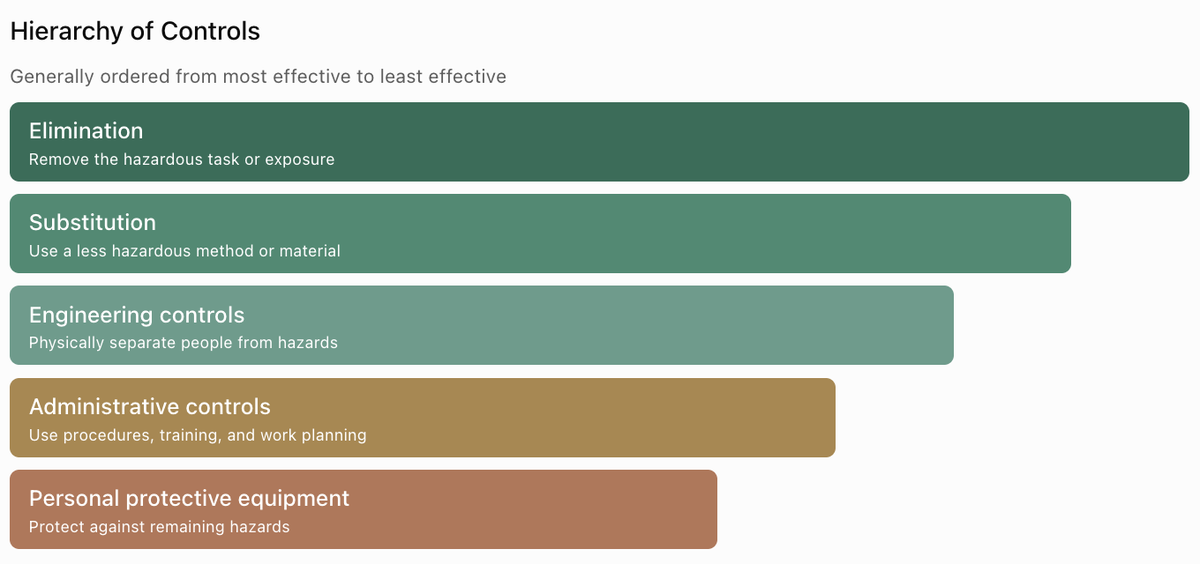
Consider a worker removing material with a chisel.
The task may expose the worker to flying fragments, sharp edges, and hand injuries.
Possible controls include using a safer removal method where practical, securing the material with a fixture, keeping nearby workers clear, and wearing appropriate eye or face protection.
PPE helps protect against remaining hazards, but it shouldn’t be the only precaution.
Assessing Overhead Work
Overhead tasks introduce dropped-object hazards.
A tool falling from a ladder, scaffold, or elevated platform can seriously injure someone below.
Depending on the task, controls may include restricting access beneath the work area, using appropriate tool-retention systems, and arranging work so tools can be handled securely.
Tool lanyards should be compatible with the equipment and rated for the intended application.
Workers should also avoid carrying loose tools in their hands while climbing ladders.
Reviewing Changing Jobsite Conditions
Risk assessments should be updated when conditions change.
Examples include introducing unfamiliar tools, changing work methods, moving into a more confined area, or identifying a new hazard after a near miss.
A short discussion before beginning work can help crews recognize risks that aren’t obvious from the tool alone.
Daily Hand Tool Safety Checklist and Toolbox Talk
A short, consistent inspection routine helps turn safety guidance into everyday practice.
The following checklist can be used as a practical starting point for supervisors and workers.
Daily Inspection Checklist
0/8 completed
This checklist supports routine inspection but doesn’t replace task-specific assessments, manufacturer instructions, or required workplace procedures.
A Five-Minute Toolbox Talk
Supervisors can reinforce hand tool safety with a brief discussion before work begins.
A simple format is:
- Identify: Discuss the tools the crew will use that day.
- Inspect: Demonstrate one common defect, such as a cracked handle or worn wrench jaw.
- Control: Review the hazards and precautions for the planned work.
- Report: Explain how workers should remove and report unsafe equipment.
- Confirm: Ask the crew to identify a hazard or describe the correct response to a damaged tool.
For additional materials, CPWR’s construction toolbox talks provide examples that can support safety discussions.
Record attendance and corrective actions according to your organization’s procedures.
Professional Hand Tools and Replacement Equipment at Slim’s
Damaged equipment should never remain in use simply because a replacement isn’t immediately available.
At Slim’s Power Tools, we help contractors and tradespeople find professional tools suited to their applications.
Our relevant product categories include:
- Professional hand tools: Hammers, wrenches, pliers, screwdrivers, and other equipment for construction and maintenance.
- Japanese hand tools: Pull saws, utility knives, replacement blades, and specialized cutting tools.
- Power tools: Professional drilling, cutting, and fastening equipment for tasks requiring powered operation.
- Safety equipment: Protective products for appropriate workplace applications, subject to product availability.
Our team can help you compare tool types, identify suitable sizes and designs, and discuss replacement options.
We also assist with special orders for eligible products when a specific tool isn’t available at the counter.
Frequently Asked Questions About Hand Tool Safety
What are the most common hand tool safety violations?
Common unsafe conditions include damaged handles, mushroomed striking heads, worn wrench jaws, incorrect tool selection, and inadequate protection against task-specific hazards. Whether a condition constitutes a regulatory violation depends on the applicable standard and circumstances.
How often should hand tools be inspected on construction sites?
Workers should inspect tools before use and whenever damage is suspected. Employers may establish additional periodic inspections based on equipment condition, exposure, and workplace procedures.
When should a damaged hand tool be removed from service?
Remove a tool when damage could affect safe operation, including cracked bodies, loose heads, severely worn jaws, or compromised striking surfaces. Repair or replacement should follow manufacturer instructions and applicable safety requirements.
Are tool lanyards required for overhead work?
Requirements depend on the task, equipment, worksite rules, and applicable regulations. Tool lanyards can be an appropriate dropped-object control, but they must be rated and compatible with the tool and working conditions.
Does OSHA require hand tool safety training?
Employers must meet the training and instruction requirements applicable to their operations and workplace hazards. Hand tool safety instruction may be necessary as part of those obligations. A toolbox talk can support training but doesn’t automatically satisfy every regulatory requirement.
What should a hand tool safety toolbox talk include?
A useful toolbox talk covers correct tool selection, inspection, common hazards, safe operation, PPE, and procedures for reporting damaged equipment. Use examples relevant to the work the crew will perform that day.
Replace Unsafe Tools Before They Cause an Injury
A cracked handle, worn wrench jaw, or damaged chisel head might seem like a minor problem until the tool fails during use.
Regular inspections and clear removal-from-service procedures help contractors address these problems before they lead to injuries.
At Slim’s Power Tools, we help Hawaii’s tradespeople find professional hand tools and replacement equipment suited to their work.
If your crew needs to replace worn equipment or compare suitable tool options, contact us to discuss your requirements.
Visit Our Store
