
Every hole you drill on a commercial job site costs time and money. Using the incorrect drill bit for the substrate destroys the cutting edge instantly. It also overheats your power tool motor and stalls your project schedule. Contractors in Hawaii face physical material challenges that mainland crews rarely see. Concrete poured locally frequently utilizes highly abrasive volcanic aggregate. Island carpenters constantly work with dense tropical hardwoods that splinter under dull edges. Commercial framers bore into heavy structural steel required to meet strict Pacific wind codes.
Slim’s Power Tools has supplied professional hardware to Oahu and Maui contractors since 1972. We see the direct results of mismatched drilling equipment at our repair counters every single week. This guide explains the specific metallurgical differences between industrial drill bit materials. Understanding these physical properties allows you to select the exact cutting edge required to maximize efficiency and extend the working life of your power tools.
Drilling into Concrete and Masonry
Masonry drilling requires a completely different mechanical action than cutting wood or metal. You do not shave the material away. You pulverize the concrete into fine dust and excavate that dust out of the hole rapidly.
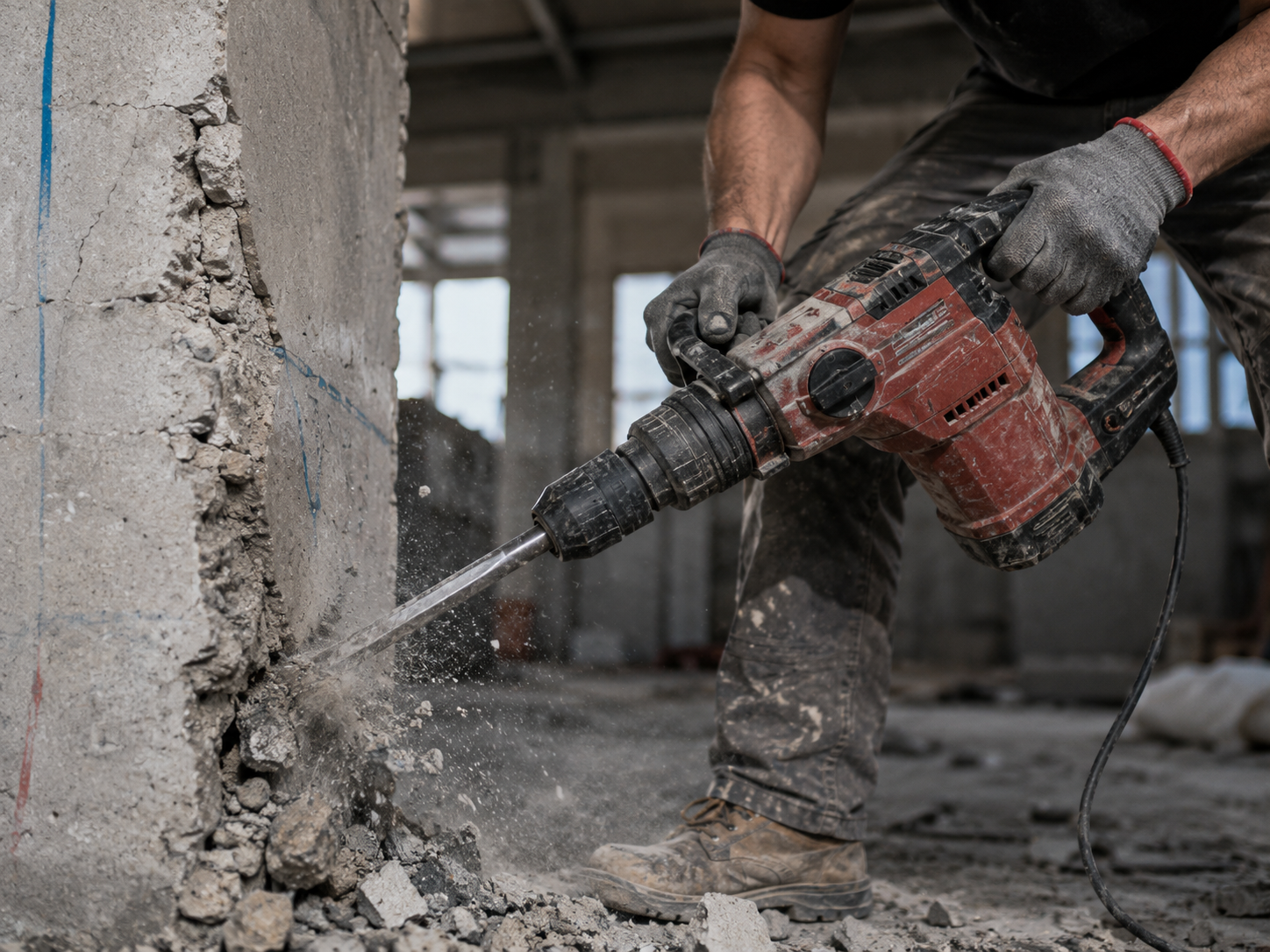
The Challenge of Hawaiian Aggregate
Concrete foundations and walls in Hawaii frequently contain local volcanic basalt as the primary aggregate. Basalt is exceptionally hard and acts as a severe abrasive against steel. A standard high-speed steel bit will round over and burn up within seconds of hitting a piece of basalt aggregate.
You must use specialized masonry bits featuring carbide-tipped cutting heads. Manufacturers braze a solid block of tungsten carbide directly into the tip of the steel shank. Tungsten carbide withstands the extreme impact force required to shatter volcanic rock without fracturing.
SDS Shank Systems for Heavy Demolition
Professional masonry drilling requires a rotary hammer rather than a standard combi-drill. Rotary hammers utilize a specialized electro-pneumatic piston to deliver massive impact energy directly to the back of the bit. Engineers developed the SDS (Slotted Drive System) shank to transfer this energy without the bit slipping violently inside the chuck.
SDS bits feature deep grooves milled directly into the base of the steel shank. These grooves lock into floating ball bearings inside the rotary hammer chuck. The bit slides back and forth freely to deliver the hammering action while rotating under extreme torque.
- SDS-Plus: This is the industry standard for drilling holes up to one inch in diameter. Framing contractors use SDS-Plus bits extensively to install concrete wedge anchors for structural sill plates.
- SDS-Max: Manufacturers design these massive bits specifically for heavy commercial demolition and large diameter holes. Plumbers and electricians rely on SDS-Max core bits to open clean pipe penetrations through thick concrete retaining walls.
Flute Design and Dust Extraction
The spiral grooves running up the entire length of the bit are called flutes. The flutes act as a mechanical conveyor belt to lift pulverized concrete dust out of the hole. If the dust remains at the bottom of the bore, the carbide tip grinds against the loose powder instead of striking fresh concrete. This creates extreme thermal friction, melts the brazing material, and causes the carbide tip to detach completely. You must regularly pull the bit back slightly during deep drilling to help the flutes clear the accumulated dust.
Masonry Drill Bit Selection Matrix
| Shank Type | Maximum Hole Diameter | Tool Requirement | Primary Application |
|---|---|---|---|
| Straight Shank | Up to 1/2 Inch | Standard Hammer Drill | Tapcon screws in brick or block |
| SDS-Plus | Up to 1-1/8 Inch | SDS-Plus Rotary Hammer | Wedge anchors in solid concrete |
| SDS-Max | Up to 2 Inches (Solid) | SDS-Max Rotary Hammer | Heavy rebar doweling |
| Core Bit (Carbide) | Up to 6 Inches | Large Rotary Hammer | Plumbing and HVAC penetrations |
Drilling into Wood and Timber
Wood fibers require a sharp shearing action to cut cleanly. If a bit lacks a razor-sharp leading edge, it simply tears the wood grain and leaves a ragged hole. Hawaii carpenters frequently work with dense local hardwoods like Koa and Monkeypod. These woods contain high levels of natural silica that dull cheap steel bits rapidly.
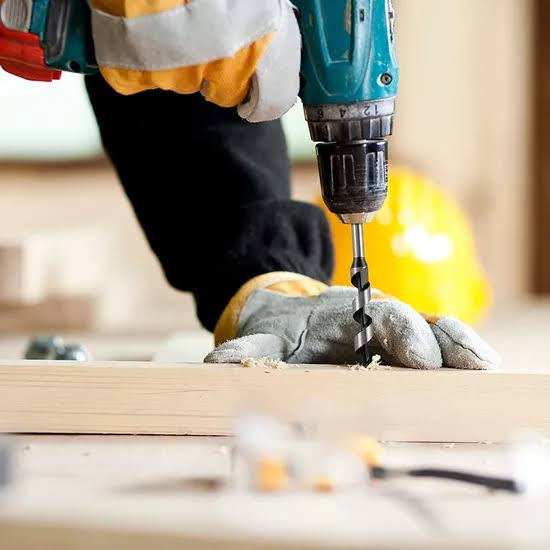
High-Speed Steel (HSS) vs. Brad-Point Bits
Standard twist bits manufactured from High-Speed Steel handle general-purpose drilling in dimensional framing lumber. The standard 118-degree pointed tip tends to wander across the wood grain before biting into the surface. This wandering ruins the exact placement required for fine cabinetry or furniture building.
Brad-point bits solve this accuracy problem directly. The tip of the bit features a sharp, elongated center spike. You press this spike precisely onto your pencil layout mark. The spike anchors the bit in place while the sharp outer spurs shear the perimeter of the hole cleanly. Brad-point bits are mandatory for finish carpenters installing exposed dowel joinery or European cabinet hinges.
Auger Bits for Deep Framing Applications
Electricians and plumbers must drill continuous holes through multiple wooden studs to run wire and copper pipe. Standard twist bits lack the necessary flute capacity to eject wood chips from a deep hole. The chips pack tightly around the shank and stall the drill motor immediately.
Auger bits feature a deep, open spiral design and a threaded screw tip. The screw tip physically pulls the bit through the timber, requiring zero forward physical pressure from the operator. The massive open flutes eject thick wood shavings effortlessly. You must exercise extreme caution when using large auger bits with high-torque drills. If the bit strikes a hidden nail, the drill will twist violently and can cause severe wrist injuries. Always use the auxiliary side handle on your drill when running large auger bits.
Spade Bits and Forstner Bits
Spade bits offer a cheap, fast solution for blowing rough holes through framing lumber. They cause severe tear-out on the exit side of the hole and leave a rough interior wall. Forstner bits perform the exact opposite function. They bore flat-bottomed holes with perfectly smooth sidewalls. Woodworkers use Forstner bits exclusively in drill presses to remove overlapping circles of material or to counter-bore holes for recessed bolt heads in heavy timber framing.
Drilling into Steel and Metal
Cutting metal generates immediate and extreme thermal friction. If the cutting edge of the drill bit overheats, the steel loses its temper and softens permanently. A soft bit will not cut metal. You must match the bit material to the exact hardness of the target metal to prevent premature tool failure.
Standard High-Speed Steel (HSS)
Basic HSS bits coated in black oxide handle mild steel, aluminum, and general sheet metal efficiently. The black oxide treatment reduces friction and helps the bit retain cutting oil. These bits utilize a standard 118-degree point angle. This standard angle provides a strong cutting edge but requires the operator to use a physical center punch. The center punch creates a dimple that prevents the bit from walking across the smooth metal surface before starting the hole.
Titanium Nitride (TiN) Coated Bits
Manufacturers apply a thin gold-colored coating of Titanium Nitride over a standard HSS core. This ceramic coating drops the friction coefficient drastically. The bit generates less heat and holds a sharp edge up to six times longer than bare steel. Titanium bits excel at drilling through repetitive layers of sheet metal or HVAC ductwork. Once the tip wears dull, you cannot resharpen a titanium bit without grinding away the protective gold coating entirely.
Cobalt Alloy Bits for Hardened Steel
When you must drill through hardened materials like stainless steel or Grade 8 structural bolts, standard HSS bits will melt. You must upgrade your fleet to Cobalt drill bits. These bits are not just coated on the surface. The manufacturer blends five to eight percent cobalt alloy directly into the entire steel matrix.
Cobalt withstands extreme sustained heat without losing its structural hardness. A cobalt bit will cut through thick structural I-beams that would destroy a standard twist bit in seconds. Because the cobalt is blended throughout the steel, you can resharpen these bits repeatedly on a bench grinder. Cobalt bits typically feature a flatter 135-degree split point. This split point design begins cutting immediately on contact, eliminating the need for a center punch.
Step Drill Bits for Sheet Metal
Electrical contractors use step bits to drill perfectly round holes in thin metal electrical panels. A single step bit features multiple tiered cutting diameters on a single cone. As you push the bit deeper into the sheet metal, the next tier automatically deburrs the top edge of the hole you just cut.
Metal Drill Bit Selection Matrix
| Bit Material | Point Angle | Best Metal Application | Resharpening Capability |
|---|---|---|---|
| Black Oxide HSS | 118-Degree | Aluminum, Mild Steel | Yes |
| Titanium Coated | 135-Degree Split | Sheet Metal, HVAC Ducts | No (Destroys coating) |
| Cobalt Alloy (M35/M42) | 135-Degree Split | Stainless Steel, Cast Iron | Yes |
| Step Bit (Unibit) | Graduated Steps | Electrical Panels, Junction Boxes | Professional grinding only |
Job Site Maintenance and Heat Management
Purchasing premium Drill Bits is a wasted investment if you do not implement proper drilling techniques. Heat is the absolute enemy of any cutting edge.
You must utilize industrial cutting fluid when drilling into thick steel. Cutting oil reduces friction and transfers the heat away from the cutting tip directly into the metal shavings. Attempting to drill half-inch holes through a structural I-beam dry will ruin a forty-dollar cobalt bit on the first attempt. Keep a bottle of high-quality cutting fluid from our Chemicals & Lubricants collection in your toolbox at all times.
Controlling your drill speed is equally critical. Professional tradespeople operate under the strict rule of “harder material requires slower speeds.” Spinning a drill bit at maximum RPM against hardened steel simply creates a friction fire. Apply heavy physical pressure and pull the trigger slowly to force the teeth to peel thick ribbons of metal. If you are generating fine metal dust instead of long curled shavings, you are spinning the drill too fast and actively ruining the cutting edge.
Equip Your Hawaii Job Site
Selecting the correct drill bit material guarantees cleaner holes, extends the operational life of your power tools, and keeps your production crew exactly on schedule. Never force a dull bit through heavy stock or attempt to cross-purpose wood bits for masonry tasks.
Visit Slim’s Power Tools at our Honolulu location on Oahu or our Maui location in Kahului to browse our massive inventory of industrial cutting accessories. We stock heavy-duty bits from trusted professional manufacturers designed to withstand the abrasive materials and rigorous demands of island construction. Check out our full selection of Drill Bits online and upgrade your job site cutting performance today.
