
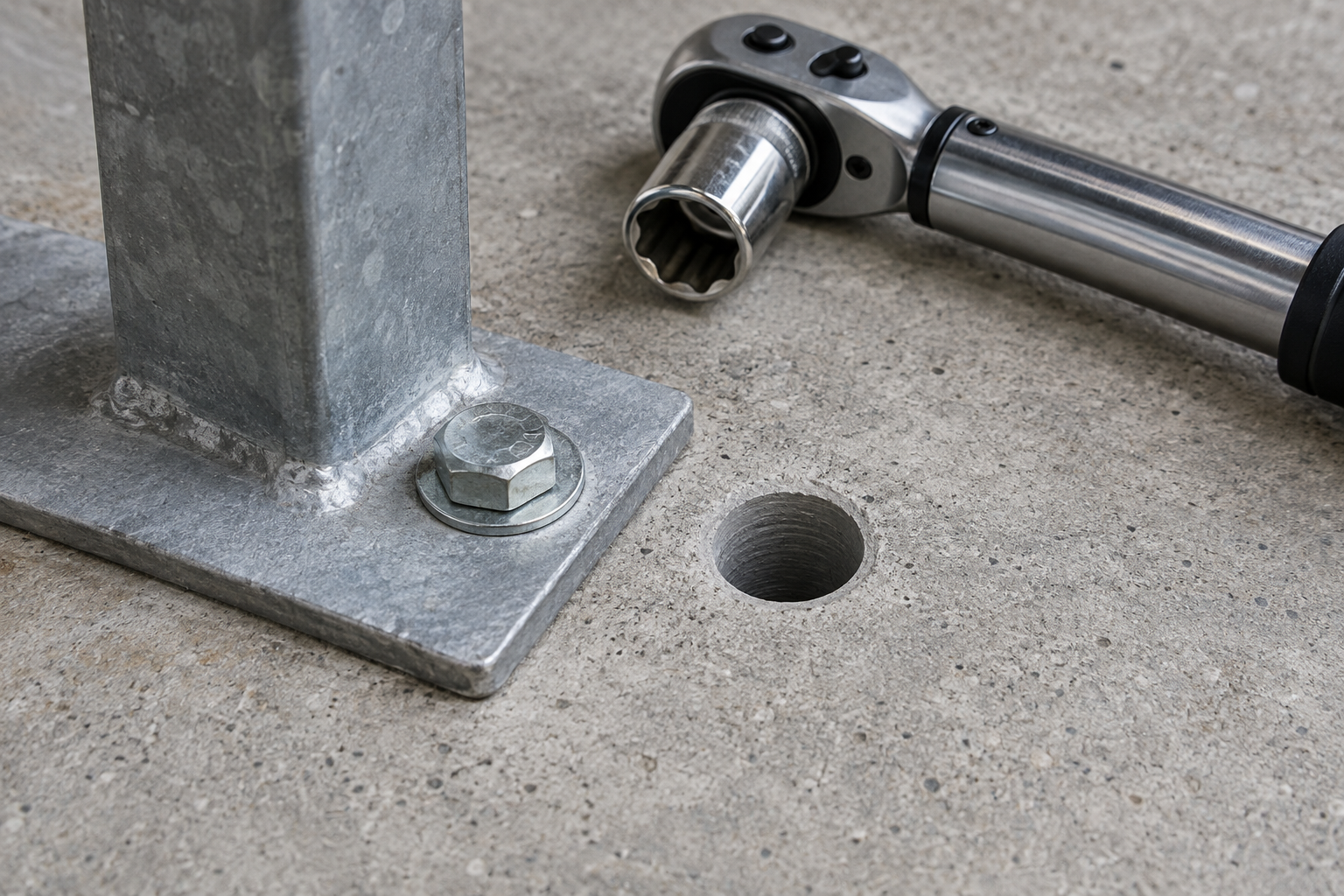
Hawaii sits in a unique position where strong trade winds, occasional tropical storms, and ongoing seismic activity combine to test every structural connection. Concrete anchors that hold equipment, sill plates, or framing to foundations face repeated uplift, shear, and cyclic forces that static loads never produce. Over time those forces can loosen expansion clips, straighten older J-bolts, or pull entire assemblies free if the anchor type, embedment, or installation falls short. The consequences range from shifted machinery and cracked concrete to compromised building performance during the next high-wind event or ground movement.
Contractors and builders across Oahu and Maui see these failures most often on older installations or jobs where the wrong product was chosen for the environment. Salt air accelerates corrosion. Dense volcanic aggregate concrete demands precise drilling. Humidity affects adhesive cure times. Codes require anchors in higher seismic design categories to perform in cracked concrete under cyclic loading. Understanding how anchors actually fail under these conditions and selecting the right system with correct installation practices keeps the connection intact when the loads arrive.
Why Concrete Anchors Fail Under Wind and Seismic Forces
Wind produces sustained and gusting uplift that tries to lift the structure or equipment off its base. Seismic events add rapid direction changes that crack the concrete around the anchor and reduce the effective holding capacity. Simple J-bolts and L-bolts common in older construction straighten under tension and extract from the concrete. Standard expansion anchors rely on friction against the hole wall. Once cracks form or the concrete spalls, that friction drops sharply.
Adhesive systems can also fail if the hole was not cleaned properly or if the resin did not fully cure. Corrosion from Hawaii’s salt-laden air weakens the steel over years, especially on zinc-plated parts left exposed near the ocean. Edge distances that are too short limit the size of the concrete breakout cone that must fail before the anchor can pull free. Short embedment depths create the same problem. In short, failure usually traces back to product selection that ignored dynamic loads, installation that cut corners, or environmental factors that mainland specifications sometimes overlook.
Choose the Right Anchor Type for the Job
Selecting an anchor that matches both the load and the conditions is the first line of defense. Different systems transfer force in different ways, and only some are tested and listed for the cracked-concrete and cyclic conditions that seismic and high-wind applications demand.
Wedge and expansion anchors expand a clip against the hole wall. Many modern versions carry evaluation reports that qualify them for cracked concrete and seismic loading. They work well for equipment bases and structural steel when the hole diameter is precise and the concrete is sound. Screw anchors, such as the Simpson Strong-Tie Titen HD series, cut into the concrete as they are driven. The threads undercut the material and create a mechanical interlock that performs reliably in both cracked and uncracked concrete. These anchors install quickly, can be loaded immediately, and are widely listed for static, wind, and seismic conditions.
Adhesive or epoxy systems create a chemical bond between the steel rod or rebar and the concrete. When the hole is clean and the product is mixed and cured correctly, they deliver high pull-out resistance even with limited edge distance. They are often preferred for retrofit work or critical connections. Cast-in-place headed anchors or plate anchors remain the strongest option for new foundations because the concrete must fail in a large cone before the anchor can release. These must be positioned before the pour and cannot be adjusted later.
| Anchor Type | Best For | Seismic/Wind Performance | Main Limitation | Common Hawaii Application |
|---|---|---|---|---|
| Wedge / Expansion | Heavy equipment, structural steel | Many models qualified | Sensitive to hole size and cracks | Machinery bases, column bases |
| Screw Anchors (Titen HD) | Fast installs, cracked concrete | Listed for static, wind, seismic | Higher unit cost | Sill plates, hold-downs, retrofits |
| Adhesive / Epoxy | Maximum pull-out, tight edges | Excellent with proper install | Requires cure time | Critical connections, damp conditions |
| Cast-in Headed / Plate | New foundation work | Highest when designed correctly | Must set before concrete pour | Stem walls, footing connections |
Matching the anchor to the actual demands of the project prevents the most common pull-out failures.
Critical Installation Details That Prevent Pull-Out
Even a well-chosen anchor fails if the installation is incomplete. Start with the hole. Use a carbide bit that matches the exact diameter specified by the manufacturer. An oversized hole reduces expansion pressure or adhesive contact area. Drill to the required depth plus a little extra for dust collection, then clean thoroughly. Blow the hole with compressed air and brush the sides until no dust remains. Residual dust is one of the leading causes of adhesive underperformance.
Meet or exceed the published minimum embedment depth. Greater depth increases the volume of concrete that must break out before the anchor can extract. Respect edge distance and spacing requirements listed in the evaluation report. Placing anchors too close to an edge or to each other reduces capacity because the failure cones overlap or cannot fully form. A practical starting point is five to ten anchor diameters from edges and between anchors, but the product data always controls.
Torque expansion and screw anchors to the value given by the manufacturer. Under-torquing leaves the expansion mechanism loose. Over-torquing can crack the surrounding concrete or damage the threads. For adhesive systems, follow the gel time and full cure schedule exactly. Hawaii’s humidity and cooler temperatures can extend those times, so plan the work sequence accordingly. In coastal or high-moisture locations, select mechanically galvanized or stainless steel versions to resist corrosion that eventually weakens the connection.
Special Considerations for Hawaii Conditions
Local concrete mixes often contain dense volcanic aggregate that is harder and more abrasive than many mainland mixes. Sharp bits and controlled drilling speed help maintain accurate hole diameters. High humidity slows adhesive cure and can affect surface preparation. Many projects fall into seismic design categories that require cracked-concrete qualified anchors under the Hawaii Building Code and referenced ACI provisions. Confirm the design category for the specific site and select only products that carry the matching evaluation reports.
When working on older buildings, inspect existing J-bolts and L-bolts. Many straighten under repeated uplift and lose capacity. Replacement with proper plate washers, larger diameter screw or adhesive anchors, or engineered hold-downs restores performance without extensive demolition. Near the ocean, corrosion resistance becomes a primary selection factor rather than an afterthought.
Why Local Expertise Matters More Than a Catalog Listing
National big-box stores and online-only retailers carry basic anchors in common sizes. They rarely stock the full range of seismic-qualified diameters and lengths or the specialized bits and dispensing tools that keep a crew productive. Mainland shipping can add days or a week when a job is waiting. Product knowledge focused on Hawaii’s wind, seismic, and corrosion conditions is limited.
Slim’s Power Tools has supplied professional contractors on Oahu since 1972 and on Maui since 1993. The stores maintain deep local inventory of heavy-duty anchors, fasteners, and related supplies so the correct product is usually available the same day. Staff understand the difference between a catalog listing and a connection that must survive years of trade winds, salt air, and occasional ground movement. That combination of stock and practical knowledge reduces delays and helps crews select systems that perform under real local loads.
Relevant Products and Services at Slim’s Power Tools
- Seismic- and wind-qualified screw anchors and wedge anchors in a range of diameters and lengths
- Adhesive anchoring systems, mixing nozzles, and dispensing tools for high-resistance applications
- Carbide drill bits sized for accurate holes in dense local concrete
- Corrosion-resistant and stainless steel options suited to coastal exposure
- Plate washers and hold-down hardware that spread load and protect wood members
- Same-day availability from deep inventory at both Honolulu and Kahului locations
- Guidance from staff experienced with local code and environmental demands
FAQ
What is the most common reason concrete anchors pull out in high winds?
Insufficient embedment depth, poor hole cleaning, use of non-qualified anchors, or corrosion that weakens the steel over time are the frequent causes. Uplift forces simply expose those weaknesses.
Are screw anchors suitable for seismic applications in Hawaii?
Many heavy-duty screw anchors, including Titen HD models, are tested and listed for cracked concrete and seismic loading. They provide reliable performance when the correct size, embedment, and installation torque are followed.
Can an existing hole be reused after an anchor has loosened?
In most cases no. The hole is often oversized or the surrounding concrete is damaged. Drill a new hole at proper spacing or switch to an adhesive system designed for the existing conditions.
How critical is edge distance for anchors under wind loads?
Very critical. Short edge distance limits the size of the concrete breakout cone that resists uplift. Always follow the minimum distances published in the product evaluation report and the project details.
Do adhesive anchors perform well in Hawaii’s humid climate?
Yes, when the specific product is rated for damp holes and the full cure time is observed. Humidity and lower temperatures extend cure schedules, so allow extra time before applying load.
Where can contractors on Oahu or Maui get the right anchors without waiting for mainland shipping?
Slim’s Power Tools keeps professional-grade anchors and related supplies in stock at both the Honolulu and Kahului stores. The team can help match products to local wind, seismic, and corrosion requirements.
Get the Right Anchors and Advice Locally
Don’t wait for an online shipment or settle for whatever is left on a big-box shelf when the next wind event or aftershock tests your work. Stop by Slim’s Power Tools in Honolulu or on Maui, talk with our experienced team, and leave with the anchors, bits, and knowledge you need to keep connections secure.
Call Oahu at (808) 841-0902 or Maui at (808) 242-7878, or visit us during business hours. When it comes to professional tools and fasteners built for Hawaii, there’s Slim’s—and there’s none.
