
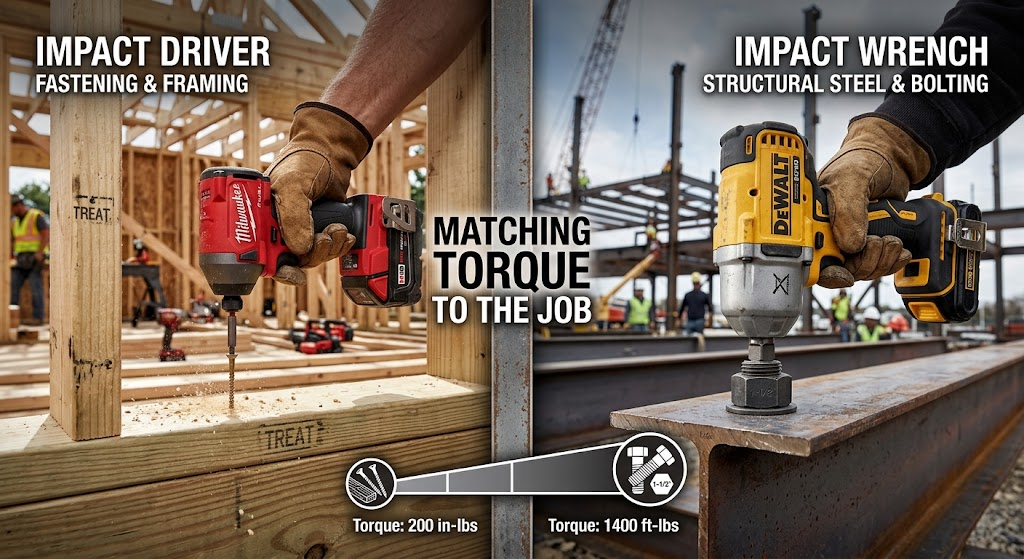
Impact drivers and impact wrenches both deliver high torque with less reaction force than a standard drill or driver. They are not interchangeable. Using the wrong tool slows production, strips fasteners, or risks damaging the work.
On Oahu and Maui jobsites the distinction matters daily. Framing, steel erection, equipment installation, and multi-trade crews all need the right combination of speed, torque, and fastener control. This guide clarifies when each tool belongs in the kit.
Core Differences in Design and Output
An impact driver is built primarily for driving screws and lag bolts. It combines rotational force with rapid axial impacts. Most models use a ¼-inch hex chuck that accepts standard impact-rated driver bits. They are compact, fast, and excellent at seating fasteners without cam-out.
An impact wrench is designed for nuts and bolts. It delivers higher peak torque through a square drive (commonly ⅜-inch, ½-inch, or larger) that accepts sockets. The mechanism prioritizes breaking loose stubborn fasteners and seating large structural bolts.
| Feature | Impact Driver | Impact Wrench |
|---|---|---|
| Primary use | Screws, lags, self-tapping fasteners | Nuts, bolts, structural fasteners |
| Typical chuck / drive | ¼-inch hex | ⅜-inch, ½-inch, or larger square drive |
| Torque range (typical) | 1,000 – 2,000+ in-lbs | 300 – 1,500+ ft-lbs (much higher peak) |
| Size and weight | Compact, lighter | Larger, heavier |
| Best daily tasks | Framing screws, deck screws, hardware | Anchoring, steel connections, equipment |
| Bit / socket system | Hex bits | Sockets |
The numbers above are approximate ranges for professional cordless models. Always check the specific tool rating. An impact driver can occasionally run a small socket adapter, but it is not designed for sustained high-torque bolting. An impact wrench can drive some large screws with the right adapter, but it lacks the speed and control of a dedicated driver for production fastening.
When an Impact Driver Is the Better Choice
Most wood-frame and general construction fastening belongs to the impact driver. Structural screws, ledger lags, hurricane ties, and deck hardware are driven faster and with better control than with a drill or impact wrench.
The compact size reduces fatigue on repetitive overhead or tight-space work. Variable speed triggers and multiple speed/torque settings help prevent overdriving into soft lumber or under-driving into dense tropical hardwoods.
On Hawaii jobsites the same advantages apply. Dense species and treated lumber still respond well to a sharp, impact-rated bit and controlled power. Keep a selection of quality hex bits matched to the fastener heads you use most.
When You Need an Impact Wrench
Move to an impact wrench for larger bolts, anchor installation, steel connections, equipment mounting, and any work that requires breaking loose rusted or high-torque fasteners. The higher peak torque and socket drive make short work of tasks that would stall or damage an impact driver.
Common applications include:
- Structural steel and moment connections
- Heavy equipment and machinery installation
- Concrete anchor bolts and large lag systems
- Trailer, truck, and fleet maintenance on site
Choose the drive size (⅜-inch, ½-inch, etc.) according to the fasteners you encounter most. Higher-torque models handle the largest structural bolts but add weight. Many crews carry both a compact mid-torque wrench and a high-torque unit.
Cordless Platforms and Battery Considerations
Both tools are widely available in the major cordless systems we stock: DEWALT 20V MAX and FLEXVOLT, Milwaukee M12 and M18, Makita, Metabo HPT, and others. Staying inside one battery platform reduces the number of chargers and spare packs on the truck.
Runtime depends on fastener size, material density, and duty cycle. High-torque impact wrenches draw more power. Matching battery capacity to the expected workload keeps production consistent through the shift.
We carry impact drivers and impact wrenches across these professional platforms along with the bits, sockets, and accessories that support them. Our power tools selection includes the models and battery systems contractors use daily.
Practical Matching on Mixed Jobsites
Many multi-trade crews benefit from owning both. Keep the impact driver on the framing and hardware pouch. Keep the impact wrench with the steel, anchor, and equipment kit. Adapters exist, but they are compromises. Dedicated tools perform better and last longer.
In dense Hawaiian lumber or when driving long structural screws, a high-output impact driver with a quality bit outperforms a lower-powered tool or an improvised wrench setup. For large-diameter bolts and breakout work, the impact wrench is the correct tool from the start.
What We Stock and How We Support Crews
Inventory includes professional impact drivers and impact wrenches from DEWALT, Milwaukee, Makita, Metabo HPT, and other lines, along with compatible batteries, chargers, bits, and sockets. Selection can vary by location, so confirm availability when you need a specific model or torque rating.
Relevant products and support:
- Impact drivers and impact wrenches across major cordless platforms
- Impact-rated bits and sockets matched to common fasteners
- Battery and charger options for the systems you already run
- Staff guidance on torque ratings and application fit
- The unconditional one-year guarantee on qualifying DEWALT, Milwaukee, and Metabo HPT power tools
- Local repair support and special-order capability
Local stock means most common tools and accessories are available the same day instead of waiting on mainland shipments.
Local Expertise Versus Generic Spec Sheets
Online torque charts rarely account for the mix of dense tropical woods, treated lumber, and structural steel common on island projects. We stock the tools contractors actually run and can help match output to the fasteners and materials on your current work. When a crew needs to add high-torque capacity or replace a worn driver, the right unit is usually on the shelf.
We also stand behind qualifying tools with the unconditional one-year guarantee and local repair support. That combination of inventory depth and after-sale service keeps fastening production consistent.
Quick Selection Checklist
- List the most common fasteners (screws vs nuts and bolts) and their sizes.
- Note the materials (lumber, steel, concrete anchors).
- Choose an impact driver for production screw and lag work.
- Choose an impact wrench for bolting, breakout, and high-torque connections.
- Match the tool to an existing battery platform when possible.
- Select bits or sockets rated for impact use.
- Confirm torque ratings against the hardest fasteners you encounter.
What Our Customers Say
Contractors and tradespeople who rely on professional fastening tools regularly share their experience with selection, performance, and service. Here are recent comments from Yelp:
Read Steve B.‘s review of Slim’s Power Tools on Yelp
Read Richard D.‘s review of Slim’s Power Tools on Yelp
Read Naomi B.‘s review of Slim’s Power Tools on Yelp
Put the Right Torque in the Right Hands
An impact driver keeps screw fastening fast and controlled. An impact wrench handles the bolts and breakout work that demand higher peak torque. Matching the tool to the fastener and material prevents slowdowns and damaged work.
Bring the fasteners you drive most and a description of the materials on site. We will help you compare available impact drivers and wrenches so the output matches the job. Join the e-Power Club for updates on fastening tools and accessories that keep crews productive under real island conditions.
The correct choice turns repetitive fastening from a bottleneck into a reliable part of the schedule.
