
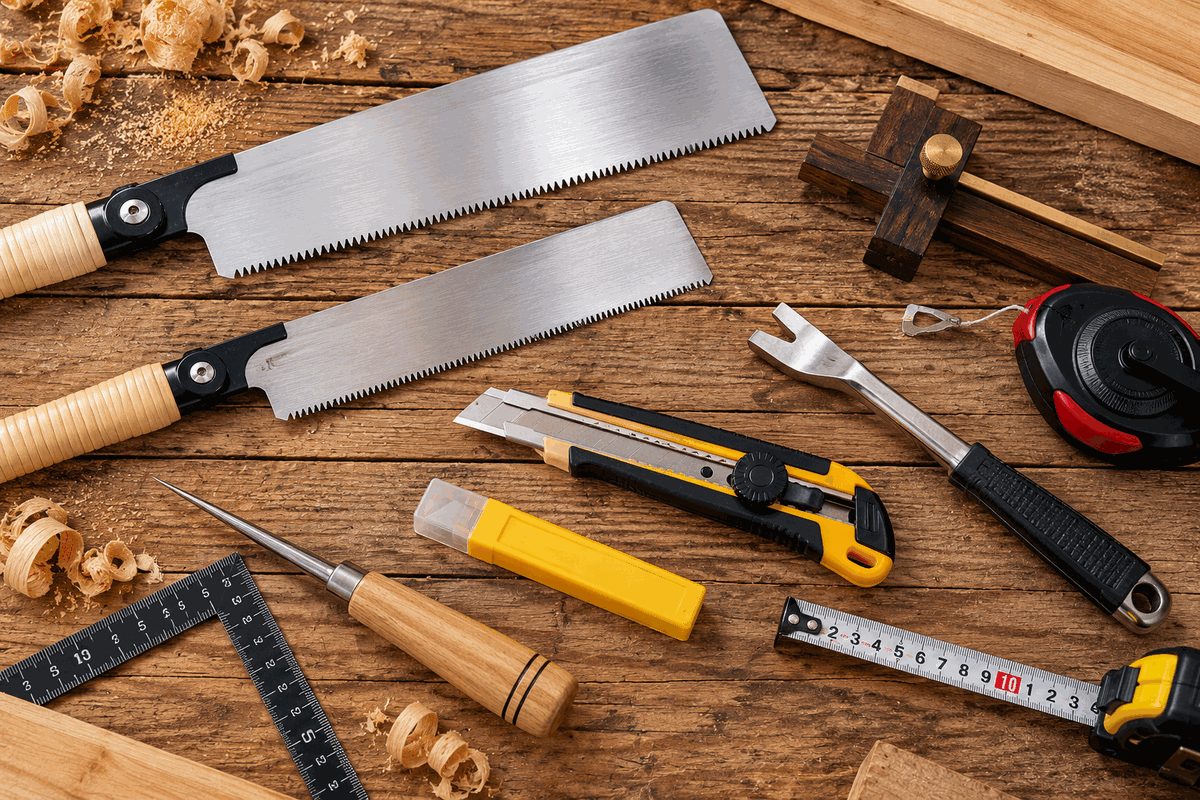
Finding the right Japanese hand tools in Hawaii can take more effort than expected. You might need a pull saw for detailed trim work, a utility knife that holds up to daily jobsite use, or a marking tool that helps keep measurements accurate. Ordering online is one option, but it’s not always easy to judge a tool from a product photo.
At Slim’s Power Tools, we help contractors, carpenters, woodworkers, and DIY customers on Oʻahu and Maui choose tools that fit their work. Our Japanese hand tool selection includes products from Tajima and Takagi/Shark, with options for cutting, layout, finishing, and general construction tasks.
This guide explains which Japanese hand tools are worth considering, how to choose between them, what to check before buying, and how to care for them in Hawaiʻi’s humid climate.
Where to Buy Japanese Hand Tools in Hawaii
There are several ways to shop for Japanese hand tools, and the right choice depends on what you need.
General hardware and home improvement stores are convenient for everyday supplies. They may carry Japanese-style cutting tools or similar products, although specialized options vary by retailer.
Online stores and importers can be useful when you’re searching for an unusual tool or a particular model. The drawback is that you can’t handle the tool before ordering. You also need to consider shipping costs, replacement blade availability, and the seller’s return policy.
Local specialty tool suppliers offer another option. Being able to discuss the application with someone familiar with professional tools can help you avoid buying something that doesn’t suit your work.
At Slim’s, we have store counters in Honolulu and Kahului. You can contact our team about Japanese hand tools, replacement blades, and other products before making a trip.
We recommend calling ahead because selection and availability can differ between locations.
What to Check Before Buying
Whether you’re shopping locally or online, start with a few practical questions.
- Is the tool designed for the material you’re working with?
- Are replacement blades or other consumable parts available?
- Does the handle feel comfortable for the way you’ll use it?
- Is the brand and exact model clearly identified?
- What does the manufacturer say about maintenance and intended use?
For specialized woodworking tools, steel composition and blade construction may also matter. But for everyday construction knives, saws, and layout tools, the cutting application and replacement-part compatibility are often more useful starting points.
What Makes Japanese Hand Tools Different?
Japanese hand tools are known for several distinctive designs, particularly in woodworking and precision cutting.
One familiar example is the Japanese pull saw. Unlike a traditional Western handsaw that primarily cuts on the push stroke, a Japanese pull saw cuts as you draw the blade toward you.
This places the blade under tension during the cutting stroke, allowing many designs to use relatively thin blades.
A thinner blade can produce a narrower kerf, which is the channel left behind as material is removed. That can be helpful when cutting trim or fitting joinery where you want to minimize material loss.
However, not every Japanese saw produces a cleaner cut than every Western saw. Tooth geometry, blade condition, wood species, and technique all affect the result.
Precision Doesn’t Always Mean Delicate
Japanese hand tools aren’t limited to fine furniture making.
A sharp utility knife can be valuable for scoring material on a remodeling project. A reliable chalk line helps a framing crew establish straight reference lines. A compact nail puller can make trim removal easier in a confined area.
The common advantage is often thoughtful tool design for a particular job, rather than a universal improvement over other tools.
What About Japanese Chisels and Hand Planes?
Traditional Japanese woodworking tools include nomi chisels and kanna hand planes.
Some traditional models use laminated construction, combining a hard cutting steel with a softer backing material. These tools can deliver excellent results in skilled hands, but they require appropriate sharpening and careful use.
They also aren’t necessary for every carpenter.
For most remodeling, framing, and general construction work, a dependable saw, knife, or layout tool may be a more practical investment.
Our currently listed Japanese hand tool range focuses on Tajima and Takagi/Shark products. Traditional nomi chisels and kanna planes are not included in that listed range. If you’re looking for a specific specialty item, contact us with the manufacturer and model information so we can discuss a possible special order.
Essential Japanese Hand Tools for Different Trades
The most useful Japanese hand tool is the one that solves a problem you regularly encounter.
Japanese Pull Saws for Carpentry and Woodworking
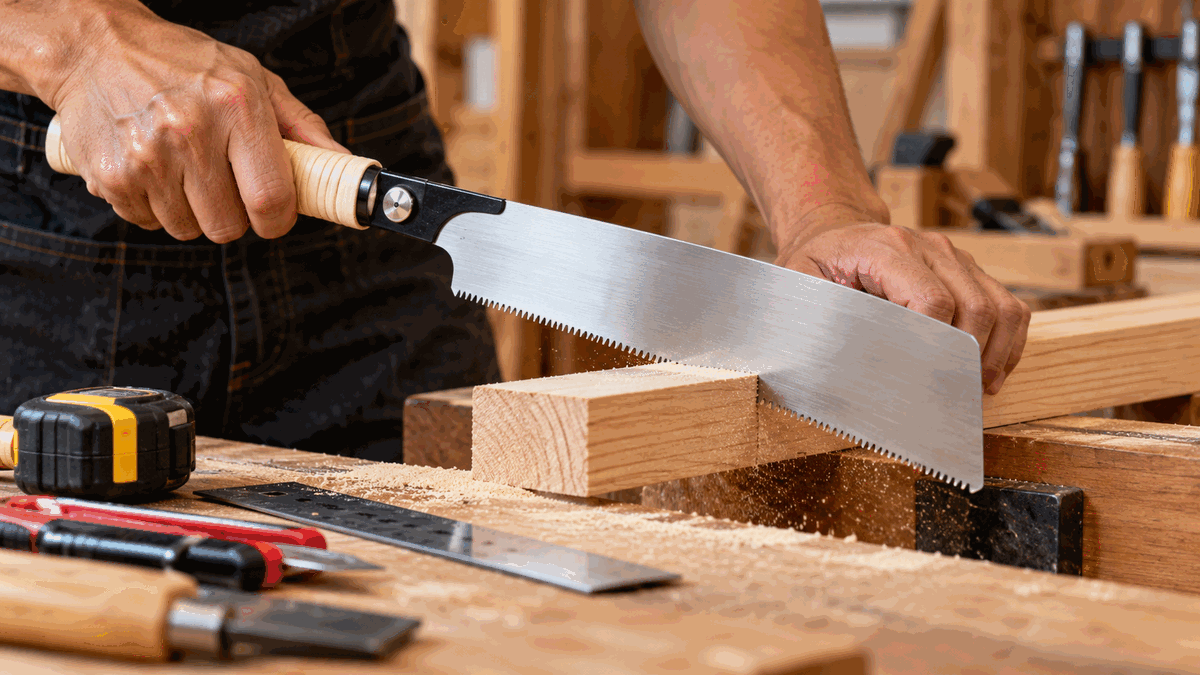
Japanese pull saws are useful for trim work, cabinetmaking, and controlled cuts where a large power saw may be unnecessary.
Several designs are worth understanding:
Ryoba saw: A double-edged saw commonly equipped with separate rip-cutting and crosscutting tooth patterns. It’s a versatile option for general woodworking.
Dozuki saw: A fine-toothed saw with a reinforced spine. The backing helps stabilize the blade for joinery, although it limits cutting depth.
Kataba saw: A single-edged saw without the reinforced spine of a dozuki. It can be useful when a deeper cut is required.
Not every pull saw fits neatly into these traditional categories. Modern manufacturers also produce multipurpose and specialized designs.
At Slim’s, our Japanese hand tool selection includes Tajima and Takagi/Shark pull saws and replacement blades.
When choosing a saw, consider the material, tooth pattern, blade length, and whether the model uses replaceable blades.
For hardwood trim or detailed joinery, a finer tooth pattern may provide better control. For faster cutting in thicker material, a more aggressive tooth pattern may be appropriate.
Utility Knives for Everyday Jobsite Work
A utility knife is one of the most frequently used hand tools on many construction sites.
Tajima utility knives include designs with replaceable snap-off blades, along with locking mechanisms intended to hold the blade during use.
Common blade widths include 18 mm and 25 mm.
An 18 mm knife can be convenient for general cutting and scoring. A larger 25 mm model may be better suited to demanding applications when the manufacturer approves its use.
Choose based on the material you’re cutting, the grip, and the required blade control.
Always use compatible replacement blades. Avoid extending a snap-off blade farther than necessary, and replace damaged blades rather than continuing to work with them.
Chalk Lines, Ink Lines, and Layout Tools
Accurate layout work helps prevent problems before cutting or fastening begins.
For example, a carpenter installing framing needs consistent reference lines. A finish worker laying out trim needs marks that are easy to see without creating unnecessary cleanup.
Tajima chalk lines and ink lines serve different purposes.
Chalk lines create visible marks that can be useful on framing lumber and other construction surfaces. Ink lines may be preferred for certain finer layout applications, depending on the material.
Before choosing, consider how permanent the mark should be and whether the marking material is suitable for the finished surface.
Plumb bobs and tape rules are also useful when checking alignment or transferring measurements.
Pry Bars, Nail Pullers, and Finishing Tools
Japanese tool brands also offer practical products for remodeling and finishing work.
Takagi nail pullers and pry bars can be useful for removing fasteners or working around trim. The correct size and shape depend on available clearance and how much leverage the job requires.
For drywall work, Tajima saws, scrapers, and rasps provide options for cutting openings or refining edges.
These tools may not receive the same attention as traditional woodworking chisels, but they can be valuable additions to a working contractor’s kit.
More Than Pull Saws: What Slim’s Power Tools Carries
Our Japanese hand tool range focuses on practical products for construction and detailed work.
The categories listed on our website include:
- Japanese pull saws and replacement blades: Tajima and Takagi/Shark options for woodworking, trim, and general cutting.
- Utility knives and replacement blades: Tajima knives with blade-locking options for everyday jobsite tasks.
- Chalk lines and ink lines: Marking tools and compatible supplies for layout work.
- Plumb and measuring tools: Products for establishing vertical reference points and checking measurements.
- Caulking guns: Tajima Convoy models for controlled sealant application.
- Nail pullers and pry bars: Takagi tools for fastener removal and trim work.
- Drywall and finishing tools: Jab saws, scrapers, and rasps for installation and finishing tasks.
We also offer a broader range of professional hand tools, including pliers, wrenches, chisels, hammers, and measuring equipment.
If you’re putting together a complete work kit, our team can help you consider how different tools fit together.
Product selection varies between stores, so contact us to confirm a particular model before visiting.
How to Choose and Maintain Japanese Hand Tools in Hawaii
Hawaiʻi’s environment adds another consideration to tool ownership: moisture.
Humidity and salt exposure can encourage corrosion on unprotected metal surfaces. Cutting tools are especially worth protecting because corrosion can damage the blade surface and affect performance.
Choose Tools Around Your Actual Work
For a finish carpenter, a pull saw and accurate layout tools may be useful additions to the kit.
For a general contractor, a dependable utility knife and nail puller may see more frequent use.
For a drywall installer, a specialized saw or rasp may be more valuable than a traditional woodworking plane.
Before purchasing, think about how often you’ll use the tool. Also consider whether it requires consumables, special maintenance, or a technique you’re willing to learn.
A specialized tool can be worthwhile when it solves a recurring problem. It doesn’t need to be expensive or unusual to earn its place in your toolbox.
Protect Cutting Tools From Rust
A simple maintenance routine can make a meaningful difference.
- Clean and dry tools after use. Remove dust, moisture, and residue using a method appropriate for the tool.
- Protect exposed steel. Apply a suitable light protective oil when recommended by the manufacturer, keeping it away from surfaces where contamination could be a problem.
- Store tools in a dry location. Avoid leaving bare steel exposed in a damp truck bed or outdoor storage area.
- Protect cutting edges. Use blade covers or appropriate cases to reduce accidental damage.
- Inspect before reuse. Check for corrosion, loose handles, damaged teeth, or worn locking mechanisms.
If a tool becomes wet during a coastal job, clean and dry it promptly. Salt deposits can continue attracting moisture after the visible water has disappeared.
Know When to Sharpen and When to Replace
Not every Japanese cutting tool is maintained the same way.
Traditional woodworking chisels and plane blades may be sharpened with suitable waterstones or other manufacturer-approved sharpening methods.
Replaceable-blade saws are different. Many use hardened teeth that are not intended for routine hand sharpening.
For those models, replacing a worn blade is usually more practical than attempting to reshape the teeth.
Snap-off utility knife blades should also be replaced or advanced according to the manufacturer’s instructions.
At Slim’s, we offer sharpening services for eligible saw blades and cutting accessories. Contact our team to confirm whether your particular item qualifies.
Why Buy Japanese Hand Tools Locally at Slim’s?
Online shopping can be convenient, particularly for uncommon specialty tools. But a product description doesn’t always answer the questions that matter most on a job.
Will this saw work for the material you’re cutting? Does the replacement blade fit your existing handle? Is that knife suitable for the task you have in mind?
Those are the kinds of questions we can help you work through.
At Slim’s Power Tools, our focus is on tools for contractors, professional tradespeople, and serious DIY customers.
We offer knowledgeable product guidance, local store access on Oʻahu and Maui, and special-order assistance when an item isn’t part of the current selection.
We can also discuss eligible repair and sharpening services when they’re relevant to your equipment.
Our goal is straightforward: help you choose a tool that makes sense for the work you actually do.
Frequently Asked Questions About Japanese Hand Tools
1. Where can I buy Japanese hand tools in Hawaii?
You can explore Japanese hand tools through online retailers, general hardware stores, and specialty tool suppliers. Slim’s Power Tools has locations in Honolulu and Kahului and lists Tajima and Takagi/Shark Japanese hand tools. Call your preferred store to confirm availability.
2. Are Japanese hand tools better than Western hand tools?
Not automatically. Japanese pull saws often offer thin blades and controlled pull-stroke cutting, while Western saws may suit different cutting techniques. The better choice depends on the task, material, and your preferences.
3. What Japanese hand tool brands does Slim’s carry?
Our listed Japanese hand tool brands are Tajima and Takagi/Shark. These include cutting tools, layout equipment, and selected construction accessories. Specific models vary by location.
4. Can I buy traditional Japanese chisels and planes at Slim’s?
Traditional Japanese chisels and hand planes aren’t part of our currently listed Japanese hand tool selection. You can contact us about special-order possibilities with the exact brand or model. Availability is not guaranteed.
5. How do I prevent Japanese hand tools from rusting in Hawaii?
Dry tools after use, remove salt and moisture, protect exposed steel with a suitable product, and store tools in a dry environment. Inspect cutting edges regularly, particularly after working near the coast.
6. Can Slim’s help me find replacement blades?
We list replacement blades for selected Japanese pull saws and utility knives. Bring the tool’s brand and model number, or contact us with those details, so we can help identify compatible options and check availability.
Find the Right Japanese Hand Tools at Slim’s Power Tools
Whether you’re fitting trim, laying out framing, or replacing a worn cutting tool, the right hand tool should make your work more manageable.
We can help you compare Japanese pull saws, utility knives, layout tools, and other options based on the work you do.
Visit or contact one of our stores:
Honolulu, Oʻahu
Kahului, Maui
Call ahead with your project details or the model you’re looking for. We’ll help you explore the available options before you make the trip.
Mahalo for choosing Slim’s Power Tools.
