
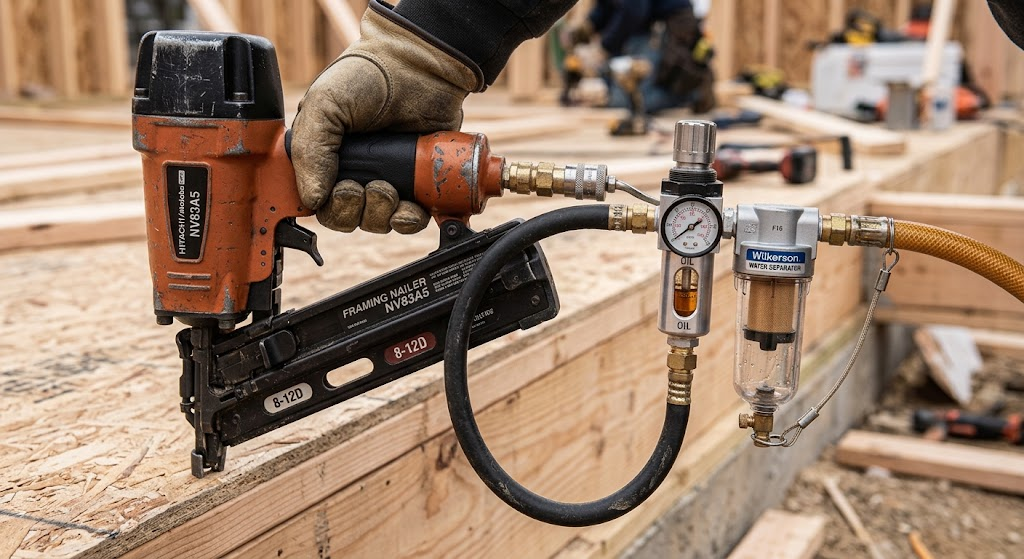
Moisture is the quiet enemy of pneumatic tools on Oahu and Maui. High humidity and salt air send water through the compressor and lines into the tool. That water washes out lubricant, corrodes internal parts, and causes sticking, misfires, and premature failure.
Daily habits and simple hardware prevent most of the damage. This guide covers the practical maintenance steps that keep nailers, staplers, impact wrenches, and other air tools productive in island conditions.
How Moisture Reaches the Tool
Compressors pull in ambient air. In high humidity that air carries a large amount of water vapor. Compression heats the air, then cooling in the tank and lines causes condensation. Without proper separation and drainage, liquid water travels downstream into the tool.
Salt particles in coastal air accelerate corrosion once moisture is present. Internal surfaces, O-rings, driver blades, and valve components suffer first. Symptoms appear as inconsistent firing, reduced power, sticky triggers, or visible rust when the tool is opened.
Daily Oiling Practices
Most pneumatic nailers and staplers require regular oiling according to the manufacturer’s instructions. A few drops of the correct air-tool oil at the start of the shift (and sometimes midday on long runs) keep internal parts lubricated and help displace moisture.
Use oil formulated for pneumatic tools. General-purpose or automotive oils can leave residues or fail to protect under the operating conditions of air tools. Apply the oil at the air inlet, then cycle the tool briefly to distribute it.
We stock pneumatic-tool oils from Relton, Metabo HPT, and other suitable products in our chemicals and lubricants selection. Confirm the recommendation for your specific models before applying any oil. Some newer tools are designed for limited or no oiling; follow the manual.
Water Separators, Filters, and Drains
An inline water separator or filter-regulator combination installed downstream of the compressor (and preferably after the air has cooled) removes bulk liquid before it reaches the tools. Automatic drains on the compressor tank and on separators reduce the chance that accumulated water is pushed into the lines.
Practical placement tips:
- Mount separators where the air has had time to cool.
- Drain the compressor tank at the end of every shift and during long runs in humid weather.
- Check and empty inline separators regularly.
- Inspect filter elements and replace them when restricted.
These steps cut the volume of water that reaches the nailer or wrench and extend both tool and hose life.
Hose and Fitting Care
Hoses collect condensate, especially longer runs or hoses left in the sun. Drain hoses by elevating one end and opening the far fitting. Inspect for cracks, soft spots, and damaged fittings. Replace damaged sections before they introduce leaks or additional moisture points.
Quick-connect fittings should seal cleanly. Corroded or worn fittings leak air and can allow moisture ingress. Keep a few spare fittings and short whip hoses on the truck for quick replacement.
Storage Practices That Limit Corrosion
At the end of the shift, disconnect tools, drain residual air and moisture when practical, and store them in a dry location. Avoid leaving nailers in open truck beds or damp job boxes overnight. Sealed cases or cabinets with desiccant packs help in continuous high humidity.
Wipe external surfaces. If a tool will sit for an extended period, a light application of the approved oil and storage in a closed container with moisture control reduces internal corrosion risk.
Symptoms of Moisture Damage and Early Response
Watch for:
- Inconsistent or weak firing
- Trigger or sequential mechanism sticking
- Visible water at the exhaust or air inlet
- Rust on external fasteners or when the tool is opened for service
- Increased air consumption or hissing from seals
Address moisture sources first. Then clean and re-oil according to the manufacturer’s guidance. Persistent problems often require professional service or replacement of internal seals and O-rings.
We repair major brands and service the pneumatic tools we sell. Local parts availability and trained staff help return tools to service faster than shipping them to the mainland.
What We Carry for Pneumatic Maintenance
Our inventory includes a complete line of pneumatic nailers, staplers, compressors, hoses, and related supplies. The chemicals and lubricants category covers air-tool oils and supporting products.
Relevant products and support:
- Pneumatic nailers, staplers, and other air tools
- Compressors and air hoses
- Pneumatic-tool oils formulated for air tools
- Water separators, filters, and related accessories (where stocked)
- Repair support and local parts for major brands
- Staff recommendations on oiling frequency and moisture-control hardware
Selection can vary between Honolulu and Kahului. Call ahead when you need specific oils, separators, or tool models.
Local Support Versus Waiting on Parts
Big-box and online sources can sell the tools, but they rarely stock the correct oil, separators, and repair parts in Hawaii at the moment a tool starts sticking. We keep maintenance products and common pneumatic tools on the ground so crews can address moisture issues the same day. When a nailer needs service, local support shortens downtime.
We also stand behind qualifying power tools with the unconditional one-year guarantee on select DEWALT, Milwaukee, and Metabo HPT models. The same practical, local approach applies to the pneumatic equipment and maintenance supplies contractors rely on.
Simple Daily and Weekly Routine
- Drain the compressor tank at the end of every shift.
- Check and empty inline water separators.
- Add the manufacturer-recommended air-tool oil at the start of the day.
- Inspect hoses and fittings for damage or leaks.
- Store tools in a dry, closed location overnight.
- Wipe tools and check for early signs of sticking or moisture.
- Schedule periodic professional inspection for high-use tools.
Frequently Asked Questions
How often should I oil my pneumatic nailer in Hawaii?
Follow the tool manufacturer’s instructions. Many models need a few drops at the start of each shift, and additional oil during long or continuous use. High humidity makes consistent oiling more important.
Can I use regular motor oil in air tools?
No. Use oil specifically formulated for pneumatic tools. Other oils can leave residues or fail to protect internal components under operating conditions.
Where should I install a water separator?
Install it downstream of the compressor after the air has had a chance to cool. Automatic drains on the tank and separator further reduce water in the lines.
What are early signs of moisture damage?
Inconsistent firing, sticky triggers, water at the exhaust, or visible rust. Address the moisture source and re-oil promptly.
Do you carry both the tools and the maintenance products?
Yes. We stock pneumatic nailers, staplers, compressors, hoses, and air-tool oils. Confirm current availability of specific items when you visit or call.
Can you service pneumatic tools locally?
We repair major brands and service the products we sell. Contact either store to discuss the tool, the problem, and current turnaround.
Protect the Tools That Drive Production
Moisture control is not complicated, but it is continuous. Daily draining, correct oiling, and basic separators keep pneumatic tools firing reliably instead of sitting on a bench waiting for parts.
Bring the tools you run most and a description of your compressor setup. We will help you select the right air-tool oil, check moisture-control options, and keep your pneumatic equipment ready for island conditions. Join the e-Power Club for updates on maintenance products and pneumatic tools that support consistent production.
Simple habits turn high humidity from a constant threat into a managed part of the job.
Pricing and specific model availability vary by location and change over time. Confirm current stock, specifications, and any applicable pricing directly with the store. Always follow the tool and compressor manufacturer’s maintenance instructions.
