
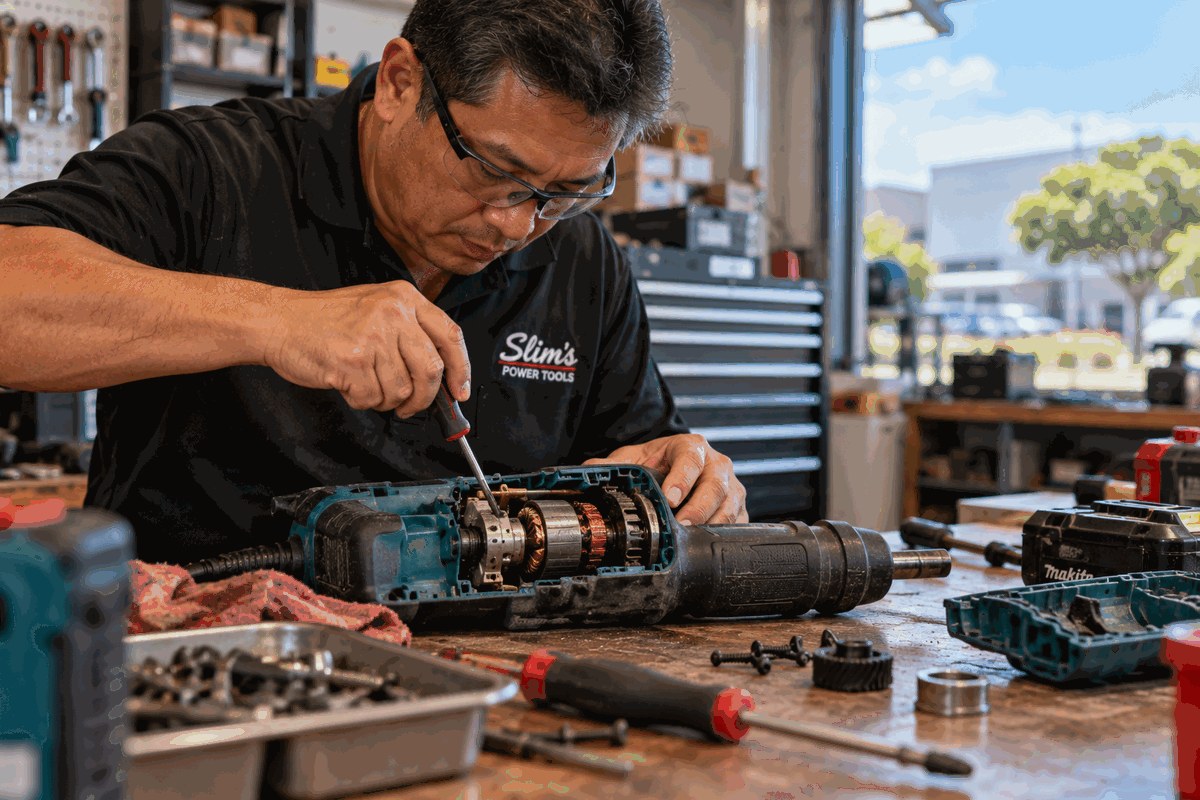
A drill that suddenly stops working can bring a job to a halt. Maybe your circular saw has started making an unfamiliar grinding noise, or your impact driver no longer delivers the torque it used to. Whatever the problem, the first question is usually the same: is this tool worth repairing, or should you replace it?
The good news is that many power tools can be repaired, particularly professional models designed with replaceable components. But not every repair makes financial sense.
In Hawaiʻi, there’s another consideration. Sending a broken tool to a mainland service center can involve additional freight costs and time without the equipment you need.
At Slim’s Power Tools, we help contractors, tradespeople, and DIY customers find practical solutions for their equipment needs. We offer power tool repair services at our Honolulu and Kahului locations, along with replacement tools and accessories.
Here’s how to recognize common problems, decide whether a repair is worthwhile, and take better care of your equipment in Hawaiʻi’s working conditions.
1. Is It Better to Repair or Replace a Power Tool?
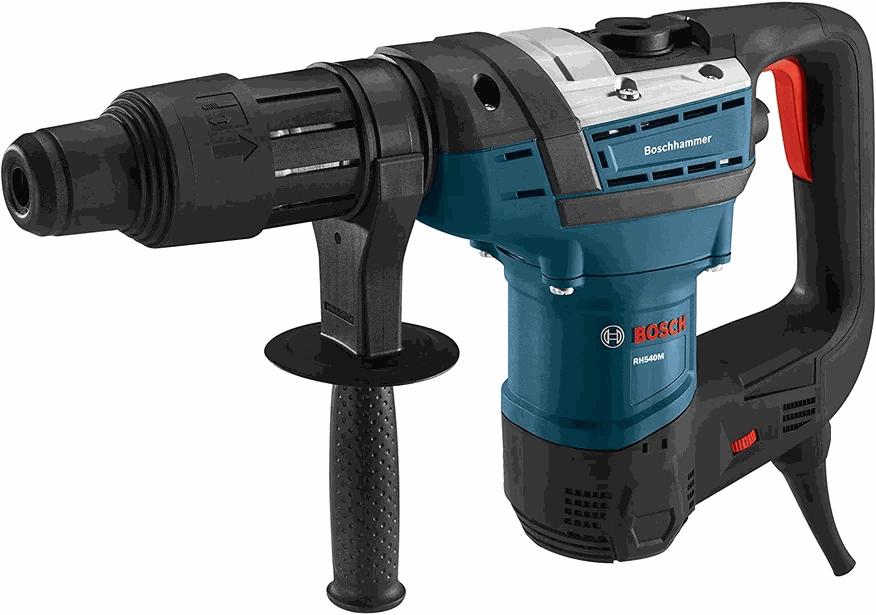
Before replacing a malfunctioning tool, consider its age, condition, repair cost, and importance to your work.
A useful starting point is the 50% rule: if a repair costs less than half the price of a comparable replacement, repairing may be worth considering.
This is a general budgeting guideline, not a universal industry standard. A repair that costs slightly more could still make sense for specialized equipment, while a less expensive repair might not be worthwhile for a heavily worn tool.
When repairing makes sense
Professional-grade tools are often good repair candidates because many models have replaceable internal components.
Consider repairing your tool when:
- The problem involves a replaceable component, such as a switch, bearing, or carbon brush.
- The tool is otherwise in good working condition.
- A comparable replacement would cost significantly more.
- Replacement parts are available for the specific model.
- The repair can restore the tool to safe, reliable operation.
For example, a rotary hammer with a worn switch may be worth repairing if its motor and mechanical components remain in good condition.
Likewise, replacing a damaged power cord on an otherwise functional saw may be more economical than buying another saw.
When replacement may be the smarter choice
Replacement becomes more attractive when the tool has extensive internal damage, multiple worn components, or limited parts availability.
An older cordless drill with a failing motor and deteriorating battery may require more investment than it’s worth.
You should also consider how the equipment fits your current work. If you need greater cutting capacity or a different battery platform, replacement may provide benefits beyond restoring the old tool.
The most useful comparison is the total cost of repair versus the cost and practical value of a suitable replacement.
2. Common Power Tool Problems and What They Mean
Power tools experience mechanical wear, electrical problems, and damage from everyday use.
Recognizing the symptoms can help you explain the issue to a repair technician and avoid further damage.
| Symptom | Possible cause | Recommended action |
|---|---|---|
| Tool stops intermittently | Damaged cord, switch, or electrical connection | Stop using it and arrange inspection |
| Excessive sparking or burning smell | Brush, motor, or electrical fault | Disconnect power immediately |
| Grinding or rattling noise | Worn bearings, gears, or internal components | Stop operation and have it assessed |
| Reduced cutting performance | Dull blade, unsuitable accessory, or mechanical issue | Inspect accessories before assuming motor failure |
| Cordless tool won’t start | Battery, charger, contacts, or electronic fault | Perform basic external checks |
| Excessive vibration | Damaged accessory, loose component, or internal wear | Stop using the tool until the cause is identified |
These symptoms don’t establish a diagnosis. Different faults can produce similar behavior, and some require professional testing.
Worn carbon brushes
Some brushed motors use carbon brushes to transfer electrical current to the rotating motor assembly.
Over time, these brushes wear down. Depending on the tool, worn brushes may cause intermittent operation, reduced performance, or unusual sparking.
Replacement can be relatively straightforward on models designed for brush servicing, but it must follow the manufacturer’s instructions.
Brushless tools don’t have this particular maintenance requirement.
Gearbox and bearing problems
Grinding noises, excessive vibration, and changes in torque can indicate mechanical wear.
Rotary hammers, grinders, and other heavily used tools may experience bearing or gearbox problems, especially after prolonged operation under demanding loads.
Continuing to use a tool with a damaged gearbox can worsen the problem.
A technician can determine whether individual components can be replaced or whether a larger assembly needs attention.
Battery and charger failures
When a cordless tool stops running, the tool itself isn’t always responsible.
The battery may be discharged, overheated, or approaching the end of its usable life. A charger fault or damaged electrical contact can produce similar symptoms.
Before assuming the motor has failed, check the battery and charger according to the manufacturer’s troubleshooting instructions.
If a battery is swollen, leaking, unusually hot, or visibly damaged, stop using it. Don’t attempt to open or rebuild the pack.
3. How Hawaiʻi’s Climate Affects Power Tool Maintenance
Working in Hawaiʻi introduces equipment-care challenges that deserve attention, especially around coastal construction sites.
Humidity and airborne salt can contribute to corrosion on exposed metal surfaces. Fine construction dust can also collect around ventilation openings and moving components.
These conditions don’t mean every tool will fail prematurely. They do make regular inspection and proper storage particularly worthwhile.
Salt air and corrosion
Coastal environments can accelerate corrosion on susceptible metal components.
Tools stored in open truck beds, damp garages, or poorly ventilated storage areas may experience more exposure than equipment kept in protected conditions.
Watch for rust around chucks, fasteners, blade mounts, and other exposed metal parts.
For compatible surfaces, use a manufacturer-recommended protective product. Avoid spraying lubricant into electrical openings or applying products to components that must remain clean and dry.
Dust and overheating
Concrete drilling, masonry cutting, and woodworking can generate substantial amounts of dust.
When dust accumulates around a tool’s cooling vents, it can restrict airflow and contribute to overheating.
Use the dust-control accessories specified for the task and tool. After use, clean exterior surfaces and ventilation openings according to the manufacturer’s instructions.
Avoid blowing dust into the motor housing or using high-pressure compressed air unless the manufacturer specifically permits that method.
Battery storage in warm conditions
Lithium-ion batteries should be protected from excessive heat, moisture, and physical damage.
Avoid leaving batteries in direct sunlight or inside a hot vehicle for extended periods.
Follow the manufacturer’s recommendations for storage temperature and charge level, especially when equipment won’t be used for several weeks.
These habits can help protect your investment, whether you’re working on an Oʻahu construction site or maintaining equipment at a Maui workshop.
4. What Can You Fix Yourself, and When Should You Seek Professional Repair?
Not every power tool problem requires a technician. However, knowing when to stop troubleshooting is just as important as knowing what to check.
Basic checks you can perform
Before arranging a repair, start with these steps:
- Disconnect the power source. Unplug corded equipment or remove the battery before inspecting it.
- Check the external condition. Look for visible cord damage, cracked housings, damaged accessories, or blocked vents.
- Check the power supply. Confirm that the outlet works or that a compatible battery has been charged correctly.
- Inspect removable accessories. A dull saw blade or worn drill bit can cause poor performance that resembles a tool problem.
- Review the owner’s manual. Check the manufacturer’s troubleshooting instructions and any warning indicators.
For compatible models, routine maintenance may include replacing user-serviceable accessories or components specifically identified in the manual.
A damaged cord or electrical switch should be repaired by a qualified person using suitable replacement parts and proper testing.
Repairs best left to professionals
Professional assessment is especially important for:
- Internal motor or electrical faults
- Gearbox and bearing replacement
- Electronic speed controllers and circuit boards
- Damaged internal wiring
- Complex rotary hammer mechanisms
- Tools that have overheated, smoked, or suffered significant impact damage
Never bypass a safety switch, guard, grounding connection, or other protective feature to make a tool operate.
Lithium-ion battery packs also require special caution. Opening or attempting to rebuild a damaged pack can create fire and injury hazards.
The EPA’s lithium-ion battery guidance explains why these batteries require appropriate handling and should not be placed in household trash or ordinary curbside recycling.
Check your warranty before opening the tool
Before attempting a repair, review the manufacturer’s warranty and service instructions.
Warranty coverage depends on the product, the nature of the failure, and the applicable terms. Unauthorized modifications or damage caused during repair may affect coverage, even though an independent repair does not automatically void every warranty.
At Slim’s, we also have an Unconditional One-Year Guarantee on qualifying DEWALT, Milwaukee, and Metabo HPT power tools. Eligibility and terms should be confirmed for your specific purchase.
If you’re uncertain about coverage, contact us before disassembling the equipment.
5. Where Can You Get Power Tools Repaired in Hawaiʻi?
When your equipment needs attention, you generally have three options.
Manufacturer service centers
Manufacturer service may be appropriate for warranty claims, specialized electronic repairs, or equipment requiring brand-specific procedures.
Depending on the brand and model, service may involve sending the tool to an authorized facility.
Before arranging service, ask about shipping responsibilities, estimated turnaround, and whether the repair is covered.
General retailers
Some retailers offer returns or exchanges under applicable policies. Others may direct customers to manufacturer repair programs.
A return or exchange is not necessarily the same as a repair service.
Check the retailer’s current policies and the manufacturer’s warranty terms before bringing in the tool.
Local power tool repair services
A local repair provider gives you the opportunity to discuss the problem directly rather than immediately arranging a mail-in repair.
At Slim’s Power Tools, we offer repairs for major power tool brands and service the equipment we sell. Repair eligibility, parts availability, and handling requirements depend on the particular tool.
Our Kahului location also provides repair inspections, estimates, and replacement-parts assistance.
If you have a damaged tool, we recommend calling the appropriate store with its brand and model number before visiting. That helps establish the next step without assuming every repair can be completed locally.
For location details, see our Honolulu store or Kahului store.
6. Power Tool Parts, Repair Costs, and Replacement Options
Repair costs depend on more than the price of the damaged component.
Labor, accessibility, parts availability, and the condition of the rest of the tool all affect the final decision.
A simple component replacement may be worthwhile, while a repair involving several damaged assemblies can become expensive.
What to prepare before requesting a repair
Having the right information makes the initial conversation more useful.
Try to provide:
- The brand and complete model number
- The serial number, if available
- A description of when the problem occurs
- Any unusual noises, warning lights, or error codes
- Details of recent drops, water exposure, or overheating
- Warranty or purchase information, if applicable
The model number is particularly important because visually similar tools may use different internal components.
Replacement parts must match the exact tool version. A component that appears identical isn’t necessarily electrically or mechanically compatible.
Use genuine or manufacturer-approved replacement parts where required, especially for safety-critical electrical and mechanical assemblies.
More Than Power Tools: What Slim’s Carries
Sometimes the problem isn’t a broken tool. It’s a worn accessory, an incompatible battery, or equipment that no longer suits the job.
Alongside our repair services, we offer several product categories that can help you keep working:
- Professional power tools: Drills, impact drivers, saws, grinders, and rotary hammers for a wide range of applications.
- Drill bits and accessories: Options for wood, metal, and masonry, including SDS-Plus and SDS-Max systems.
- Saw blades: Cutting accessories for circular saws, reciprocating saws, and other equipment.
- Batteries and chargers: Cordless power options across supported professional tool platforms, subject to model compatibility.
- Chemicals and lubricants: Selected cutting lubricants and tool-specific maintenance products.
We also assist with special orders for eligible tools, accessories, and replacement parts.
Product selection and availability vary between our Honolulu and Kahului stores, so please contact us before making a special trip.
7. Why Choose Slim’s Power Tools?
When you’re deciding whether to repair or replace equipment, it helps to speak with someone who understands how the tool is used.
Our focus is on professional tools and contractor supplies, rather than a broad selection of general household merchandise.
We can help you compare suitable replacement equipment, identify compatible accessories, and discuss available repair options.
For contractors managing several tools or working within an established cordless platform, that guidance matters. Replacing a drill isn’t simply about choosing the right size. Battery compatibility, working conditions, and the tasks ahead all influence the purchase.
With store counters in Honolulu and Kahului, customers on Oʻahu and Maui can speak with our team directly.
And when a product or replacement part isn’t available at the counter, we can discuss special-order options rather than suggesting an unsuitable substitute.
Get Help With Power Tool Repair in Honolulu or Kahului
A malfunctioning tool doesn’t always need to be replaced. Sometimes a repair or a compatible replacement component is all that’s needed. Other times, investing in a new tool makes more sense for the work ahead.
At Slim’s Power Tools, we’re here to help you understand your options.
Give us a call with your tool’s brand, model number, and a description of the problem. We’ll help you determine the appropriate next step, whether that’s discussing a repair, checking parts options, or choosing replacement equipment.
Contact Slim’s Power Tools today and get the right guidance before spending money on another tool.
