
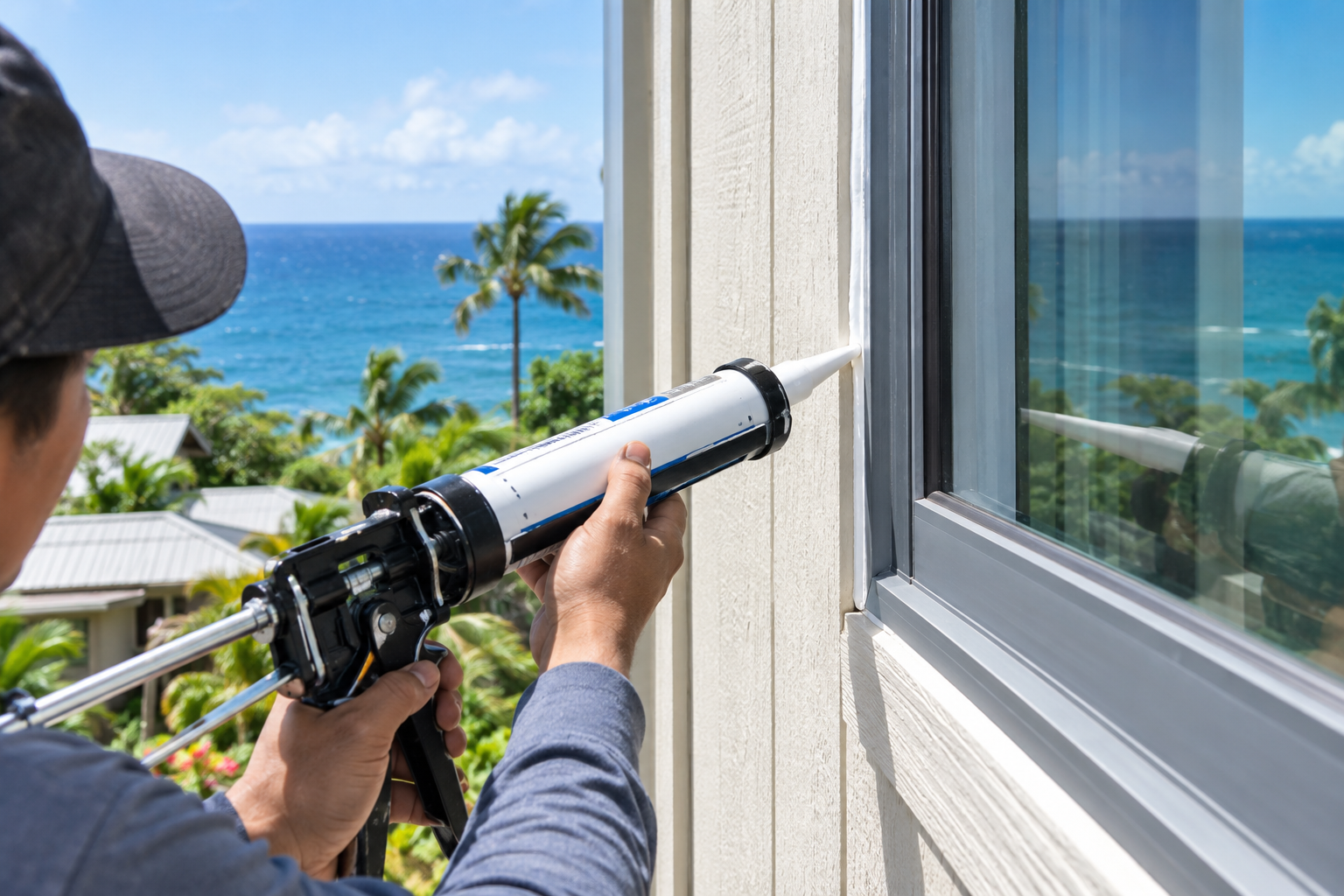
Exterior joints on Oahu and Maui face constant UV, salt spray, wind-driven rain, and daily temperature swings. A sealant that works inland can harden, crack, or lose adhesion here within a few seasons. The gun that dispenses it matters just as much. Low-thrust tools struggle with the thicker, high-performance materials required for lasting weatherproofing.
We stock professional caulking guns, including Tajima Convoy manual models and cordless options from Milwaukee and Makita, along with related adhesives and sealants. This guide covers the practical choices for exterior contractors, window and door installers, and waterproofing crews working in coastal conditions.
Why Standard Guns and Sealants Fail on the Islands
Many consumer-grade guns offer thrust ratios around 6:1 to 10:1. That is adequate for thin latex or acrylic caulk. High-performance polyurethane, polyether, and marine-grade sealants are far more viscous. They require higher mechanical advantage to flow evenly without gaps or excessive hand fatigue.
Salt air and UV attack both the cured sealant and the gun itself. Cheap metal frames corrode. Plastic components become brittle. Sealants that lack UV stabilizers chalk, crack, and lose elasticity. Thermal cycling opens joints that were never properly tooled or that used the wrong chemistry for the substrate.
Common failure points include:
- Insufficient thrust leading to skipped beads or incomplete filling
- Sealant chemistry that hardens or shrinks under UV and salt exposure
- Poor adhesion to damp, salty, or previously coated surfaces
- Incorrect joint design or tooling that traps water
Thrust Ratio and Gun Design
Thrust ratio measures the mechanical advantage of the gun. A higher ratio multiplies the force applied at the trigger into greater pressure at the plunger.
| Thrust Ratio Range | Typical Use Case | Material Examples |
|---|---|---|
| 6:1 – 10:1 | Thin latex, acrylic, light interior caulk | Standard painter’s caulk |
| 12:1 – 18:1 | Most professional exterior and window work | Polyurethane, polyether, many silicones |
| 20:1 – 26:1+ | Very thick adhesives, cold material, high volume | Heavy polyurethanes, structural adhesives |
For coastal exterior work, start at 12:1 or higher. Many professional manual guns fall in the 18:1 range. Higher ratios reduce fatigue on long runs of window perimeters, siding joints, and expansion gaps.
Look for smooth rod action, a comfortable grip that does not dig into the hand, and a drip-free or quick-release mechanism that stops flow cleanly when you release the trigger. Rotating frames help keep the nozzle oriented correctly around corners and overhead.
Cartridge vs Sausage Packs
Standard 10-ounce cartridges fit most guns and work well for smaller jobs or touch-up. Sausage packs (typically 20-ounce foil sausages) hold more material, produce less packaging waste, and often cost less per ounce on volume work.
Sausage packs require a compatible barrel and plunger system. Convertible guns accept both formats. For crews running continuous beads on large window packages, curtain walls, or long horizontal joints, sausage packs reduce reload frequency and keep production moving.
Confirm the gun accepts the container size and type of material you plan to use before purchase.
Sealant Chemistry for Coastal Exposure
Not every exterior-rated sealant survives Hawaii conditions equally. Key performance factors include:
- UV resistance to prevent chalking and surface degradation
- Flexibility that accommodates thermal expansion and substrate movement
- Adhesion to common local substrates (concrete, aluminum, painted wood, glass, certain plastics)
- Resistance to salt spray and moisture without losing elasticity
Polyurethane sealants offer strong adhesion and durability but can be sensitive to UV unless formulated for exposure. Polyether and certain advanced silicones often provide better long-term weather resistance while remaining flexible. Always match the product to the joint design, substrate, and expected movement.
Surface preparation remains critical. Salt residue, old failed sealant, and dampness reduce adhesion. Clean, dry, and properly primed surfaces give any chemistry its best chance.
Application Technique That Lasts
A high-thrust gun makes consistent bead size easier, but technique still determines longevity. Cut the nozzle at the correct angle and opening size for the joint width. Maintain steady pressure and speed. Tool the bead immediately to ensure contact with both sides of the joint and to create a slightly concave profile that sheds water.
Avoid overfilling. Excess material that sits proud of the joint is more exposed to UV and mechanical damage. In vertical or overhead work, a gun with good control and a quick cutoff reduces mess and incomplete fills.
What We Stock for Weatherproofing Work
Our inventory includes Tajima Convoy manual caulking guns in multiple capacities, cordless caulking guns from Milwaukee and Makita, and related application tools. The chemicals and lubricants category covers adhesives, sealants, and supporting products used in exterior and waterproofing applications.
Relevant products and support:
- Professional manual and cordless caulking guns (Tajima, Milwaukee, Makita, and others)
- Compatibility with standard cartridges and, where applicable, sausage packs
- Related adhesives and sealants suited to exterior and coastal exposure
- Staff guidance on matching gun thrust and container type to the material
- Bulk and commercial-account options for volume users
Selection can differ between stores. Call ahead when you need a specific capacity, cordless model, or material type.
Local Support for Exterior and Envelope Work
Big-box shelves often emphasize low-cost interior caulk guns and general-purpose sealants. Coastal weatherproofing demands higher thrust, better chemistry, and reliable local availability when a job is open and weather windows are short. We keep professional guns and supporting materials on the ground so crews can match the tool to the material without waiting on freight.
We also support the broader tool package with repair services and the unconditional one-year guarantee on qualifying DEWALT, Milwaukee, and Metabo HPT power tools. That same local approach applies to the application tools and consumables exterior crews rely on daily.
Practical Selection Checklist
- Identify the primary sealant chemistry and viscosity you use most.
- Choose a thrust ratio that matches the material (12:1 or higher for most exterior polyurethanes and polyethers).
- Decide between cartridge and sausage formats based on job volume.
- Confirm the gun accepts the container size and offers a clean cutoff.
- Verify the sealant is formulated for UV, salt, and movement expected on the project.
- Prepare surfaces thoroughly before application.
- Tool the bead promptly for proper adhesion and water shedding.
Frequently Asked Questions
What thrust ratio do I need for thick exterior sealants?
Most professional exterior polyurethanes and similar materials perform best with 12:1 or higher. Many contractors prefer 18:1 for reduced fatigue on long runs.
Are sausage packs worth it?
For high-volume work they reduce reloads and packaging waste and often lower material cost per ounce. They require a compatible gun or convertible barrel.
Can I use a standard hardware-store gun for coastal work?
Low-thrust guns struggle with high-viscosity materials and increase the chance of incomplete beads. A professional high-thrust gun produces more consistent results with less effort.
Do cordless caulking guns make sense on exterior jobs?
They reduce hand fatigue on large packages of windows or long joints. Battery platform compatibility with your existing tools is worth considering.
How important is UV resistance in Hawaii?
Critical for any exposed joint. Sealants without adequate UV stabilizers degrade faster under intense island sunlight and salt exposure.
Do you carry both the guns and the sealants?
We stock professional caulking guns and related adhesives and sealants. Availability of specific chemistries can vary, so confirm current stock when you need both the tool and the material.
Keep the Building Envelope Intact
Coastal weatherproofing succeeds when the gun, the chemistry, and the technique all match the exposure. High-thrust professional guns and UV-stable sealants reduce callbacks and protect the work behind the joint.
Bring the sealant type you use most and a description of the joints you run daily. We will help you select a gun and supporting materials that fit real island conditions and keep production consistent. Join the e-Power Club for notices on application tools and consumables that support durable exterior work.
The right combination turns salt air and UV from constant threats into managed details of the job.
