
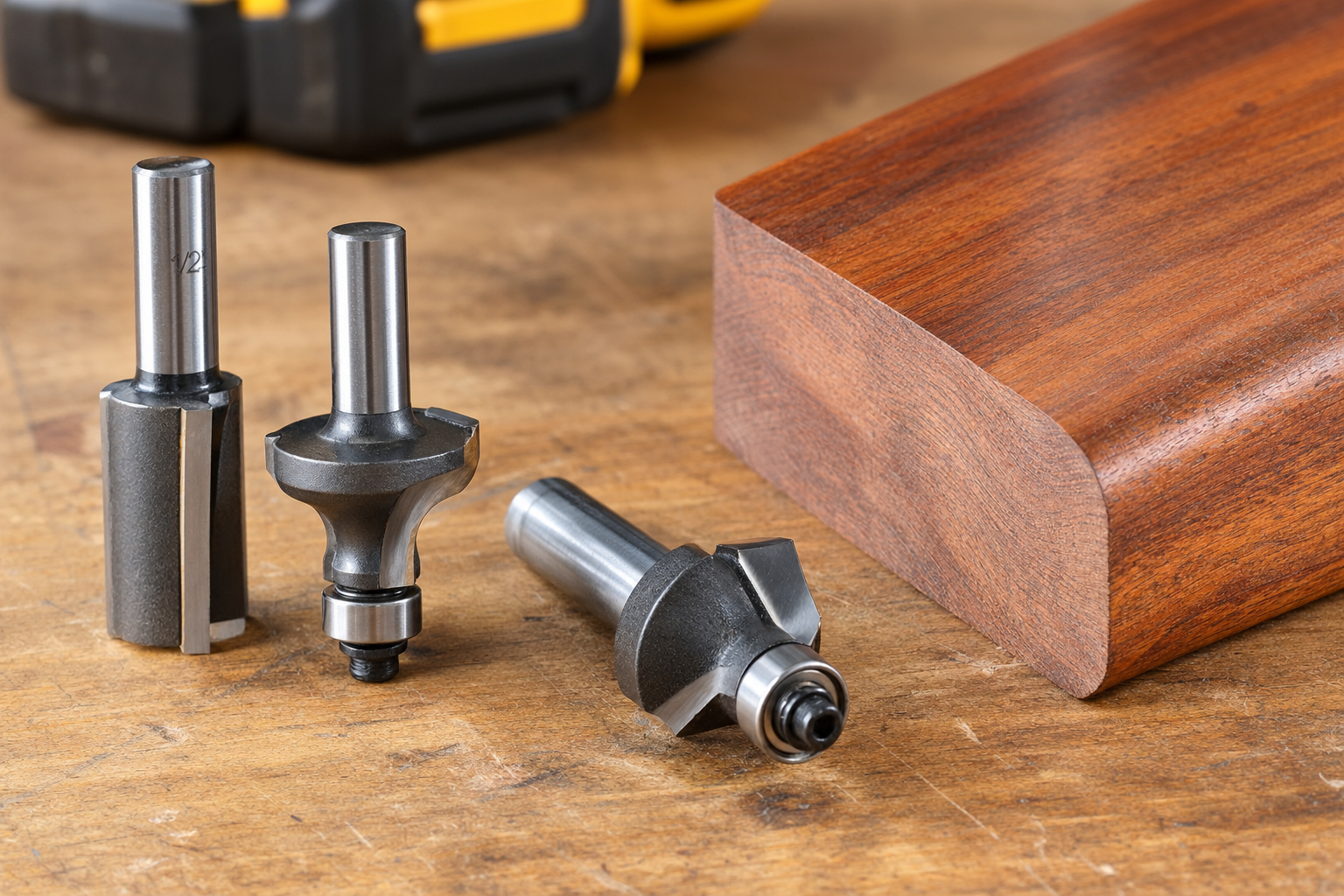
Dense tropical hardwoods such as koa and ohia punish ordinary router bits. Softwoods and sheet goods present different challenges. The wrong bit material, shank size, or profile produces burn marks, tear-out, and short tool life. The right combination produces clean edges that need less sanding.
We stock high-speed steel and carbide router bits along with routers and woodworking accessories at both our Honolulu and Kahului locations. This guide covers the practical choices that matter on Oahu and Maui shops and jobsites.
Carbide vs High-Speed Steel: Which Edge Holds Up
Router bits are made primarily from high-speed steel (HSS) or carbide (usually carbide tips brazed to a steel body, sometimes solid carbide).
| Feature | High-Speed Steel (HSS) | Carbide-Tipped / Solid Carbide |
|---|---|---|
| Edge life | Shorter; dulls faster on dense or abrasive stock | Longer; holds edge far longer under load |
| Heat resistance | Lower; can lose temper in continuous cuts | Higher; maintains hardness at elevated temperatures |
| Best materials | Softwoods, short runs, light profiling | Hardwoods, plywood, MDF, laminates, production work |
| Cost | Lower upfront | Higher upfront, lower cost per linear foot |
| Sharpening | Easier with standard equipment | Requires diamond tools or professional service |
| Brittleness | More flexible | More brittle; avoid drops and side impact |
For koa, ohia, and other dense local hardwoods, carbide is the practical choice. HSS can start sharp but lose its edge quickly in these species, leading to burning and tear-out. Carbide maintains a cleaner cut longer and tolerates the heat generated by dense fiber.
HSS still has a place for occasional softwood work or when budget is the primary constraint and the bit will see limited use. Most professional shops that route tropical hardwoods or engineered panels standardize on carbide.
Shank Size: 1/4-Inch vs 1/2-Inch
The shank is the smooth portion that seats in the router collet. Two sizes dominate: 1/4-inch and 1/2-inch.
A 1/2-inch shank has roughly four times the cross-sectional area of a 1/4-inch shank. That extra mass reduces vibration, resists deflection under load, and improves heat dissipation. The difference is most noticeable on:
- Deep dados or grooves in hardwood
- Larger-diameter profile bits
- Continuous production runs
- Router-table work where the bit is fully engaged
1/4-inch shanks remain useful for trim routers, smaller bits, and light edge work. Many routers accept both sizes with the correct collet. When the router and bit both allow it, the 1/2-inch shank generally produces a cleaner, more consistent cut in dense stock.
Always confirm the collet size on your router before buying bits. Bring the tool or model number when you visit so we can match compatibility.
Common Profiles and When to Use Them
Straight bits handle dados, grooves, rabbets, and general stock removal. Spiral versions (upcut, downcut, or compression) improve chip evacuation and edge quality on plywood and laminates.
Roundover and cove bits create the edge profiles common on furniture, cabinetry, and trim. Flush-trim and pattern bits follow templates or existing edges for consistent results on multiple pieces.
Chamfer, ogee, and other decorative profiles add detail. Larger diameter or longer-cutting-length bits demand more rigid setups and appropriate feed rates to avoid chatter.
Match the profile to the finished appearance and the wood species. Dense grain can tear if the bit is dull or the feed rate is wrong. A sharp carbide bit at a controlled feed usually reduces the sanding that follows.
Hawaii Shop and Jobsite Realities
Humidity and temperature swings affect both wood movement and tool performance. Bits that run hot in dense stock can leave burn marks that are difficult to sand out of figure-rich koa. Keeping bits clean and sharp reduces heat buildup.
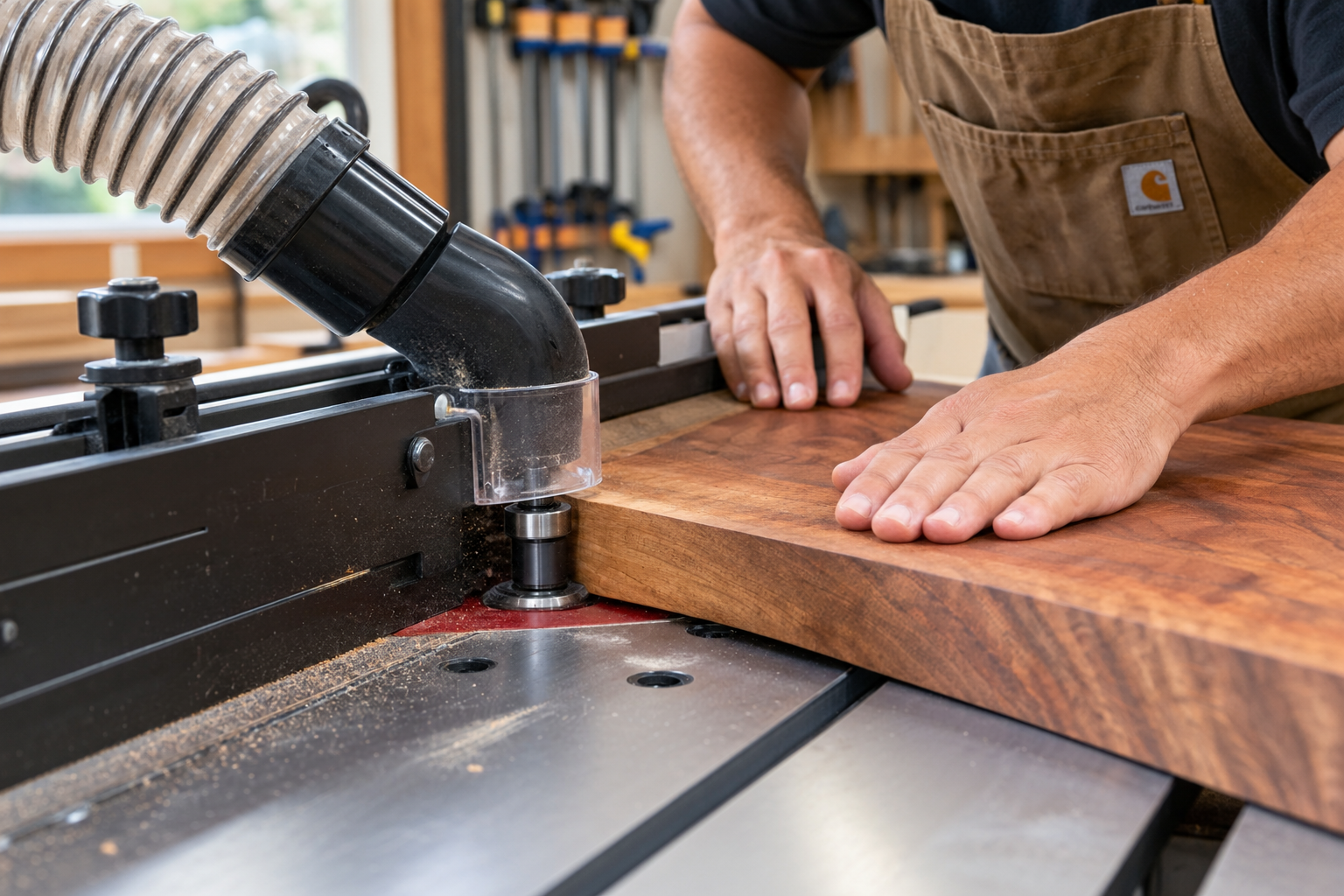
Dust extraction helps. Fine tropical-wood dust and resin can load the flutes, increasing friction. Clear chips promptly and wipe bits after use.
We carry routers suitable for both shop and jobsite work, including models from DEWALT, Makita, and other professional lines. Our power tools selection includes routers, planers, and related woodworking tools. Bring the router model and the profile you need so we can confirm collet size and available bits.
What We Stock and How We Help
Our story page notes that we maintain the largest selection of router bits in high-speed steel and carbide. Inventory covers a range of profiles and shank sizes used by finish carpenters, cabinet makers, and furniture builders on the islands.
Relevant products and services:
- High-speed steel and carbide router bits in common profiles
- Routers and woodworking accessories from professional brands
- Collets and related hardware
- Sharpening service for eligible bits and cutting tools
- Special-order capability when a specific profile or size is not on the floor
- Staff guidance on matching bit to material and router
Product selection can differ between Honolulu and Kahului. Call ahead for specific profiles or quantities.
Why Local Selection Matters for Router Bits
Online catalogs list thousands of bits, but lead times and return friction matter when a job is waiting. We keep a working selection of high-speed and carbide bits on the ground so you can compare profiles in person, confirm collet fit, and leave with what you need the same day in most cases.
Our team works with local carpenters and woodworkers regularly. We understand the difference between routing soft construction lumber and dense island hardwoods. That practical experience helps avoid the trial-and-error that wastes both time and bits.
We also service major brands and offer the unconditional one-year guarantee on qualifying DEWALT, Milwaukee, and Metabo HPT power tools. While the guarantee focuses on those lines, the same local support approach applies to the woodworking equipment and accessories we carry.
Practical Buying Checklist
- Identify the primary wood species and whether the bit will see daily or occasional use.
- Confirm router collet size (1/4-inch, 1/2-inch, or both).
- Choose carbide for dense hardwoods and production work; consider HSS for light softwood tasks.
- Match profile and cutting length to the finished detail.
- Prefer larger shank sizes when the router and application allow it.
- Plan for cleaning, storage, and eventual sharpening or replacement.
Frequently Asked Questions
Should I buy carbide or HSS for koa and ohia?
Carbide is the better match for these dense species. HSS dulls faster and is more likely to burn the surface. Carbide holds its edge longer and produces cleaner results with less sanding.
Is a 1/2-inch shank always better?
It is more rigid and generally produces cleaner cuts in demanding work. Use 1/4-inch when the router only accepts that size or when the bit is small and the cut is light. Match the shank to both the router and the load.
Can I sharpen carbide router bits?
Yes, but it requires diamond abrasives or professional service. We offer sharpening for eligible cutting tools. Ask at either store about current capabilities and turnaround.
What if the exact profile I need is not in stock?
Call the store. We can check current inventory, suggest close alternatives, or place a special order. Bring the required dimensions or a sample if possible.
Do you carry routers as well as bits?
Yes. We stock professional routers and related woodworking tools. Confirm collet size and available bits at the same time so everything matches.
How should I store router bits in a humid shop?
Keep them clean, dry, and protected from impact. A dedicated bit case or tray reduces chipping risk. Wipe resin and dust after use.
Stop by and Match the Bit to the Work
Bring a sample of the wood or a description of the profile and the router you use. We will help you select from the high-speed and carbide bits on hand and confirm compatibility.
Honolulu
1626 Republican Street, Honolulu, HI 96819(808) 841-0902Mon–Fri 7:30 a.m.–4:00 p.m., Sat 8:00 a.m.–12:00 p.m.
Kahului142 Kalepa Place, Kahului, HI 96732
(808) 242-7878Mon–Fri 7:30 a.m.–4:00 p.m., Sat 8:00 a.m.–12:00 p.m.
Join the e-Power Club for notices on woodworking tool and accessory promotions. Visit either store, call, or ask about a commercial account. We are here to keep your edges clean and your projects moving under real island conditions.
Pricing and specific model availability vary by location and change over time. Confirm current stock, specifications, and any applicable pricing directly with the store. Always follow the router and bit manufacturer’s speed and feed recommendations.
