
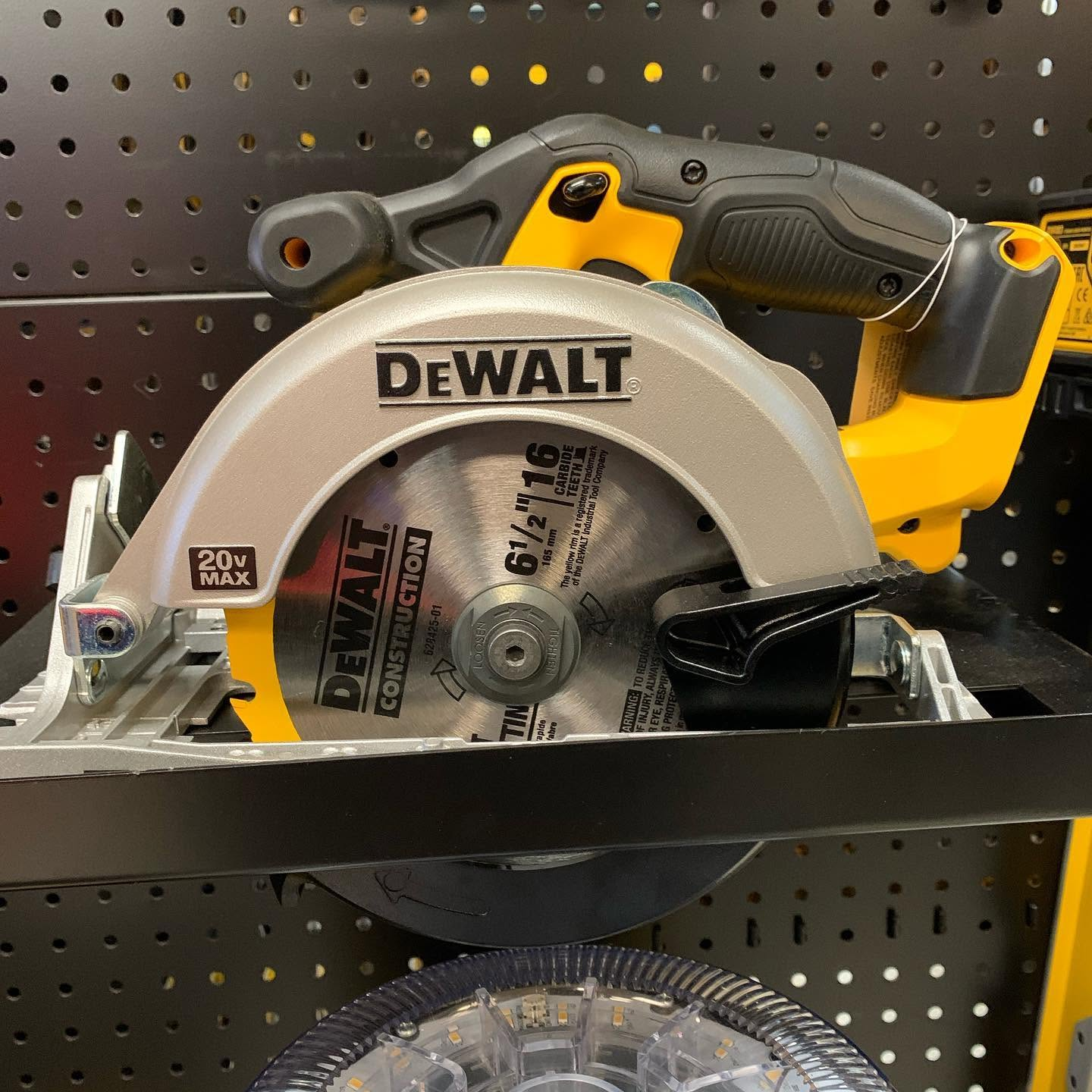
Every cut you make on a job site costs money. Using the wrong saw blade wastes expensive material, slows down production, and prematurely burns out your power tools. Contractors operating in Hawaii face the added challenge of sourcing blades capable of handling highly abrasive tropical hardwoods and dense structural steel without constantly needing replacement.
Slim’s Power Tools has provided heavy-duty contractor supplies across Oahu and Maui since 1972. We know that picking up a generic combination blade from a big-box store will not cut it for professional masonry, structural steel, or fine cabinetry. This guide breaks down the technical specifications of industrial saw blades so you can outfit your crew with the exact cutting edge required for the job.
The Anatomy of an Industrial Saw Blade
Understanding saw blade terminology prevents costly purchasing mistakes. You must match the blade’s physical design to both your material and your specific power tool.
Tooth Count and TPI
The number of teeth on a blade directly determines the speed and finish of the cut. Blades with fewer teeth remove material rapidly but leave a rough, splintered edge. Blades with a high tooth count produce a slow, surgically clean cut required for finish carpentry and metalwork. On bandsaws and reciprocating saws, this is measured in Teeth Per Inch (TPI).
Kerf Thickness
The kerf refers to the width of the cut slot the blade makes in the material.
- Full-Kerf Blades: These are thick, heavy plates designed to resist deflection under high heat. They require a powerful corded saw (typically 15 amps or more) to push them through dense material without stalling the motor.
- Thin-Kerf Blades: These remove less material, reducing friction and motor strain. They are explicitly designed to maximize battery life on cordless circular saws and miter saws.
Hook Angle
The hook angle (or rake) is the angle of the tooth face relative to the center of the blade hub. A positive hook angle aggressively pulls the blade into the material for fast ripping. A negative hook angle pushes the material away from the blade. This prevents the saw from climbing over the material, making negative hook angles mandatory for cutting metal and cutting on radial arm saws.
Choosing Saw Blades for Wood Applications
Woodcutting requires matching the blade to the grain direction and the density of the lumber. Cutting along the grain (ripping) produces long, stringy shavings. Cutting across the grain (crosscutting) severs the wood fibers, requiring a shearing action to prevent tear-out.
Ripping Blades
Ripping blades feature a low tooth count (typically 24 teeth on a 10-inch blade). They utilize deep gullets, the spaces between the teeth to aggressively clear long wood chips out of the kerf before they can bind the blade. A flat-top grind (FTG) tooth geometry acts like a chisel, chopping out material efficiently.
Crosscutting Blades
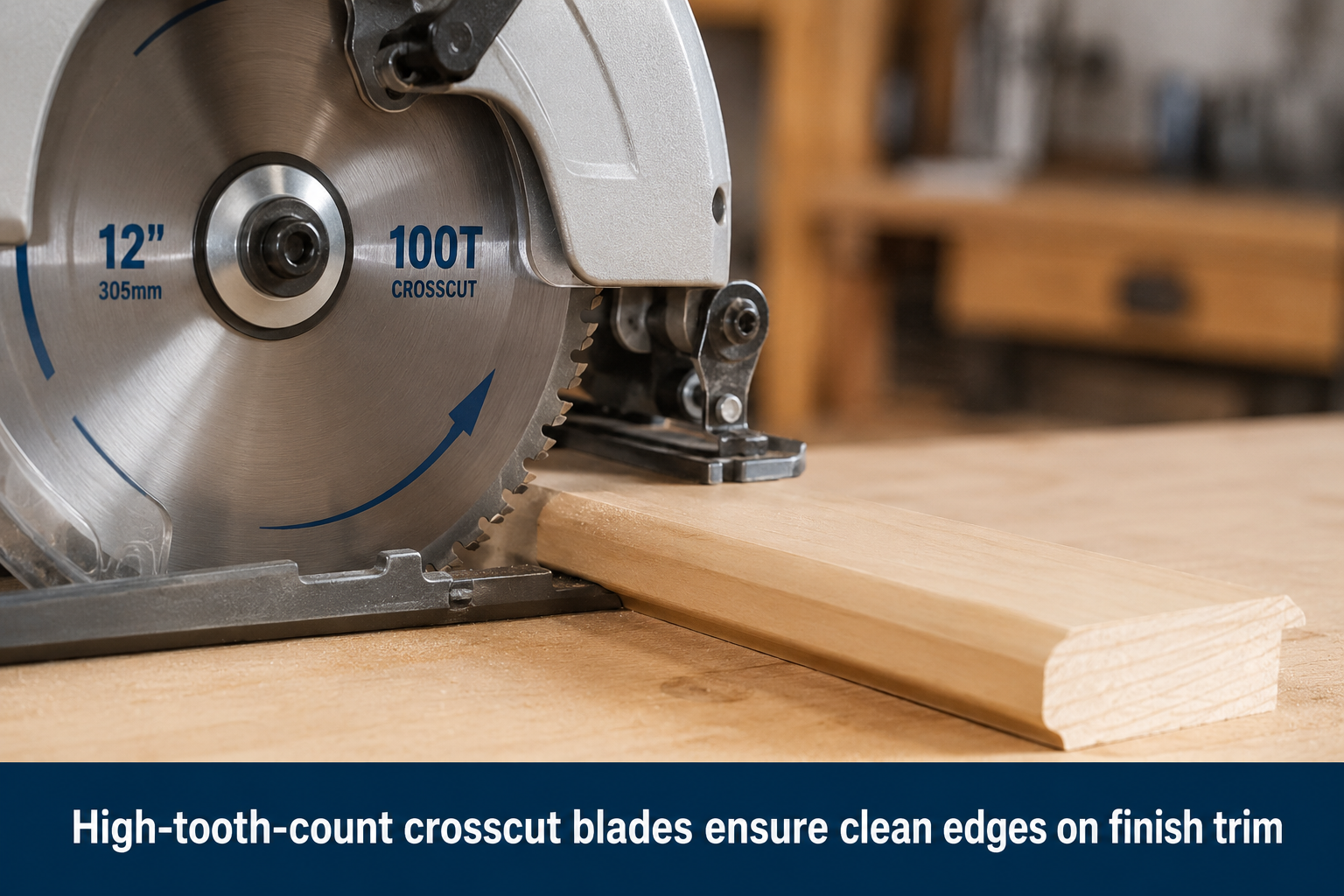
Crosscut blades require a high tooth count (60 to 80 teeth on a 10-inch blade) to slice cleanly through wood fibers without splintering the edge. The teeth alternate leaning left and right, known as Alternate Top Bevel (ATB). This design creates a sharp knife-like edge on both sides of the kerf, producing glass-smooth cuts on expensive plywood and hardwood trim.
Combination Blades
A combination blade (typically 40 to 50 teeth) attempts to balance ripping and crosscutting. While acceptable for rough framing or general demolition, combination blades will never rip as fast as a dedicated rip blade or cut as cleanly as a dedicated crosscut blade. Professional finish carpenters swap blades based on the specific task.
Wood Cutting Blade Selection Matrix
| Cutting Task | Recommended Tooth Count (10″ Blade) | Grind Type | Best Application |
|---|---|---|---|
| Heavy Ripping | 24 – 30 Teeth | Flat Top (FTG) | Dimensional framing lumber |
| General Purpose | 40 – 50 Teeth | ATB | Rough construction cuts |
| Fine Crosscutting | 60 – 80 Teeth | High ATB | Hardwood flooring and trim |
| Plywood/Melamine | 80+ Teeth | Triple Chip (TCG) | Cabinetry and veneered panels |
Choosing Saw Blades for Metal Applications
Cutting metal generates extreme heat. If a blade overheats, the metal plate warps and the teeth lose their temper, destroying the blade instantly. You must select blades engineered to transfer heat into the metal chips rather than the blade core.
Abrasive Cut-Off Wheels
Abrasive wheels use bonded grit (like aluminum oxide) to literally grind their way through metal. They are cheap to replace and highly effective for cutting hardened rebar and cast iron. However, they shrink in diameter as they wear down, reducing your depth of cut. They also generate massive amounts of sparks and leave a jagged burr that requires secondary grinding.
Carbide-Tipped Metal Blades
Industrial metal-cutting circular saw blades feature specialized C6 grade carbide teeth braised onto a heavy steel plate. Unlike abrasive wheels, these teeth shear the metal. This shearing action keeps the blade and the material cool to the touch. They leave a perfectly clean, burr-free edge ready for immediate welding.
These blades require a specialized low-RPM dry-cut saw. Running a carbide metal blade on a standard high-RPM wood saw will shatter the carbide teeth instantly and create severe shrapnel hazards on the job site.
Non-Ferrous Metal Blades
Cutting aluminum or brass requires a specific tooth geometry. Non-ferrous blades utilize a negative hook angle and a Triple Chip Grind (TCG). The negative hook prevents the blade from aggressively grabbing the soft aluminum and stalling the saw. You must use cutting wax or industrial blade lubricant to prevent the soft aluminum chips from welding themselves to the carbide teeth.
Metal Cutting Blade Selection Matrix
| Material Type | Blade Construction | Tool Requirement | Cut Quality |
|---|---|---|---|
| Rebar / Cast Iron | Abrasive Aluminum Oxide | High-RPM Chop Saw | Rough, heavy burr |
| Structural Steel | C6 Carbide Tipped | Low-RPM Dry Cut Saw | Smooth, burr-free |
| Aluminum Extrusion | TCG Carbide (Negative Hook) | Miter Saw / Circular Saw | Clean, requires lubricant |
| Thin Sheet Metal | High-Speed Steel (HSS) | Nibbler / Shears | Clean, no heat distortion |
Interactive Blade Selector Tool
Use this interactive tool to match your material and power tool with the correct blade specifications for your next project.
Industrial Blade Selector
Select your material and cutting application to find the optimal blade specifications.
Recommended Blade Specifications
24 – 30 Teeth
Flat Top Grind (FTG)
Aggressive Positive (20°+)
Specialty Blades for Hawaii Job Sites
Hawaii contractors frequently deal with dense, abrasive tropical hardwoods like Koa and Ohia. These woods contain high levels of silica and internal moisture. Silica acts like sandpaper against a saw blade, dulling standard steel blades in minutes.
If you process local hardwoods, you must invest in premium industrial blades featuring C4 micro-grain carbide teeth. This specific carbide grade resists the abrasive wear of silica.
Additionally, the high humidity on Oahu and Maui causes exposed steel plates to rust overnight. Rust creates friction, leading to burn marks on your finished wood. Choose blades featuring industrial non-stick coatings (often Teflon or similar proprietary finishes). These coatings seal the steel plate against moisture, reduce cutting friction, and prevent sticky wood pitch from building up behind the teeth.
Signs It Is Time to Replace or Sharpen Your Blade
Pushing a dull blade through material strains your power tool motor and compromises job site safety. A dull blade requires extreme physical force to cut, increasing the risk of severe kickback. Watch for these indicators:
- Burn Marks: If you see dark scorch marks on the cut edge of the wood, the teeth are dull and rubbing rather than cutting.
- Excessive Tear-Out: When a crosscut blade begins splintering the top veneer of plywood, the sharp cutting corners of the teeth are rounded over.
- Motor Strain: If your saw motor bogs down or smells hot during a standard cut, the blade is failing.
- Chipped Carbide: Inspect the teeth visually. If the carbide tips are chipped, missing, or fractured from hitting a hidden nail, the blade must be replaced immediately.
High-quality industrial blades can be resharpened multiple times through our professional in-store sharpening services.
Equip Your Saws for Success
Matching the correct industrial blade to your material guarantees cleaner cuts, extends the life of your power tools, and keeps your crew operating safely. Never force a dull or incorrect blade through heavy stock.
Visit Slim’s Power Tools at our Honolulu location or Maui location to browse our massive inventory of industrial cutting accessories. We stock heavy-duty blades from trusted professional manufacturers designed to withstand the rigors of island construction. Check out our full selection of Saw Blades online and upgrade your cutting performance today.
